Start with context, not labels
The same action can have different meanings. Record where, when and what changes the behaviour.
205 GUIDES
Cat behaviour becomes easier to understand when you look at the whole situation: body language, timing, resources, health and what happened immediately before and after. This hub connects everyday questions about meowing, sleep, play, fear and attention.
Choose the closest behaviour for a focused explanation, useful context and kind next steps.
Routine, curiosity and social closeness
Understand this behaviour →SLEEPS ON YOUWhy your cat sleeps on youWarmth, trust, scent and security
Understand this behaviour →TRILLS AT PEOPLEWhy does my cat trill at me?Greeting, attention and invitations to follow
Understand this behaviour →BITES DURING PETTINGWhy a cat bites during pettingOverstimulation, boundaries and early signals
Understand this behaviour →WALKS ON TOESWhy cats walk on their toesDigitigrade movement and gait changes
Understand this behaviour →ROUTINE CHANGESHow cats cope with changes in routineStress, adaptation and predictable support
Understand this behaviour →The same action can have different meanings. Record where, when and what changes the behaviour.
Food, water, litter, safe rest, scratching, climbing, play and social choice form the foundation. Training works best after pain, fear and conflict have been considered.
Small changes make results easier to read. Reward the behaviour you want and avoid punishment that can add fear.
Pain, illness, stress, conflict and environmental change are possible. A sudden or persistent change deserves veterinary advice.
Yes. Predictable cues, immediate rewards and gradual steps can shape many routines while preserving choice.
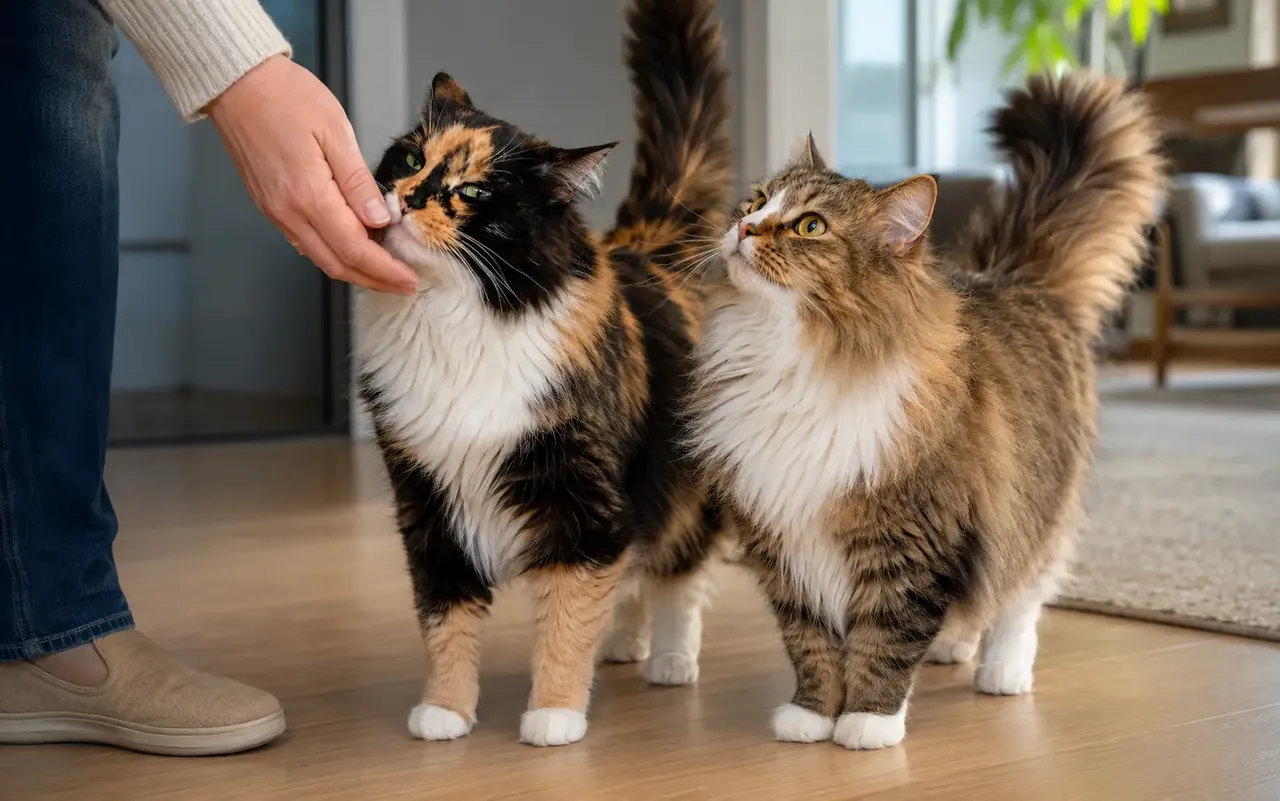
Cats are digitigrade animals: they normally walk on their toes while the heel stays raised. This limb position supports quiet movement, acceleration and jumping.
Read the guide →Cats are digitigrade animals: they normally walk on their toes while the heel stays raised. This limb position supports quiet movement, acceleration and jumping.
A cat may sleep on you because you provide warmth, familiar scent, security and a predictable resting routine. The choice usually reflects comfort, but the whole pattern matters more than one cuddle.
A trill is a short rolling vocalisation often used during friendly greetings, attention and invitations to follow. Its meaning becomes clearer from where the cat goes and what happens next.
A relaxed cat may continue purring while drifting into light sleep, especially during a warm, familiar resting routine. Purring alone does not prove comfort or deep sleep.
The room combines access to you, predictable routines and interesting scents or surfaces. Practical observations, a safe next step and clear warning signs.
Pain, fear, outside triggers and changed scent can disrupt an old relationship.
Cats hear higher frequencies than people, helping them detect small prey and subtle noises.
What bunting says about scent, familiarity and friendly contact.
Rolling onto the back can show relaxation, invite play or prepare all four paws for defence.
Moving water can be easier to notice and may taste fresher to some cats.
Understand space, scent and access without reducing every conflict to ‘dominance’.
Some cats prefer drinking locations away from food, noise or other animals.
An upright quivering tail can appear in an excited greeting, while spraying has a different context and posture.
Small whisker, ear, paw and tail movements commonly occur during active sleep.
The sound may announce an intention, request space or reflect a learned way to attract attention..
Running water, echoes, warmth and concern about an unusual human routine can all attract attention..
A brief tap may be an invitation to follow, a request or a low-pressure social check-in..
The position offers height, sightlines and access to activity on more than one floor..
Breath carries recent food scents and close-range information about a familiar person..
A mirror reflection may resemble another cat without matching scent or normal movement cues. Calm curiosity is harmless; repeated distress means changing the mirror setup.
Kneading before sleep is usually a comforting settling routine carried from kittenhood. Let it continue when the cat is relaxed and the surface is safe.
Doorbell fear usually links a sharp sound with strangers, doors opening or loss of control. Reduce intensity and protect a reliable retreat before training.
Remaining hidden after visitors leave can be a normal recovery response. The useful measure is whether the cat gradually resumes eating, toileting and ordinary activity.
A sink can feel cool, curved and secure, especially in warm weather. The main risks are cleaning chemicals, hot water and taps being turned on unexpectedly.
The sound may predict your movement, conversation or a break in attention and become part of a learned routine. Learn what to observe, what to try safely and when to seek help.
A brief sprint can follow relief or arousal, but changed toileting may also signal discomfort. Learn what to observe, what to try safely and when to seek help.
Waiting at the top of stairs may be social observation or route monitoring, but it can also block another cat and creates a trip hazard.
Most cats do not show human-style mirror self-recognition. They may treat a reflection as another cat, visual movement or an unimportant image after learning there is no scent.
A high gently quivering tail often appears during an excited greeting, although urine marking must be distinguished. Learn what to observe, what to try safely and when to seek help.
An open floor can offer a cool surface, a clear view and a central observation point. Learn what to observe, what to try safely and when to seek help.
Your pillow carries strong familiar scent and lies on a direct route to warmth or attention. Learn what to observe, what to try safely and when to seek help.
Carrying and calling may be hunting play, social communication or an invitation for attention. Learn what to observe, what to try safely and when to seek help.
A new place may reflect temperature, noise or routine, but sudden relocation can accompany stress or discomfort. Learn what to observe, what to try safely and when to seek help.
An unfamiliar shape, smell, movement or sound can seem unsafe until the cat gathers information. Learn what to observe, what to try safely and when to seek help.
A brief sprint after passing normal stool may reflect relief or excitement. New frantic running can also accompany pain, constipation or irritation.
Door-frame scratching usually combines stretching, route marking and a valuable location. The best alternative matches both the texture and the exact place.
Height provides visual control, rest and distance without requiring the cat to leave the room. A calm, practical guide to what it means and what to do next.
A window view can enrich a cat or repeatedly trigger frustration when outdoor animals cannot be approached or escaped. Body language and recovery reveal the difference.
Cats often rotate sleeping places to manage warmth, noise, light and security. The pattern is usually normal when your cat settles comfortably and eating, movement and social behaviour remain unchanged.
A ceiling fan can frighten a cat through overhead movement, shadows, vibration and unfamiliar sound. Give protected routes and reduce exposure gradually without forcing the cat beneath it.
A cat staring at an empty corner usually detects a tiny sound, insect, scent or reflection that people miss. Check the environment, then assess responsiveness and the wider behaviour pattern.
Rewarding an available floor or perch is clearer than spraying or shouting. A calm, practical guide to what it means and what to do next.
Waiting outside another cat's litter box can be curiosity, play or subtle blocking. The cat inside needs an exit that cannot be controlled from one doorway.
Grooming after petting can reset the coat, blend scent or help a cat settle after stimulation. It does not automatically mean rejection, but frantic or damaging grooming is different.
Overnight guests change scent, sound, doors and routine. Protect a guest-free safe area, preserve the cat's normal resources and ask visitors to let the cat control every approach.
Temperature, household sounds, light and social distance can make different resting spots valuable through the night.
New furniture changes scent, routes, height and hiding places. Let the cat investigate at their own pace while preserving familiar resources and safe paths.
The cat may be checking your response, inviting you to follow or repeating a routine that reliably gets attention.
A kitten may chase an older cat's tail as moving prey, but repeated biting can become painful and prevent rest. Redirect early and give the older cat kitten-free space.
A gentle paw to the face may ask for contact, food or a change in interaction. Read claw position and body tension, protect your face and reward safer communication.
A short trill can be a friendly contact sound used during a familiar waking or greeting routine. Read the full body, try a gentle response and know when the change matters.
The sudden sound may startle the cat or prompt a learned social response. Practical observations, a safe next step and clear warning signs.
A soft exhale can accompany relaxation or a change from alertness to rest when breathing remains easy and quiet. Read the full body, try a gentle response and know when the change matters.
A very soft or inaudible meow can be a learned visual request for access or attention. Read the full body, try a gentle response and know when the change matters.
Growling can protect a valued item or create distance when excitement and possession are high. Read the full body, try a gentle response and know when the change matters.
Cooking combines movement, smells and routine, making it fascinating to cats. The priority is preventing burns, toxic-food exposure and falls.
The room may hold water sounds, scent, echoes or a routine strongly associated with a person. Read the full body, try a gentle response and know when the change matters.
A cat may hide from a ringtone because the sharp sound, vibration or events after a call have become a learned warning signal.
An unfamiliar silhouette can resemble a person or animal until scent and movement confirm what it is. Read the full body, try a gentle response and know when the change matters.
A doorway can provide airflow, visibility and a strategic resting point. Check that the cat is relaxed and is not blocking another pet’s essential route.
Cats may choose a hard floor because it is cool, quiet or supportive. A new preference can also reflect overheating, pain or difficulty climbing.
One frightening loss of footing can teach a cat that a smooth route is unsafe. Read the full body, try a gentle response and know when the change matters.
A hat changes the familiar outline, movement and scent cues the cat uses to recognize you. Read the full body, try a gentle response and know when the change matters.
Pre-bedtime restlessness often reflects normal evening activity, unused hunting energy or a learned routine. A new pattern with other changes needs medical attention.
The sight, location or movement of the vacuum can predict the frightening sound before it begins. Read the full body, try a gentle response and know when the change matters.
Dark glass can act like a mirror, while outdoor animals, sounds and moving lights may appear suddenly. Read the full body, try a gentle response and know when the change matters.
Cats notice weekend changes in wake time, meals and household activity. Stable anchor points reduce early waking and demanding behaviour.
Moving a cat's bed changes scent, temperature, views and escape routes. Restore choice and let the cat decide whether the new position works.
Bags and coats carry intense unfamiliar scent and create a defined surface worth investigating. Read the full body, try a gentle response and know when the change matters.
Curiosity may bring the cat forward before voice, movement or scent becomes too intense. Read the full body, try a gentle response and know when the change matters.
A camera can change your posture, attention and the environment, so a cat that normally plays may pause when recording begins.
Large rhythmic movement makes a familiar person look briefly unusual and can trigger curiosity, caution or play interest. Read the full body, try a gentle response and know when the change matters.
A new perfume can briefly confuse a scent-focused cat. Let the fragrance fade and allow the cat to re-approach rather than insisting on contact.
A cat may hide when luggage appears because it predicts disruption, unfamiliar smells or a previous absence—not because the suitcase itself is frightening.
Renovation noise next door can cause hiding and vigilance even when no workers enter your home. Predictability and sound buffering help.
After boarding, restore familiar resources and give the cat time to decompress. Mild tiredness may pass, but appetite, breathing and litter output should remain normal.
An older cat may avoid a kitten because the kitten ignores social limits and disrupts rest. Distance is a valid coping strategy.
Two cats can share a window perch only when it is large, stable and easy to leave. Quiet crowding can still create conflict.
Social grooming is normal, but excessive licking can reflect tension, displacement or attraction to painful or abnormal skin.
Cats swapping beds is usually normal scent sharing and resource rotation, provided both cats can rest without displacement.
A warm guide to one of the friendliest sounds in the feline vocabulary.
Recognition, routine and reunion—without assuming your cat watched the clock all day.
Affection is possible. So are salt, scent, texture and a learned ritual.
The switch is rarely random when you watch arousal, pauses and touch preferences.
A vulnerable display can mean trust, play or defense. Context decides.
Your head is warm, relatively still and carries a strongly familiar scent.
A fixed gaze can be a question, a learned request or a warning. Read the whole face.
Laundry baskets combine soft nesting material with concentrated familiar scent.
An awkward human moment can be ordinary feline trust and positioning.
A resting paw can request attention, maintain contact, investigate movement or ask for space.
Blankets provide warmth, darkness and a sheltered den-like space.
A toy on the pillow may be an invitation, a hunting sequence or successful attention strategy.
Turning away can be a sign that a cat feels safe enough not to monitor you continuously.
Curiosity, movement and consequences explain more than revenge ever could.
A closed door interrupts access to territory, information and familiar people.
Warmth, location and your attention make the keyboard unusually valuable.
A recently occupied chair is warm and smells strongly of a familiar person.
Kneading can be a comforting juvenile behaviour and a way to prepare a resting surface.
Movement, freshness and bowl setup may all influence water preference.
Testing depth, making movement and changing an uncomfortable setup are common explanations.
Curling reduces exposed surface area, helps conserve warmth and protects the softer abdomen.
Some cats sprint after toileting, possibly from relief, arousal or a learned routine.
Caching, odor and meal size can explain the invisible covering routine.
Many adult cats rest or sleep for much of the day, but normal varies with age, health and activity.
Management and a better routine beat shouting across the kitchen.
A cat may drop a piece occasionally, but repeated food dropping can point to mouth pain or difficulty chewing.
Cardboard offers scent, resistance and a satisfying tearing texture.
Some cats open their mouth for a very quiet meow during social interaction.
The rapid chattering sound often appears when a cat watches birds or other inaccessible prey.
Change the reward schedule without ignoring genuine needs.
Many cats occasionally chew grass, although the exact motivation is not fully settled.
A howl is a long intense vocalisation that can signal mating behaviour, conflict, disorientation or distress.
Access, routine and reinforcement matter more than stubbornness.
Cats can detect movement and may respond to prey-like shapes and sounds on modern screens.
Fast feet can look like prey. Give the hunting sequence a safer target.
Most cats do not show clear evidence of visual self-recognition in the classic mirror test.
Some healthy cats naturally have small squeaky voices because vocal style varies widely.
Read the setup, the body and the recovery—not just the dramatic leap.
Research and everyday observation suggest cats can distinguish familiar words, including their names.
Purring is not limited to happiness and may occur during fear, pain or self-soothing.
Adult cats still need to hunt. They also need clear rules about human skin.
Cats can distinguish a familiar person's voice from unfamiliar voices.
Cats can learn associations with names, routines and repeated sounds, but fixed vocabulary claims are unreliable.
A frightening sight outside can start a fight inside. Safety and time come first.
Carpal whiskers on the backs of the front legs provide close-range touch information.
Cats can detect changes in human scent, movement, breathing and voice, but 'smelling fear' is an oversimplification.
Recognising a name and choosing to respond are different abilities.
A cat may notice changed scent, body temperature, routine and behaviour during pregnancy.
Cats can learn that a sound predicts interruption, but they do not understand a moral rule behind it.
A doorway stare can matter as much as a food-bowl fight.
Cats may notice altered scent, movement, voice, temperature and daily routines when someone is unwell.
A slow blink often appears during calm, non-threatening social contact.
How to spot one-sided pressure before it becomes an obvious fight.
Cats can form strong attachment relationships and may notice when a familiar person disappears.
An open book creates a defined surface directly between your hands, eyes and attention.
Allogrooming can support social bonds, but it does not prove perfect friendship.
Some cats change behaviour after a companion disappears, though responses vary widely.
Turning away can lower social pressure and communicate a wish for less direct contact.
Cats can compete for valued attention, space or resources, but human-style jealousy is difficult to prove.
Cats can struggle with absence. Diagnose the pattern, not the stereotype.
Cats remember threatening experiences and may avoid the person or place connected with them.
An arched back can make a frightened cat appear larger, but cats also arch during stretching and greeting.
Sleep alone is not proof. Look for unmet hunting, climbing and choice needs.
Cats alternate light dozing with shorter periods of deeper and REM sleep. Offer beds with different levels of warmth, height, company and privacy.
Cats do not innately know that a kiss means affection, but many learn what their person's gesture predicts.
Piloerection makes the tail look larger during strong arousal such as fear, surprise or intense play.
Hiding, stillness and changed routines may speak more loudly than hissing.
A paw over the face often appears when a relaxed cat curls up or shields the eyes from light. Offer both a dim covered bed and an open resting place.
Many cats respond to a familiar person's soft, cat-directed voice.
Tail thumps can signal rising arousal, irritation, concentration or conflict about continuing contact.
Hair loss is a symptom to investigate, not proof of anxiety.
Chirps and jaw chatter often appear during intense visual focus on inaccessible prey.
Ears rotated sideways or flattened can accompany worry, overload, conflict or defensive readiness.
Fabric, plastic and litter can create real medical danger. Treat the cause and the access.
Cats commonly choose warmer resting zones than people find comfortable. Give access to shade, water and a cooler escape, and protect light skin from intense sun.
A long stretch after resting often marks the transition from sleep to movement and may become part of a familiar greeting routine.
Cats can rotate each ear independently to monitor sounds in different directions.
Comfort behavior can become dangerous when chewing turns into swallowing.
Hissing creates distance and usually signals fear, pain, surprise or overload—not spite.
Forward whiskers often accompany focused investigation, hunting interest or high arousal.
Scent marking is communication. It still deserves a medical check and a practical plan.
Adult cats often direct meows toward people far more than toward unfamiliar adult cats.
Cheek rubbing deposits facial scent and gathers information from a familiar landmark.
Progress begins with safety, predictability and the right to say no.
A relaxed tail curl around a person or another cat can be friendly contact.
Many cats lick an area after friendly touch without rejecting the person who touched it. Use brief consent-based petting and pause at tail flicks or skin twitching.
The pre-pounce wiggle helps a cat adjust hind-foot position and prepare explosive movement.
Stress, fatigue, pain and unfamiliar scent can all shape the homecoming.
Cheek and body rubbing deposits scent and renews familiar routes through the home. Keep valued rubbing corners available and clean them only when necessary.
Freezing reduces visible movement while the cat gathers information about distance and timing.
Grabbing and hind-leg kicking are parts of prey handling and defensive behaviour.
Visitors should predict safety and choice—not a compulsory introduction.
A fresh sheet creates a defined, slightly insulated surface in the centre of human activity.
Licking can shift into a warning nip, play or overstimulation as arousal rises.
Prepare resources, boundaries and a quiet retreat before the doorbell rings.
Some cats choose a simple marked floor area even when it has no walls. Try only with wide removable tape and remove it before adhesive loosens.
Moving ankles can trigger stalking and pouncing, especially in an under-stimulated cat.
Vacuum cleaners, alarms and construction need distance, control and gradual learning.
Some cats prefer moving water while others are happy with a clean still bowl. Offer wide bowls and, if enjoyed, a fountain that can be dismantled and cleaned often.
Cats do not have human fingerprints, but features such as nose patterns can be individually distinctive.
Hidden moving feet resemble prey beneath cover and create an irresistible hunting puzzle.
Predictability matters, but flexible confidence can be built before life changes.
Cats may carry valued toys to safe locations or leave them where a hunting sequence ended.
Cats may react to absence and household change. Support the individual in front of you.
An empty-looking wall may carry a tiny sound, shadow, insect, vibration or scent.
Cats can grip with the front legs and kick rapidly with both hind feet. Use a long sturdy kicker toy and keep hands out of wrestling games.
Pawing or batting food can extend foraging and hunting behaviour before eating.
The right experience is safe, gradual and paired with choice.
A yawn during calm contact can accompany relaxation, waking or a shift from one activity to another.
Stop the unwanted outcome by changing triggers, access and rewards.
A keyboard is warm, elevated and positioned exactly where your hands and attention are focused.
Clear timing and tiny steps can teach useful skills without force.
Your meal brings strong smells, predictable routines and a chance that attention or food will follow.
Better grooming, medication and cuddles begin with pauses the cat can trust.
The flehmen response draws scent chemicals toward the vomeronasal organ in the roof of the mouth.
Scent around the rear provides detailed social and individual information.
Sun patches provide changing warmth and comfortable resting conditions.
Shoes carry concentrated outdoor scents plus the familiar scent of their wearer.
Cats use familiar scent, landmarks, spatial memory and possibly other environmental cues, but their abilities are not infallible.
Cats learn daily sequences and can anticipate events linked with light, hunger and household routines.
Cats may detect tiny insects, reflections, air movement or high-frequency sounds that people miss.
Normal feline internal temperature is typically higher than the human average. Never take a rectal temperature without safe veterinary instruction.
Supraorbital whiskers detect nearby contact and air movement around the vulnerable eye. Use carriers and hiding places without sharp edges near the face.
Night meowing may follow hunger, attention, outside activity or routine, but sudden calling—especially in a senior cat—deserves a veterinary check.
If waking you reliably produces food, the cat has learned a strong sequence. Check daily intake and health, then make breakfast depend on a neutral cue instead.