Can cats hear ultrasonic sounds?
Cats can hear frequencies far above the normal human range. This high-frequency sensitivity helps them detect small prey and subtle sounds, but it also means an electronic device may be audible or irritating even when a person hears nothing.
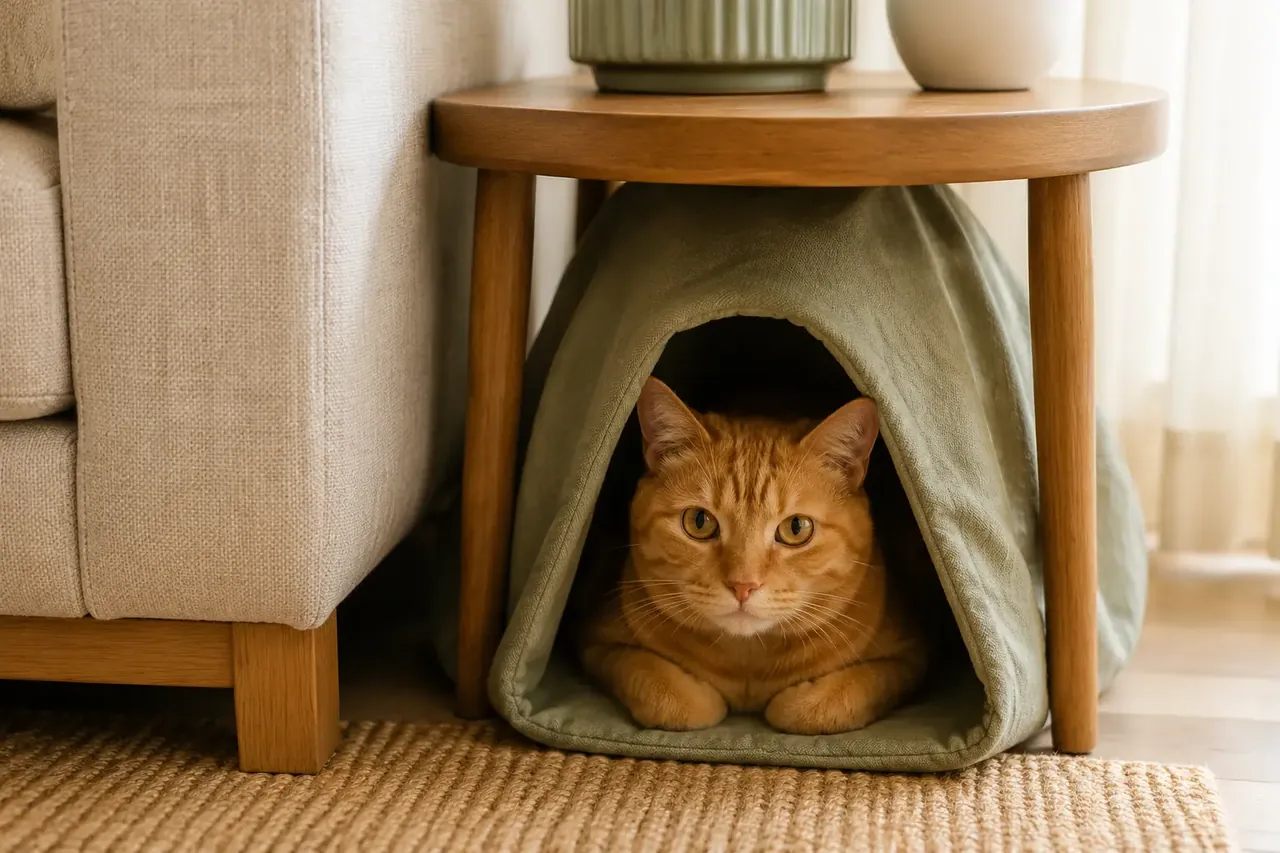
 Topic illustration selected for this guide. Some learning images may be AI-assisted.
Can cats hear ultrasonic sounds — the quick answer
✓ Cats hear higher frequencies than people, helping them detect small prey and subtle noises.
✓ Watch for avoidance around electronics and provide quiet retreat spaces.
✓ Head shaking, ear pain or reduced response to sound needs veterinary assessment.
Cats hear higher frequencies than people, helping them detect small prey and subtle noises. Ultrasonic does not mean every high-frequency device is harmless or pleasant. The useful answer comes from the whole situation—not one pose, sound or viral claim.
What ultrasonic means
Ultrasound is sound above the usual upper limit of human hearing. Cats have a wider hearing range than people, especially at high frequencies, although sensitivity varies with age, health, loudness and distance.
Why high frequencies matter
Rodents produce high-pitched sounds, and kittens use high-frequency calls. Detecting those signals can help a cat locate small animals and communicate at close range. Hearing is used together with vision, smell and vibration.
Quiet to you may not be quiet to a cat
Chargers, televisions, pest devices, motors and other electronics can produce high-frequency tones or harmonics. A cat repeatedly leaving one area may be reacting to sound, vibration, heat, smell or another feature; observation cannot identify the cause by itself.
Create a sound-friendly home
Provide a quiet retreat away from speakers and appliances, keep volume moderate and let the cat leave. Do not test hearing with whistles, ultrasonic apps or loud sudden noises. Products sold as ultrasonic deterrents should not be aimed at or used around cats.
When hearing needs checking
New failure to respond to familiar sounds, unusual startle, louder vocalising, head shaking, discharge, head tilt or balance change needs veterinary assessment. Sudden neurological signs or severe loss of balance warrants urgent care.
Your quick checklist
Loading saved progress…
Three simple things you can do
You do not have to change everything today. Pick one step that feels realistic, try it and see how your cat responds.
- 1Observe your cat’s individual baseline.
- 2Make one gentle change at a time.
- 3Ask a qualified professional when health or safety is involved.
Common mistakes
×Waiting for a dramatic symptom instead of noticing smaller changes from the cat’s normal routine.
×Changing several things at once, making it difficult to learn what actually helped.
×Treating general guidance as a substitute for advice from a veterinarian who knows the individual cat.
Questions cat people ask
Does every cat follow the same rule?+
No. Age, health, history, temperament and environment all change what works for an individual.
When should I seek professional help?+
Seek veterinary advice for sudden, persistent or concerning changes and urgent help for breathing difficulty, collapse, seizures, poisoning or urinary obstruction signs.
Still looking for the right answer?
Search the full EverYes Cats encyclopedia with your own words — a symptom, food, behaviour, breed or everyday question.
Checked, dated and transparent
- Prepared by
- EverYes Cats editorial team
- Last updated
- Source checked
- Primary reference
- Merck Veterinary Manual ↗
We begin with the named reference, rewrite the information in plain language and add practical cat-parent steps. Urgent health statements are checked against veterinary sources. This guide has not been individually reviewed by a veterinarian unless explicitly stated. It provides education, not diagnosis or treatment.
How we choose and use sources →
Spotted something unclear or outdated? Tell us so we can review it.
Loading your saved choice…
Blankets provide warmth, darkness and a sheltered den-like space.
 01
 03
 04