Why your cat attacks your ankles
Moving feet can trigger stalking and grabbing, especially when ambush play has been practised successfully. Prevent the setup, schedule appropriate hunting play and investigate sudden or severe attacks medically.
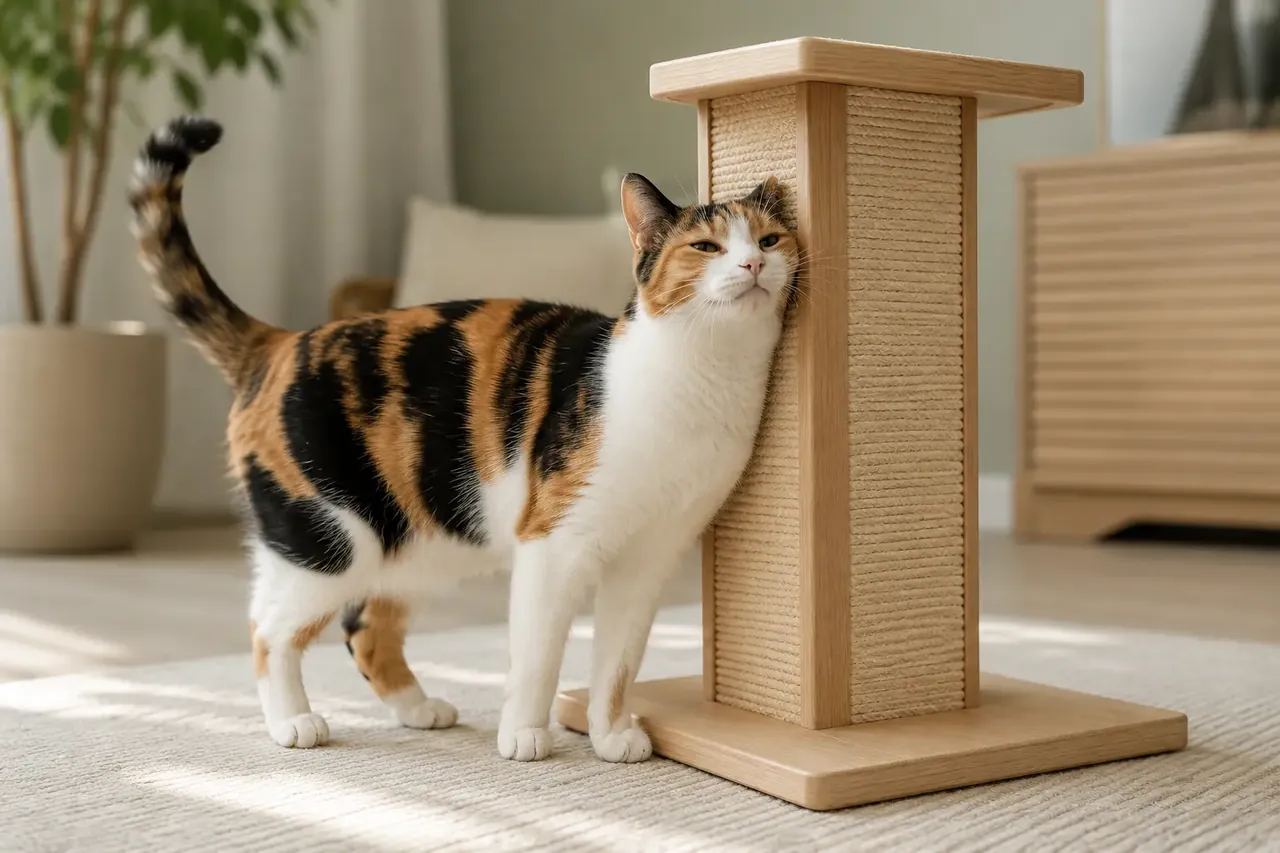
 Topic illustration selected for this guide. Some learning images may be AI-assisted.
Why your cat attacks your ankles — the quick answer
✓ Ambush play uses stalking, chasing and grabbing. Ankles provide movement, especially for young or under-stimulated cats.
✓ Schedule long-wand play before the usual attack window and carry a toss toy for early redirection.
✓ Read the complete body and setting
✓ Sudden, severe or touch-linked attacks need medical screening and qualified behaviour support.
A cat launches from behind furniture and grabs a moving calf or foot. Ambush play uses stalking, chasing and grabbing. Ankles provide movement, especially for young or under-stimulated cats. This guide helps you read the moment, protect the relationship and choose a response that works for the cat as well as the household.
Why ankles become prey-like
Feet accelerate, stop and disappear around furniture, creating the movement pattern that invites stalking and pouncing. A large human reaction can make the event even more rewarding. This is usually play behaviour rather than revenge or a wish to dominate.
Find the predictable attack window
Record time, route, hiding place, household activity and what happens afterward. Attacks before meals, after long rest or in one hallway suggest opportunities for prevention. Also note ears, tail, vocalising and recovery to distinguish loose play from fear or high arousal.
Redirect before the launch
Use a long wand toy away from legs before the usual time, allow stalking and a catch, then finish calmly with part of the measured ration when suitable. Carry a toss toy for early redirection, but never use hands, feet or moving toes under blankets as prey.
Change the ambush environment
Block unsafe hiding points, improve lighting, secure rugs and provide legal tunnels, boxes and elevated observation. Walk rather than run past the trigger where practical. Do not kick, chase, spray or punish after contact; that adds fear without teaching a replacement.
When ankle attacks need help
Arrange veterinary assessment for sudden, intense, unprovoked or touch-linked attacks, especially with limping, skin sensitivity, pain or behaviour change. Clean broken human skin promptly and seek medical advice for punctures, swelling or bites near hands or joints.
Your quick checklist
Loading saved progress…
Three simple things you can do
You do not have to change everything today. Pick one step that feels realistic, try it and see how your cat responds.
- 1Observe your cat’s individual baseline.
- 2Make one gentle change at a time.
- 3Ask a qualified professional when health or safety is involved.
Common mistakes
×Waiting for a dramatic symptom instead of noticing smaller changes from the cat’s normal routine.
×Changing several things at once, making it difficult to learn what actually helped.
×Treating general guidance as a substitute for advice from a veterinarian who knows the individual cat.
Questions cat people ask
Does every cat follow the same rule?+
No. Age, health, history, temperament and environment all change what works for an individual.
When should I seek professional help?+
Seek veterinary advice for sudden, persistent or concerning changes and urgent help for breathing difficulty, collapse, seizures, poisoning or urinary obstruction signs.
Still looking for the right answer?
Search the full EverYes Cats encyclopedia with your own words — a symptom, food, behaviour, breed or everyday question.
Checked, dated and transparent
- Prepared by
- EverYes Cats editorial team
- Last updated
- Source checked
- Primary reference
- Cornell: Aggression in cats ↗
We begin with the named reference, rewrite the information in plain language and add practical cat-parent steps. Urgent health statements are checked against veterinary sources. This guide has not been individually reviewed by a veterinarian unless explicitly stated. It provides education, not diagnosis or treatment.
How we choose and use sources →
Spotted something unclear or outdated? Tell us so we can review it.
Loading your saved choice…
Carrying a toy to a person can extend a hunting sequence, invite play, move a valued object or repeat a behaviour that earns attention. What the cat does next is more informative than a single universal explanation.
 01
 02
 03
 04
 05
 06