Why cats drink from the faucet
Movement, freshness and bowl setup may all influence water preference.
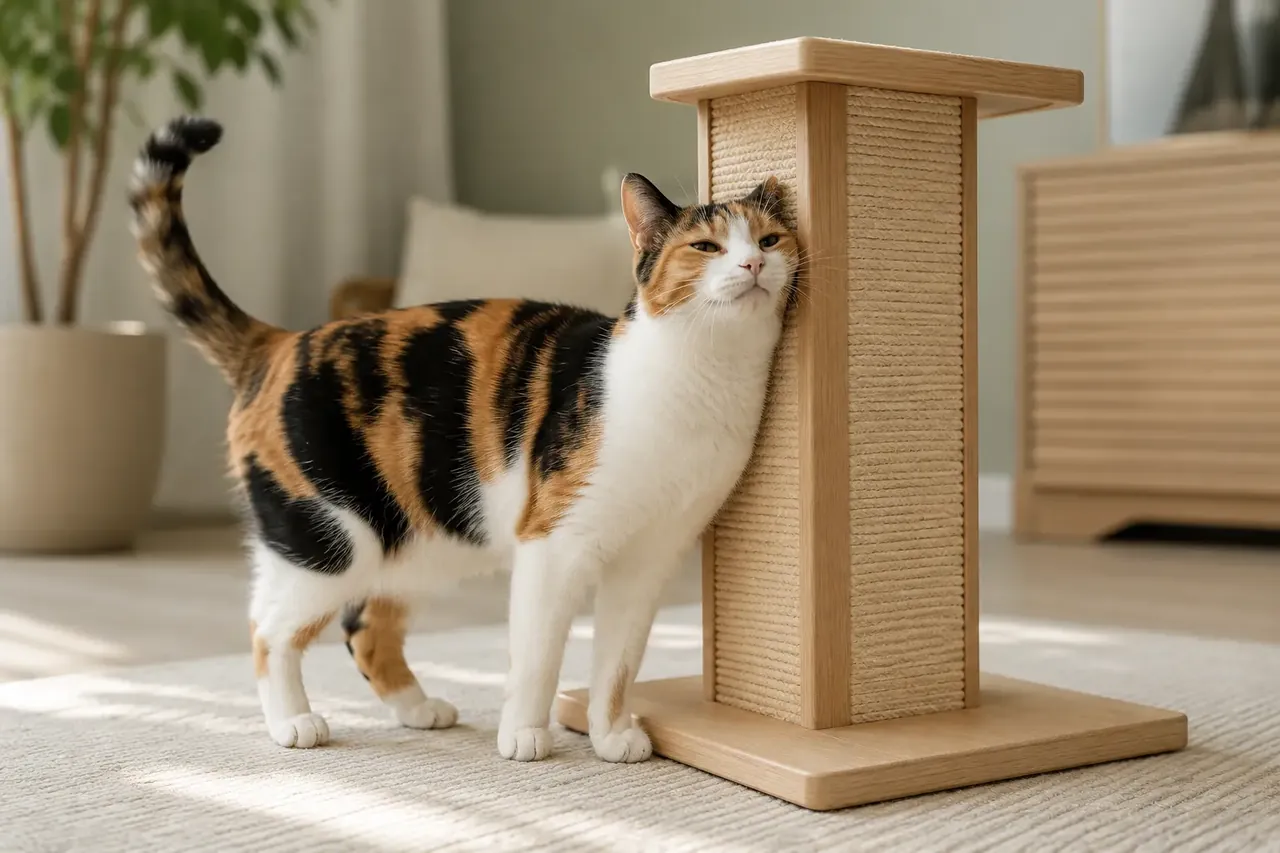 Topic illustration selected for this guide. Some learning images may be AI-assisted.
Why cats drink from the faucet — the quick answer
✓ Moving water is interesting and may be positioned away from food, litter or a noisy appliance. Bowl material, depth and freshness also matter.
✓ Offer several wide clean bowls in quiet places and consider a well-maintained fountain. Refresh water daily.
✓ Read the complete body and setting
✓ Increased thirst or urination, weight loss or new nighttime drinking needs veterinary assessment.
The bowl is full, yet your cat waits in the sink for a narrow stream from the tap. Moving water is interesting and may be positioned away from food, litter or a noisy appliance. Bowl material, depth and freshness also matter. This guide helps you read the moment, protect the relationship and choose a response that works for the cat as well as the household.
Start with the moment, not a label
The bowl is full, yet your cat waits in the sink for a narrow stream from the tap. Moving water is interesting and may be positioned away from food, litter or a noisy appliance. Bowl material, depth and freshness also matter. No single explanation fits every cat. Age, health, learning history, relationships, location and access to resources all matter. A behavior can be normal and still create a household problem. It can also look ordinary while being driven by discomfort. Hold both possibilities until evidence narrows them. Warmth does not require guesswork. The most respectful response begins with precise observation.
Read the whole cat
Read the ears, eyes, whiskers, tail, posture, muscle tension and movement together. Then add the setting. The bowl is full, yet your cat waits in the sink for a narrow stream from the tap. A loose body and voluntary approach tell a different story from freezing, flattened ears, a tucked tail or blocked escape. Compare with this cat’s normal baseline. A confident kitten and a quiet senior may communicate the same need differently. Breed stereotypes and words such as stubborn, jealous or dominant are not observations. Describe what the body does first. Interpret second. This simple discipline protects cats from being punished for normal communication, fear or pain.
Keep a seven-day behaviour record
Keep a seven-day record. Write down when the behavior happens, where it happens, who is present and what occurs immediately before and after. Include meals, play, sleep, visitors, outdoor animals and unusual noise. Measure frequency and duration instead of writing “always” or “never.” Short video can help when it is collected without provoking the cat. The purpose is not to catch a mistake. It is to identify the conditions in which the behavior starts, succeeds, stops or changes. Memory highlights dramatic moments; a record reveals quieter patterns. That evidence is useful at home and much more useful to a veterinary team than a personality label.
Find what keeps the behaviour going
Behavior continues because it has a function or consequence. Sometimes the reward is food or play. Sometimes it is relief from touch, distance from another cat, access to height or a person responding. Moving water is interesting and may be positioned away from food, litter or a noisy appliance. Bowl material, depth and freshness also matter. Ask two questions: what does the cat gain, and what does the cat avoid? The answer may change from one occurrence to the next. Make the appropriate option available before the unwanted version begins. A cat does not need a moral story about being good or bad. The cat needs a safe behavior that works at least as well as the current one.
Ask the questions that change the plan
Ask: Is the behavior new? Is it increasing? Can the cat stop? Does the cat recover quickly? Is anyone frightened or injured? Are eating, drinking, elimination, grooming, sleep and movement normal? The bowl is full, yet your cat waits in the sink for a narrow stream from the tap. Also ask what happens on days when the behavior does not occur. That comparison often identifies the missing resource or trigger. Share decisions among everyone in the household. Inconsistent responses can make a behavior unusually persistent because the next attempt might still pay. One clear, kind household rule is easier for cats and people to learn.
Fit the plan to the cat’s daily rhythm
Place the behavior inside the cat’s full day. Cats move through repeated cycles of watching, seeking, chasing, eating, grooming and resting. A household plan works better when it respects that rhythm. Schedule active play before the time why cats drink from the faucet usually becomes noticeable. Follow a successful catch with a small portion of the normal daily food when appropriate. Protect uninterrupted rest afterward. For food-motivated cats, measure the full daily ration first so training rewards do not quietly increase calories. For cats that value distance or access more than food, use those outcomes honestly. The reward must belong to the individual cat, not to a generic training recipe.
The multi-cat home changes the picture
If more than one cat lives in the home, examine the behavior from each cat’s position. Friendly cats do not automatically want to share every bowl, tray, bed or route. One cat can create pressure without hissing or fighting simply by sitting in a doorway, watching a litter tray or arriving whenever another cat approaches a person. Moving water is interesting and may be positioned away from food, litter or a noisy appliance. Bowl material, depth and freshness also matter. Provide separated resources and observe whether the pattern changes when cats cannot see one another. Never use forced proximity as a test of friendship. Peaceful coexistence is a worthwhile outcome even when cats do not sleep together, groom one another or play as a pair.
A practical plan for home
Offer several wide clean bowls in quiet places and consider a well-maintained fountain. Refresh water daily. Begin with the smallest version that can succeed. Keep other conditions stable for several days so you can judge the result. Reward the desired action at the instant it occurs. A reward may be food, play, access, distance or quiet attention, depending on what the cat values. If the cat becomes tense, refuses food or leaves, lower the difficulty. Progress is not obedience under pressure. It is comfort, choice and successful repetition. Write down the result and adjust one variable at a time.
DEEPER GUIDE9 more detailed sectionsOpen +
Make the environment do some of the work
Support the plan with a cat-friendly home. Provide safe hiding, elevated resting areas, sturdy scratching surfaces, clean litter trays, separated food and water and daily hunting play. In multi-cat homes, duplicate important resources in genuinely different places. A row of bowls is one station, not several. Give every cat routes that do not require passing a competitor. Protect quiet sleep and keep key routines predictable. Environmental support is not spoiling a cat. It is the foundation that allows learning, confidence and healthy social behavior to develop.
Build confidence through choice
Confidence grows through successful choices. Give the cat an easy way to approach, pause and leave. Use height and hiding so the animal can gather information without being cornered. Offer several wide clean bowls in quiet places and consider a well-maintained fountain. Refresh water daily. Repeat familiar easy steps more often than difficult ones. Novelty is useful only when the cat can recover and re-engage. A cat that freezes is not necessarily coping, and a cat that takes food may still be tense. Look for loose movement, normal grooming and voluntary return. Those are stronger signs that learning feels safe. Confidence cannot be hurried by removing the option to retreat.
Separate evidence from a good story
Be careful with explanations that sound certain but cannot be tested. Online claims often assign one emotion to one gesture, yet feline behavior is contextual. Moving water is interesting and may be positioned away from food, litter or a noisy appliance. Bowl material, depth and freshness also matter. Use the primary reference below as a starting point, then compare it with the cat in front of you. A useful explanation predicts what should happen when one condition changes. If adding distance, moving a resource or changing timing improves the pattern, that result teaches you something. If nothing changes, revise the idea. Good behavior work is curious rather than defensive. It welcomes evidence that the first guess was incomplete.
Prevent the difficult moment
Prevention is kinder than waiting for failure. Identify the earliest reliable cue and act before arousal rises. Prepare toys, barriers, feeding stations or quiet rooms in advance. Place the desirable option where the cat already chooses to be. Practise when the household is calm, not only during the hardest event. Offer several wide clean bowls in quiet places and consider a well-maintained fountain. Refresh water daily. When the right action is easy, accessible and rewarded, it has a genuine chance to replace the old pattern. Prevention also protects people and other animals while learning develops.
Common mistakes
Increased thirst or urination, weight loss or new nighttime drinking needs veterinary assessment. Do not change five things at once. Avoid spray bottles, shouting, scruffing, essential oils, aversive smells and startle devices. They may interrupt an action while leaving its purpose untouched. They can also make the cat wary of you or of the location. Never remove warnings such as hissing or growling through punishment; a warning is safer than a bite without warning. When safety is at risk, use barriers, distance and professional guidance. Management prevents rehearsal and gives a careful plan time to work.
When health may be part of the picture
Increased thirst or urination, weight loss or new nighttime drinking needs veterinary assessment. Behavior and health cannot be separated neatly. Pain changes sleep, movement, touch tolerance and social choices. Nausea changes food behavior. Urinary discomfort changes litter patterns. Sensory or cognitive change alters confidence and vocalizing. Arrange veterinary assessment for a sudden, intense or persistent change. Bring the record and video. Tell the clinic what is new, not only what is inconvenient. If medical causes are treated and the concern continues, ask for a qualified feline behavior professional who uses reward-based methods.
What progress really looks like
Aim for useful improvement rather than a perfect performance. Moving water is interesting and may be positioned away from food, litter or a noisy appliance. Bowl material, depth and freshness also matter. Some normal behaviors should be redirected, not eliminated. Some fears need weeks or months. Some cat relationships become peaceful without becoming close. Review the record weekly. Keep changes that improve comfort, access and choice. If progress stops, lower the difficulty rather than increasing pressure. A good plan fits the cat, the people and the real home. It is safe enough to follow on an ordinary busy day, not only when everyone has unlimited time.
Review and adjust after two weeks
Review the plan after two weeks, or sooner if safety is affected. Compare frequency, intensity, recovery time and the cat’s willingness to use alternatives. Improvement may be a shorter episode, softer body, faster recovery or one extra voluntary choice. Increased thirst or urination, weight loss or new nighttime drinking needs veterinary assessment. If the pattern worsens, stop increasing difficulty and revisit health, triggers and resource access. Keep successful management in place while seeking help. Do not remove every support the moment the cat improves; reliable behavior needs a history of reliable outcomes. Gradually vary the setting only after the easy version feels ordinary.
The warm, honest answer
Your cat is not presenting a puzzle to win. The behavior is an action with a history, a setting and an outcome. Moving water is interesting and may be positioned away from food, litter or a noisy appliance. Bowl material, depth and freshness also matter. Responding well means observing before reacting, meeting normal feline needs and taking sudden change seriously. Offer several wide clean bowls in quiet places and consider a well-maintained fountain. Refresh water daily. Keep steps small. Protect choice. Ask for help early when health, safety or welfare is affected. That approach may feel slower than a quick fix, but it produces clearer communication and change that is far more likely to last.
Your quick checklist
Your progress is saved on this device.
Three simple things you can do
You do not have to change everything today. Pick one step that feels realistic, try it and see how your cat responds.
- 1Observe your cat’s individual baseline.
- 2Make one gentle change at a time.
- 3Ask a qualified professional when health or safety is involved.
Common mistakes
×Waiting for a dramatic symptom instead of noticing smaller changes from the cat’s normal routine.
×Changing several things at once, making it difficult to learn what actually helped.
×Treating general guidance as a substitute for advice from a veterinarian who knows the individual cat.
Questions cat people ask
Does every cat follow the same rule?+
No. Age, health, history, temperament and environment all change what works for an individual.
When should I seek professional help?+
Seek veterinary advice for sudden, persistent or concerning changes and urgent help for breathing difficulty, collapse, seizures, poisoning or urinary obstruction signs.
Still looking for the right answer?
Search the full EverYes Cats encyclopedia with your own words — a symptom, food, behaviour, breed or everyday question.
Checked, dated and transparent
- Prepared by
- EverYes Cats editorial team
- Last updated
- 7 August 2026
- Source checked
- 7 August 2026
- Primary reference
- FelineVMA: Healthy feline environment ↗
We begin with the named reference, rewrite the information in plain language and add practical cat-parent steps. Urgent health statements are checked against veterinary sources. This guide has not been individually reviewed by a veterinarian unless explicitly stated. It provides education, not diagnosis or treatment.
Spotted something unclear or outdated? Tell us so we can review it.
Your answer helps us improve the cat encyclopedia.
Some cats prefer moving water while others are happy with a clean still bowl. Offer wide bowls and, if enjoyed, a fountain that can be dismantled and cleaned often.