Why does my cat sniff where someone was sitting?
A recently occupied chair or blanket holds warmth and a fresh mixture of skin, clothing, outdoor and animal scents. Brief relaxed sniffing is normal information gathering; persistent searching, distress or urine marking needs more context.
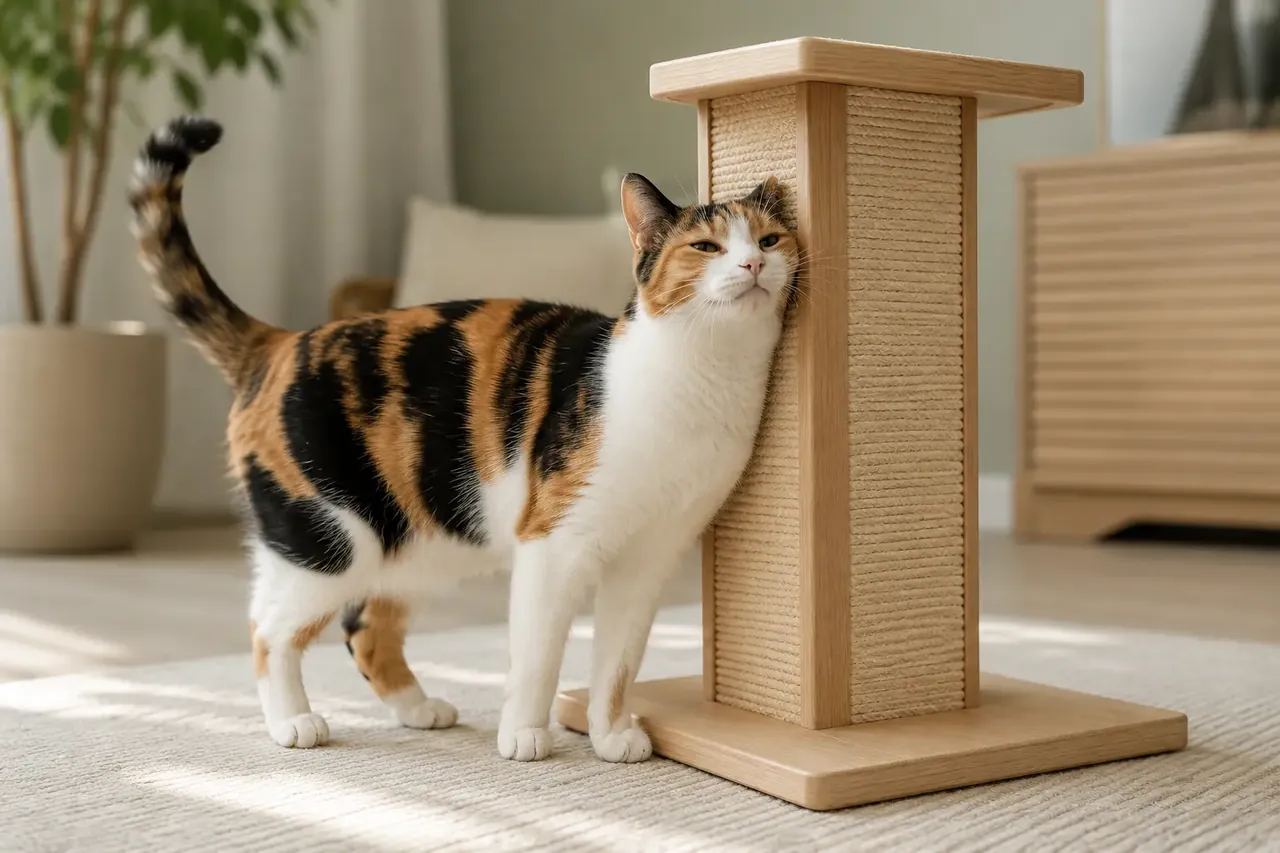 Topic illustration selected for this guide. Some learning images may be AI-assisted.
Why does my cat sniff where someone was sitting — the quick answer
✓ Warm fabric and fresh scent provide information about who was there and what they carried into the home.
✓ Observe: Compare brief relaxed sniffing with intense searching or urine marking.
✓ Try this: Let the cat investigate without pushing them toward an unfamiliar scent.
Warm fabric and fresh scent provide information about who was there and what they carried into the home. The useful question is not only what the moment resembles, but whether it fits this cat’s normal pattern. Context, frequency, recovery and accompanying changes make the interpretation safer and more accurate.
What the cat may be detecting
Fabric can retain scent from the person, their home, food, other animals, perfume and places visited. Cats gather chemical information at close range, but sniffing cannot tell you exactly which scent they noticed or whether they like or dislike the person.
Read the body around the sniff
A loose cat may investigate, rub, settle or walk away. Fixed searching, crouching, flattened ears, repeated flehmen, spraying or inability to settle suggests higher arousal. Check whether the visitor carried a strong product or scent from another animal without forcing the cat back to investigate.
Let investigation remain voluntary
Leave a safe seat available briefly and keep an open route away. Do not push the cat toward clothing or hold an item under its nose. If the cat appears uncertain, move the scented item away from food, water, litter and narrow routes and let the room air naturally.
Reduce marking pressure
For repeated urine marking, clean affected surfaces with a suitable enzyme product after the cat has left, distribute resources and check for outdoor-cat or visitor triggers. Never punish marking or use strong fragrance to cover scent. Confirm that the cat is passing urine normally.
When to seek help
Veterinary advice is important for new house soiling, frequent litter visits, pain, appetite change or major persistent distress. Straining with little or no urine is an emergency, especially in a male cat. Qualified behaviour support can help recurring visitor-related fear after health causes are addressed.
Your quick checklist
Loading saved progress…
Three simple things you can do
You do not have to change everything today. Pick one step that feels realistic, try it and see how your cat responds.
- 1Observe your cat’s individual baseline.
- 2Make one gentle change at a time.
- 3Ask a qualified professional when health or safety is involved.
Common mistakes
×Waiting for a dramatic symptom instead of noticing smaller changes from the cat’s normal routine.
×Changing several things at once, making it difficult to learn what actually helped.
×Treating general guidance as a substitute for advice from a veterinarian who knows the individual cat.
Questions cat people ask
Does every cat follow the same rule?+
No. Age, health, history, temperament and environment all change what works for an individual.
When should I seek professional help?+
Seek veterinary advice for sudden, persistent or concerning changes and urgent help for breathing difficulty, collapse, seizures, poisoning or urinary obstruction signs.
Still looking for the right answer?
Search the full EverYes Cats encyclopedia with your own words — a symptom, food, behaviour, breed or everyday question.
Checked, dated and transparent
- Prepared by
- EverYes Cats editorial team
- Last updated
- Source checked
- Primary reference
- FelineVMA: Feline Environmental Needs Guidelines ↗
We begin with the named reference, rewrite the information in plain language and add practical cat-parent steps. Urgent health statements are checked against veterinary sources. This guide has not been individually reviewed by a veterinarian unless explicitly stated. It provides education, not diagnosis or treatment.
How we choose and use sources →
Spotted something unclear or outdated? Tell us so we can review it.
Loading your saved choice…
A doorbell can trigger a brief orienting pause or a stronger fear response because it predicts voices, footsteps and entry. Give the cat a protected retreat and train only below the point where it freezes or flees.
 01
 02
 05