The slow blink: your cat’s quiet smile
A slow blink often appears in relaxed positive interaction, especially with soft eyes and a loose body. Return it gently without staring, then let the cat decide whether to approach.
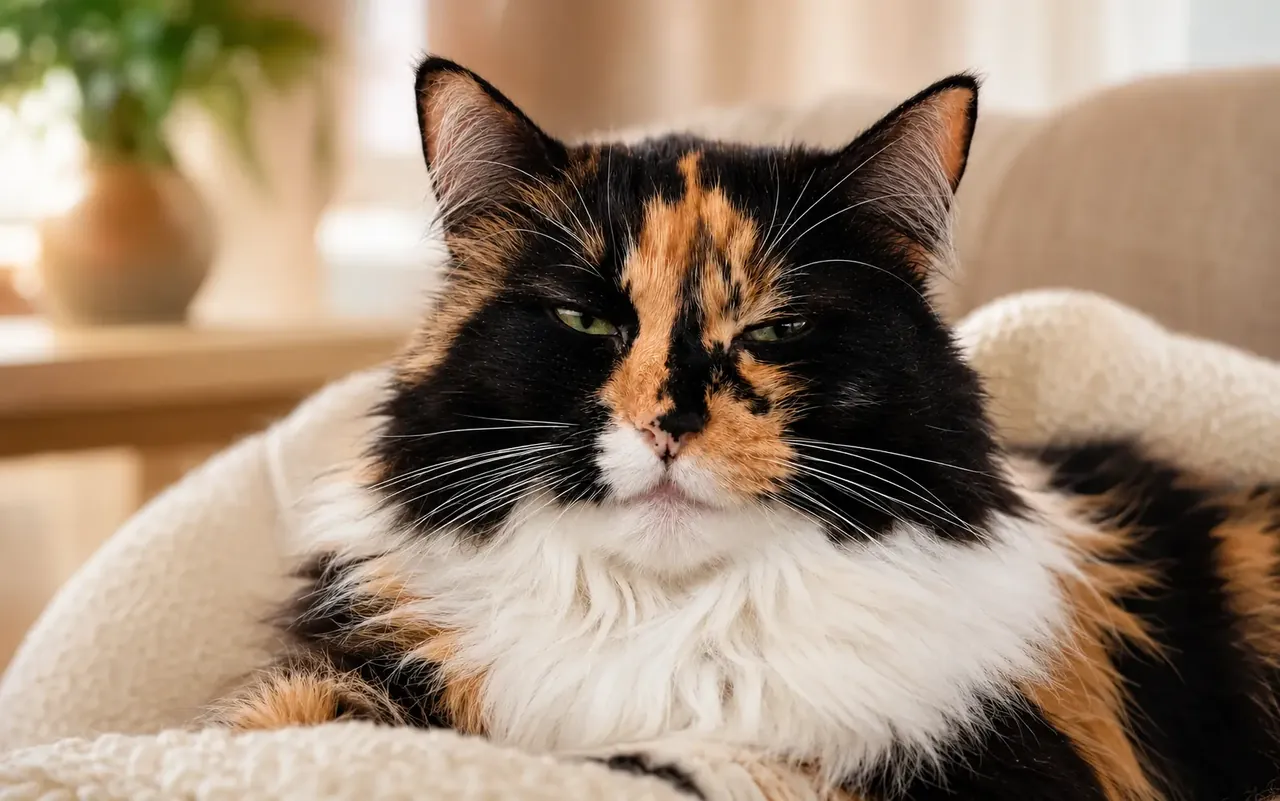 Topic illustration selected for this guide. Some learning images may be AI-assisted.
The slow blink: your cat’s quiet smile — the quick answer
✓ Soft eyes matter more than one isolated blink
✓ You can return the gesture without staring
✓ Always read the rest of the body language
When a cat looks at you with soft eyes, slowly closes them and opens them again, the moment can feel unusually gentle. Slow blinking is widely associated with relaxed, positive interaction.
What to look for
A friendly slow blink usually appears with a relaxed face, neutral ears and a body that is not tense. A hard stare with flattened ears means something very different.
Try it yourself
Sit at a comfortable distance, soften your gaze and close your eyes slowly for a moment. Look slightly away when you open them. Let your cat decide whether to respond or approach.
Respect the answer
Some cats blink back; others simply remain relaxed. The goal is not to force a response. Quiet, predictable interaction builds trust over time.
Look for the relaxed cluster
Soft eyelids, neutral ears, ordinary breathing and a body that can turn away support a friendly interpretation. Squinting in one eye, discharge, redness, unequal pupils or light sensitivity are health signs—not a social slow blink.
Offer, then release the pressure
Sit at a comfortable distance, soften your gaze, close both eyes slowly and look slightly aside when reopening them. Do not move closer to demand a response. Remaining relaxed, blinking back or approaching are all voluntary answers.
Your quick checklist
Your progress is saved on this device.
Three simple things you can do
You do not have to change everything today. Pick one step that feels realistic, try it and see how your cat responds.
- 1Sit sideways rather than facing your cat directly.
- 2Soften your gaze, blink slowly once and then look slightly away.
- 3Stop while the interaction is still calm instead of repeating it for a response.
Common mistakes
×Interpreting one movement without reading the ears, eyes, posture and situation together.
×Forcing interaction when the cat is asking for distance or time to observe.
×Using punishment, which can increase fear without teaching a safer alternative.
Questions cat people ask
What if my cat does not blink back?+
Nothing is wrong. Some cats remain relaxed without copying the gesture. Comfort is visible in the whole body, not in one required response.
Can I slow-blink at an unfamiliar cat?+
You can use a soft gaze from a respectful distance, but allow the cat to choose whether to stay, leave or approach.
Still looking for the right answer?
Search the full EverYes Cats encyclopedia with your own words — a symptom, food, behaviour, breed or everyday question.
Checked, dated and transparent
- Prepared by
- EverYes Cats editorial team
- Last updated
- 13 August 2026
- Source checked
- 13 August 2026
- Primary reference
- FelineVMA Healthy Feline Environment ↗
We begin with the named reference, rewrite the information in plain language and add practical cat-parent steps. Urgent health statements are checked against veterinary sources. This guide has not been individually reviewed by a veterinarian unless explicitly stated. It provides education, not diagnosis or treatment.
Spotted something unclear or outdated? Tell us so we can review it.
Your answer helps us improve the cat encyclopedia.
Cats often prefer the person who feels safest and most predictable—not simply the person who fills the bowl. Voice, scent, respectful handling and repeated positive routines all shape the bond.