Why does my cat hide toys?
Cats may carry and hide toys as part of prey handling, resource storage or a familiar play routine. The behaviour is usually harmless when toys are safe and daily function stays normal.
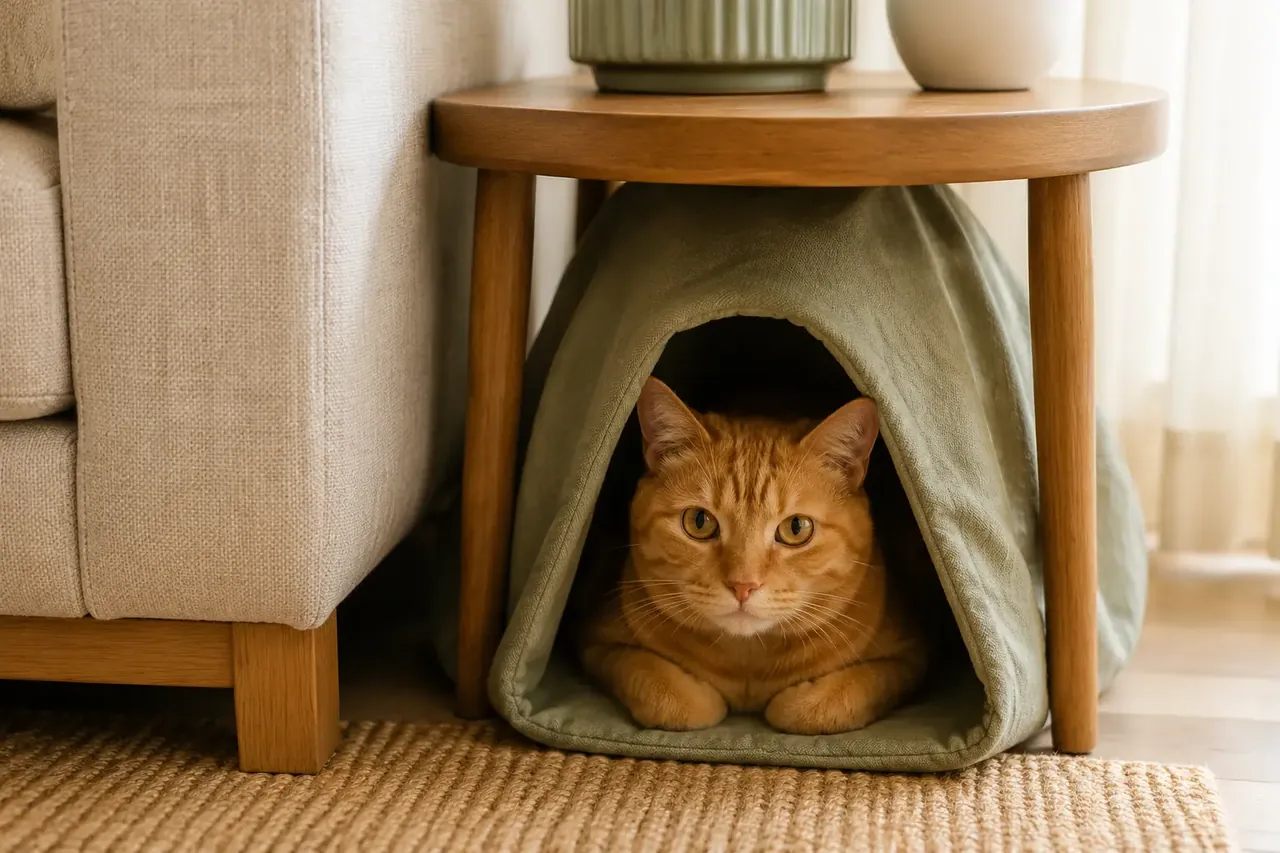
 Topic illustration selected for this guide. Some learning images may be AI-assisted.
Why does my cat hide toys — the quick answer
✓ Cats may carry valued toys to safe locations or leave them where a hunting sequence ended.
✓ Rotate toys, check hidden places safely and keep small swallowable objects unavailable.
✓ Swallowing toy parts, vomiting or reduced appetite is urgent.
Cats may carry valued toys to safe locations or leave them where a hunting sequence ended. There is no need to assume hoarding or a human-style plan. The useful answer comes from the whole situation—not one pose, sound or viral claim.
A portable prey substitute
Small toys can be carried from a busy area to a quiet one, placed near food or beds, or stored under furniture. The cat may be completing an individual hunting routine rather than protecting the toy from people.
Observe the pattern without stealing
Note which toys, locations and times are preferred and whether the cat later retrieves them. Allow ordinary hiding while checking locations safely. Do not chase the cat, repeatedly remove a favourite toy or create competition.
Remove swallowing and entanglement hazards
Store string, ribbon, hair ties, elastic bands and toys with loose feathers or detachable pieces after supervised use. Replace damaged items and choose solid toys too large to swallow for unsupervised play.
Manage multi-cat resources
Provide several toys, resting areas and play sessions so one cat cannot block all access. Separate high-value play when tension appears and avoid forcing cats to share or compete for one moving toy.
Escalate ingestion or compulsive change
Contact a veterinarian urgently after suspected swallowing of string or a toy part; do not pull visible string from the mouth or anus. Seek advice for sudden repetitive collecting with distress, appetite loss, vomiting or reduced normal activity.
Your quick checklist
Loading saved progress…
Three simple things you can do
You do not have to change everything today. Pick one step that feels realistic, try it and see how your cat responds.
- 1Observe your cat’s individual baseline.
- 2Make one gentle change at a time.
- 3Ask a qualified professional when health or safety is involved.
Common mistakes
×Waiting for a dramatic symptom instead of noticing smaller changes from the cat’s normal routine.
×Changing several things at once, making it difficult to learn what actually helped.
×Treating general guidance as a substitute for advice from a veterinarian who knows the individual cat.
Questions cat people ask
Does every cat follow the same rule?+
No. Age, health, history, temperament and environment all change what works for an individual.
When should I seek professional help?+
Seek veterinary advice for sudden, persistent or concerning changes and urgent help for breathing difficulty, collapse, seizures, poisoning or urinary obstruction signs.
Still looking for the right answer?
Search the full EverYes Cats encyclopedia with your own words — a symptom, food, behaviour, breed or everyday question.
Checked, dated and transparent
- Prepared by
- EverYes Cats editorial team
- Last updated
- Source checked
- Primary reference
- International Cat Care ↗
We begin with the named reference, rewrite the information in plain language and add practical cat-parent steps. Urgent health statements are checked against veterinary sources. This guide has not been individually reviewed by a veterinarian unless explicitly stated. It provides education, not diagnosis or treatment.
How we choose and use sources →
Spotted something unclear or outdated? Tell us so we can review it.
Loading your saved choice…
Blankets provide warmth, darkness and a sheltered den-like space.
 01
 02
 03
 04