Why cats groom each other
Mutual grooming can support familiarity and reach difficult areas, but it does not prove that two cats share every resource comfortably. Read consent, reciprocity and what happens before and after the grooming.
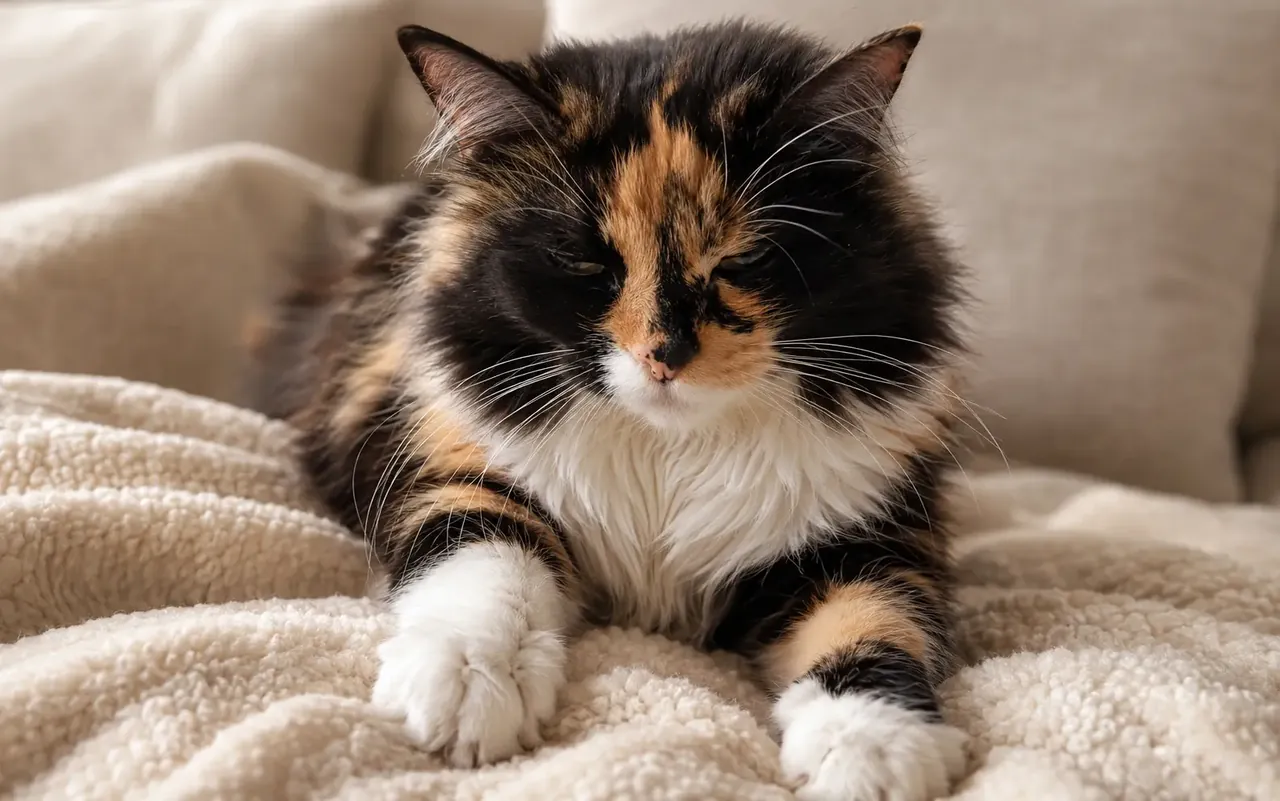 Topic illustration selected for this guide. Some learning images may be AI-assisted.
Why cats groom each other — the quick answer
✓ Social grooming occurs between familiar cats, but one friendly behavior does not define the entire relationship.
✓ Let calm grooming continue and provide separate beds so closeness remains voluntary.
✓ Read the complete body and setting
✓ Bald patches, skin lesions, ear irritation or sudden grooming change needs veterinary care.
One cat licks another’s head and neck until the recipient relaxes, leaves or swats. Social grooming occurs between familiar cats, but one friendly behavior does not define the entire relationship. This guide helps you read the moment, protect the relationship and choose a response that works for the cat as well as the household.
What social grooming looks like
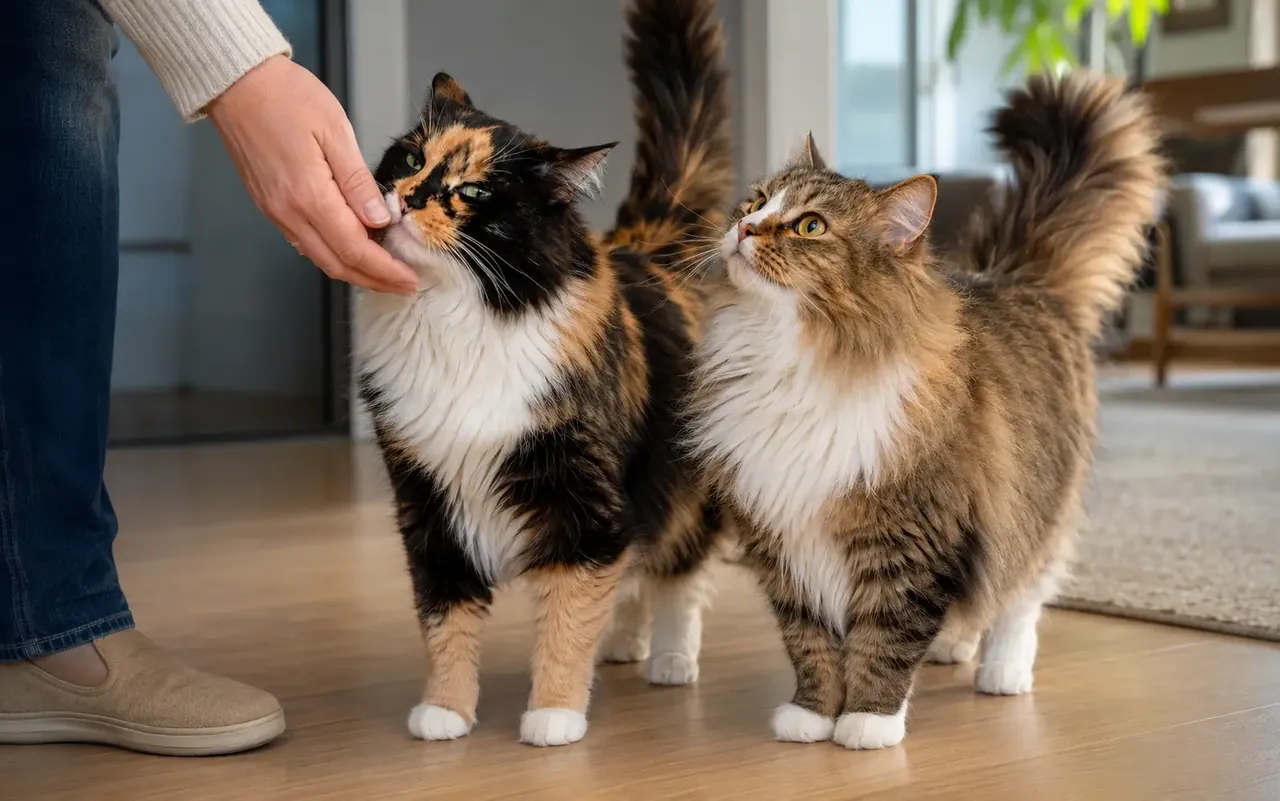
Familiar cats may lick the head, ears and neck where self-grooming is harder. A relaxed recipient may lean in, reposition or leave freely. Allogrooming can be one part of a positive relationship without defining the entire relationship.
Notice consent and balance
Watch whether both cats initiate at different times and whether either becomes stiff, pins the other, lashes the tail or repeatedly ends with a swat. A brief disagreement can occur, but one cat should not be trapped or forced to tolerate prolonged licking.
Friendly moments do not erase competition
Cats that sleep or groom together may still compete at food, litter, doorways or people. Continue providing separate resources and choices. Do not reduce litter boxes or feeding stations because the cats sometimes appear affectionate.
Check repeated focus on one area
Persistent licking of one ear, patch or wound can indicate odour, discharge, parasites, skin disease or pain. Separate calmly if skin is becoming wet or damaged and prevent licking of topical medication unless a veterinarian says it is safe.
When grooming needs assessment
Veterinary advice is appropriate for bald patches, sores, ear discharge, head shaking, pain or a sudden change in social grooming. Escalating restraint, fighting or avoidance may also need behaviour support after health checks.
Your quick checklist
Loading saved progress…
Three simple things you can do
You do not have to change everything today. Pick one step that feels realistic, try it and see how your cat responds.
- 1Observe your cat’s individual baseline.
- 2Make one gentle change at a time.
- 3Ask a qualified professional when health or safety is involved.
Common mistakes
×Waiting for a dramatic symptom instead of noticing smaller changes from the cat’s normal routine.
×Changing several things at once, making it difficult to learn what actually helped.
×Treating general guidance as a substitute for advice from a veterinarian who knows the individual cat.
Questions cat people ask
Does every cat follow the same rule?+
No. Age, health, history, temperament and environment all change what works for an individual.
When should I seek professional help?+
Seek veterinary advice for sudden, persistent or concerning changes and urgent help for breathing difficulty, collapse, seizures, poisoning or urinary obstruction signs.
Still looking for the right answer?
Search the full EverYes Cats encyclopedia with your own words — a symptom, food, behaviour, breed or everyday question.
Checked, dated and transparent
- Prepared by
- EverYes Cats editorial team
- Last updated
- Source checked
- Primary reference
- FelineVMA: Healthy feline environment ↗
We begin with the named reference, rewrite the information in plain language and add practical cat-parent steps. Urgent health statements are checked against veterinary sources. This guide has not been individually reviewed by a veterinarian unless explicitly stated. It provides education, not diagnosis or treatment.
How we choose and use sources →
Spotted something unclear or outdated? Tell us so we can review it.
Loading your saved choice…
Cats that previously coexisted may fight after pain, fear, unfamiliar scent, redirected arousal or a resource conflict. Separate safely, arrange health checks and rebuild familiarity gradually rather than forcing a reunion.
 01
 02
 04
 05
 06