Why your cat puts their rear end in your face
A cat that turns its rear toward you is usually choosing a comfortable position or continuing a relaxed social greeting—not trying to insult you. Reposition calmly, and distinguish the harmless pose from scooting, pain or skin irritation.
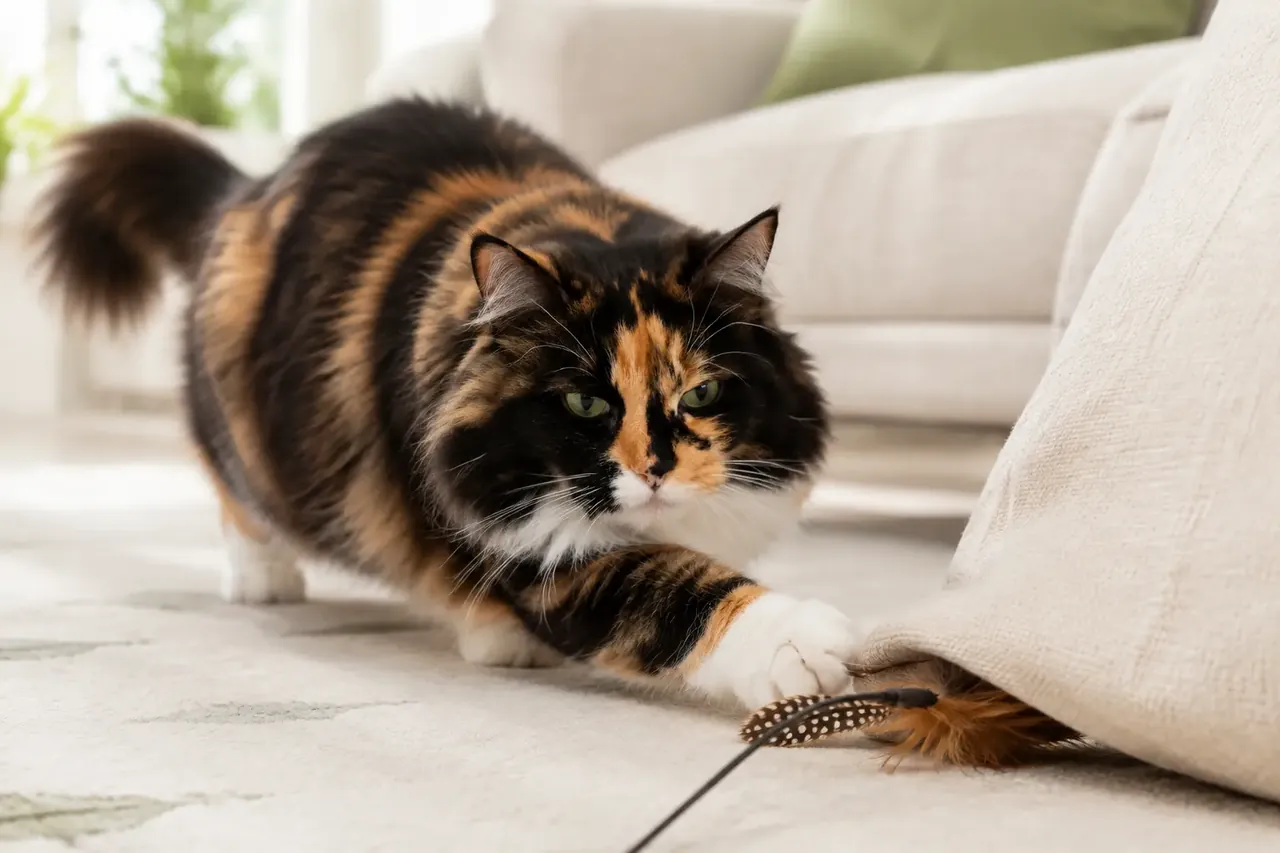 Topic illustration selected for this guide. Some learning images may be AI-assisted.
Why your cat puts their rear end in your face — the quick answer
✓ Cats do not share human etiquette. Turning may position the head toward the room, create comfort or continue a scent-rich greeting.
✓ Reposition calmly or reward a nearby blanket. Do not shove or turn a harmless social moment into conflict.
✓ Read the complete body and setting
✓ Scooting, swelling, blood, odor, pain or obsessive grooming deserves a veterinary examination.
Your cat climbs up, turns around and settles with the least photogenic end facing you. Cats do not share human etiquette. Turning may position the head toward the room, create comfort or continue a scent-rich greeting. This guide helps you read the moment, protect the relationship and choose a response that works for the cat as well as the household.
Cats do not share human etiquette
People attach embarrassment and rudeness to body orientation; cats do not use those rules. Turning around may position the face toward the room, place the body against warmth or simply be the easiest way to settle after approaching.
Greeting can continue after the turn
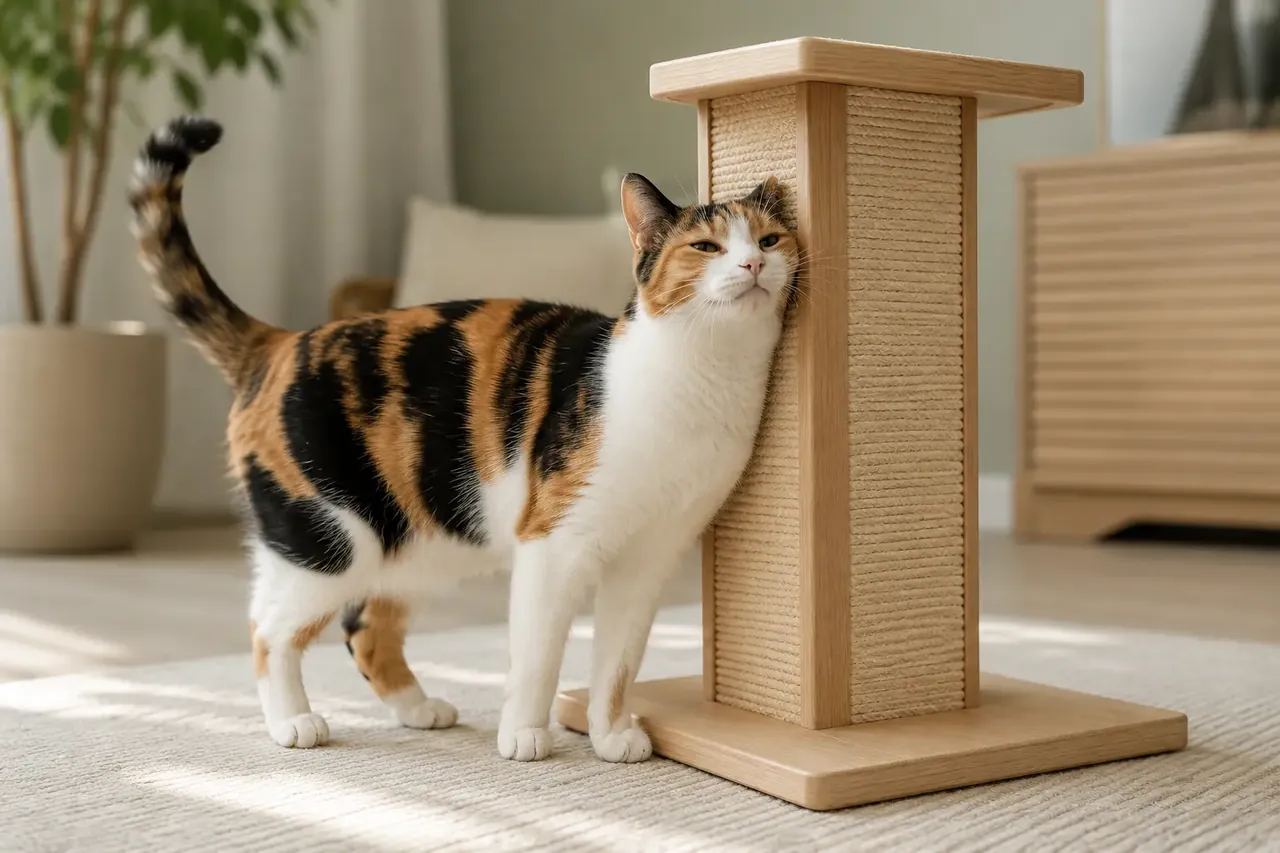
Cats gather rich scent information during social contact, and a relaxed cat may rub, pass, turn and pause. Loose muscles, an upright or resting tail and freedom to leave support an ordinary friendly interaction. The pose alone does not prove dominance or ownership.
Set a boundary without conflict
Shift your body slowly, place a blanket beside you or reward the cat for settling in another orientation. Avoid shoving, startling or touching the rear to provoke a reaction. A harmless social moment does not need punishment.
Check hygiene and comfort
Look for faecal material, matted fur, redness, swelling, discharge, a strong new odour or repeated licking. Long-haired, overweight, arthritic or unwell cats may struggle to groom the area and can need practical or veterinary help.
When the rear-end behaviour is medical
Scooting, biting at the area, pain, blood, worms, diarrhoea, constipation or difficulty passing stool deserves veterinary advice. Sudden weakness of the hind limbs, inability to urinate, collapse or severe pain requires urgent care.
Your quick checklist
Loading saved progress…
Three simple things you can do
You do not have to change everything today. Pick one step that feels realistic, try it and see how your cat responds.
- 1Observe your cat’s individual baseline.
- 2Make one gentle change at a time.
- 3Ask a qualified professional when health or safety is involved.
Common mistakes
×Waiting for a dramatic symptom instead of noticing smaller changes from the cat’s normal routine.
×Changing several things at once, making it difficult to learn what actually helped.
×Treating general guidance as a substitute for advice from a veterinarian who knows the individual cat.
Questions cat people ask
Does every cat follow the same rule?+
No. Age, health, history, temperament and environment all change what works for an individual.
When should I seek professional help?+
Seek veterinary advice for sudden, persistent or concerning changes and urgent help for breathing difficulty, collapse, seizures, poisoning or urinary obstruction signs.
Still looking for the right answer?
Search the full EverYes Cats encyclopedia with your own words — a symptom, food, behaviour, breed or everyday question.
Checked, dated and transparent
- Prepared by
- EverYes Cats editorial team
- Last updated
- Source checked
- Primary reference
- FelineVMA: Healthy feline environment ↗
We begin with the named reference, rewrite the information in plain language and add practical cat-parent steps. Urgent health statements are checked against veterinary sources. This guide has not been individually reviewed by a veterinarian unless explicitly stated. It provides education, not diagnosis or treatment.
How we choose and use sources →
Spotted something unclear or outdated? Tell us so we can review it.
Loading your saved choice…
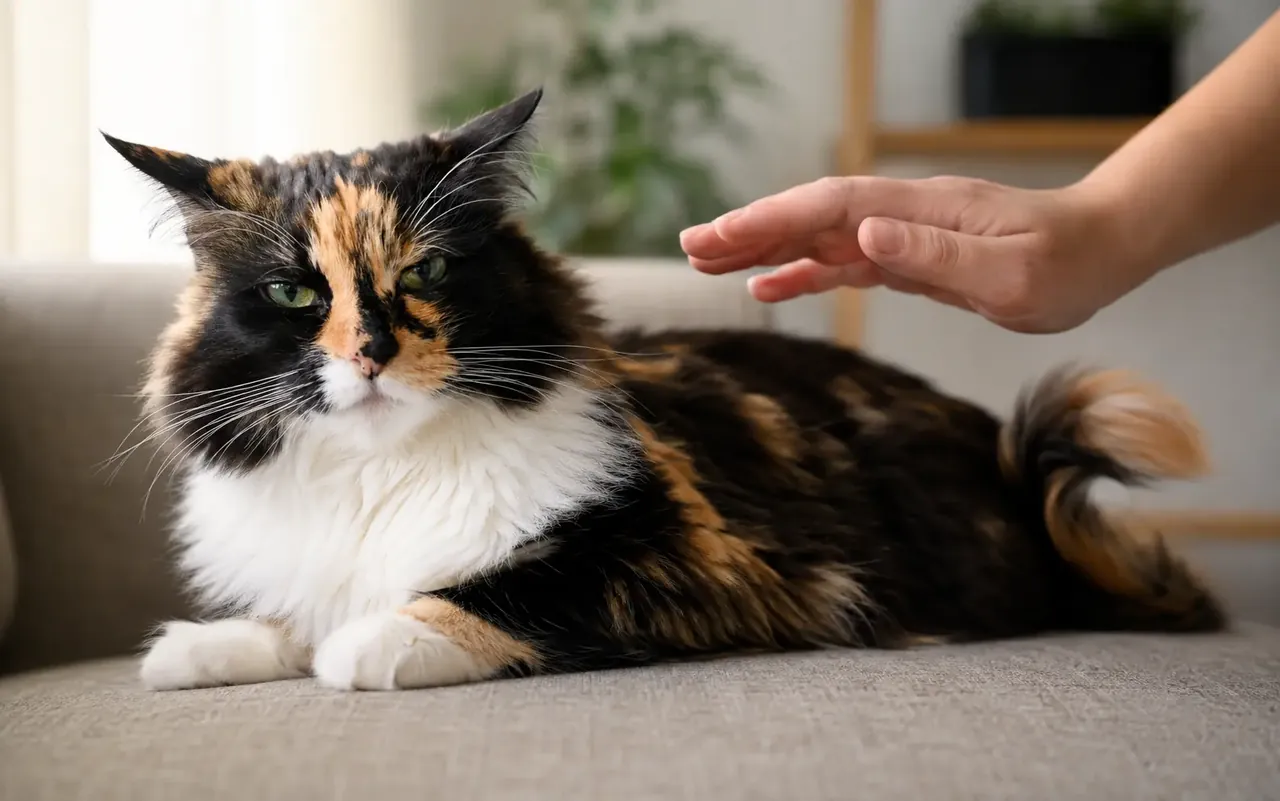
Grooming after petting can reset the coat, mix scent or help a cat settle after stimulation. It does not automatically mean rejection, while frantic or damaging grooming is different.
 02
 03
 06