Why cats hide after a veterinary visit
Hiding after a veterinary visit may reflect stress, fatigue, pain, medication or unfamiliar clinic scent. Provide quiet recovery and follow the clinic's instructions while monitoring appetite, breathing, movement and alertness.
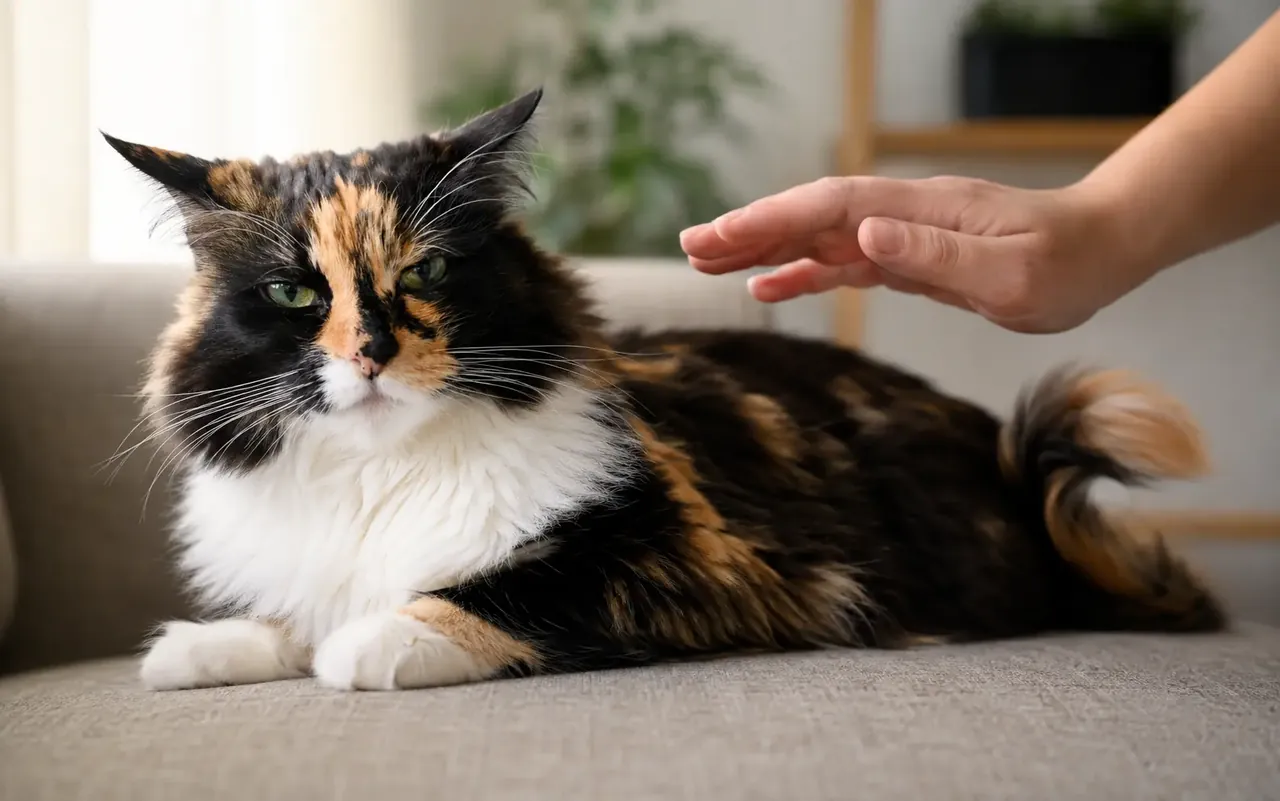 Topic illustration selected for this guide. Some learning images may be AI-assisted.
Why cats hide after a veterinary visit — the quick answer
✓ Travel, handling and clinic odors create a heavy sensory event; sedation or pain can also alter behavior.
✓ Offer a quiet recovery room with familiar resources and let the cat emerge voluntarily.
✓ Read the complete body and setting
✓ Breathing difficulty, collapse, repeated vomiting, severe pain or prolonged sedation requires a call to the clinic.
The carrier opens and the cat runs under the bed while a housemate may hiss. Travel, handling and clinic odors create a heavy sensory event; sedation or pain can also alter behavior. This guide helps you read the moment, protect the relationship and choose a response that works for the cat as well as the household.
Why the return home feels different
Travel, handling, other animals and clinic odours create an intense sensory event. Sedation, procedures, pain or nausea can also alter movement and social behaviour. A housemate may hiss because the returning cat smells unfamiliar.
Set up a complete recovery space
Use a quiet warm room with water, familiar food when allowed, litter, hiding and a floor-level bed. Keep children and other animals out initially. Open the carrier and let the cat emerge without being pulled or tipped out.
Follow discharge instructions first
Medication, feeding, wound, activity and monitoring advice from the clinic overrides general guidance. Confirm the expected recovery window and whom to call after hours. Do not give human painkillers or change prescribed doses.
Handle housemate tension carefully
If another cat hisses or stalks, separate them with full resources and allow scent and arousal to settle. Exchange bedding and reintroduce gradually only while both are calm. Do not force them together to restore the shared smell.
When post-visit hiding is concerning
Call the clinic for worsening or prolonged sedation, uncontrolled pain, failure to eat as instructed, repeated vomiting, wound problems or inability to urinate. Breathing difficulty, collapse, pale or blue gums, severe weakness or unresponsiveness is urgent.
Your quick checklist
Loading saved progress…
Three simple things you can do
You do not have to change everything today. Pick one step that feels realistic, try it and see how your cat responds.
- 1Observe your cat’s individual baseline.
- 2Make one gentle change at a time.
- 3Ask a qualified professional when health or safety is involved.
Common mistakes
×Waiting for a dramatic symptom instead of noticing smaller changes from the cat’s normal routine.
×Changing several things at once, making it difficult to learn what actually helped.
×Treating general guidance as a substitute for advice from a veterinarian who knows the individual cat.
Questions cat people ask
Does every cat follow the same rule?+
No. Age, health, history, temperament and environment all change what works for an individual.
When should I seek professional help?+
Seek veterinary advice for sudden, persistent or concerning changes and urgent help for breathing difficulty, collapse, seizures, poisoning or urinary obstruction signs.
Still looking for the right answer?
Search the full EverYes Cats encyclopedia with your own words — a symptom, food, behaviour, breed or everyday question.
Checked, dated and transparent
- Prepared by
- EverYes Cats editorial team
- Last updated
- Source checked
- Primary reference
- FelineVMA: Healthy feline environment ↗
We begin with the named reference, rewrite the information in plain language and add practical cat-parent steps. Urgent health statements are checked against veterinary sources. This guide has not been individually reviewed by a veterinarian unless explicitly stated. It provides education, not diagnosis or treatment.
How we choose and use sources →
Spotted something unclear or outdated? Tell us so we can review it.
Loading your saved choice…
Noise fear improves through immediate refuge and carefully controlled learning—not forced exposure. Reduce intensity, preserve escape and seek medical advice when sound sensitivity appears suddenly.
 01
 02
 03
 05