What if a cat is frightened by a training clicker?
A clicker is not required for training. If the sound causes a startle, replace it with a soft consistent word or gentler marker and build a positive association below the cat's fear threshold.
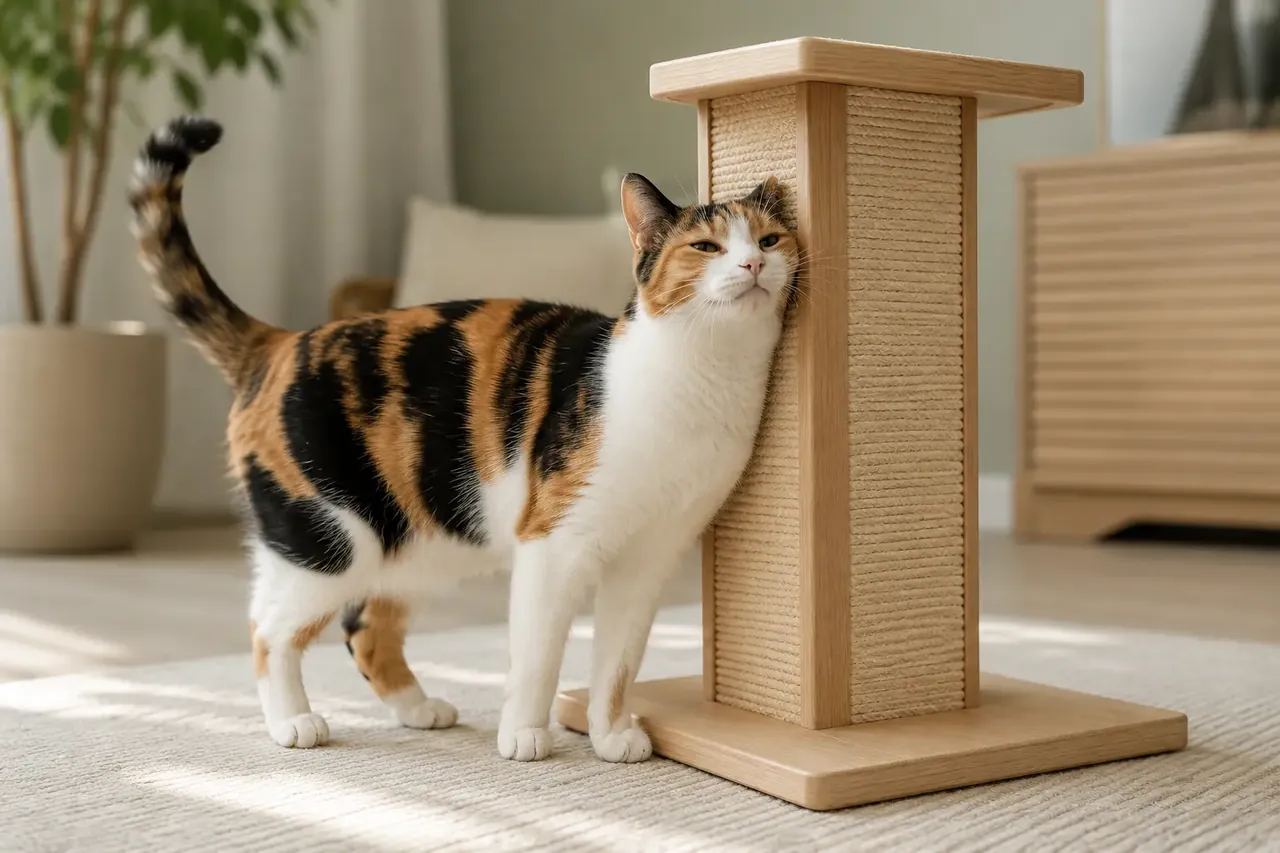 Topic illustration selected for this guide. Some learning images may be AI-assisted.
What if a cat is frightened by a training clicker — the quick answer
✓ A sharp click is not necessary for training; a soft word or quieter marker can communicate the same moment.
✓ Observe: Find the lowest sound that causes no startle or withdrawal.
✓ Try this: Use a gentle verbal marker and pair it with food before teaching any task.
A sharp click is not necessary for training; a soft word or quieter marker can communicate the same moment. The useful question is not only what the moment resembles, but whether it fits this cat’s normal pattern. Context, frequency, recovery and accompanying changes make the interpretation safer and more accurate.
Stop using the startling sound
Freezing, crouching, fleeing, flattened ears or refusal of food means the click is too intense. Do not click repeatedly to create habituation and never hold the device near the ears. Give the cat time and distance to recover.
Choose a quieter marker
Use a short soft word, tongue sound or muted click from farther away. The marker only needs to be brief, consistent and followed by a reward. Test it during a calm moment and lower intensity immediately if the cat startles.
Build meaning before teaching tasks
Say the marker once, then deliver a tiny valued reward. Repeat only a few times in a short session. When the cat comfortably anticipates the reward, mark a simple voluntary behaviour such as looking toward you or approaching a target.
Protect choice and hearing
Train in a quiet room with an open escape route and avoid loud apps or improvised metal sounds. Do not withhold meals to increase motivation. Sound-sensitive cats may work better for play, brushing or access rewards when those are genuinely valued.
When sound sensitivity needs help
A sudden reaction to ordinary sounds, ear pain, scratching, head tilt, balance change or apparent hearing change deserves veterinary assessment. Persistent panic can benefit from qualified behaviour support after medical causes are considered.
Your quick checklist
Loading saved progress…
Three simple things you can do
You do not have to change everything today. Pick one step that feels realistic, try it and see how your cat responds.
- 1Observe your cat’s individual baseline.
- 2Make one gentle change at a time.
- 3Ask a qualified professional when health or safety is involved.
Common mistakes
×Waiting for a dramatic symptom instead of noticing smaller changes from the cat’s normal routine.
×Changing several things at once, making it difficult to learn what actually helped.
×Treating general guidance as a substitute for advice from a veterinarian who knows the individual cat.
Questions cat people ask
Does every cat follow the same rule?+
No. Age, health, history, temperament and environment all change what works for an individual.
When should I seek professional help?+
Seek veterinary advice for sudden, persistent or concerning changes and urgent help for breathing difficulty, collapse, seizures, poisoning or urinary obstruction signs.
Still looking for the right answer?
Search the full EverYes Cats encyclopedia with your own words — a symptom, food, behaviour, breed or everyday question.
Checked, dated and transparent
- Prepared by
- EverYes Cats editorial team
- Last updated
- Source checked
- Primary reference
- FelineVMA: Positive Reinforcement Training Toolkit ↗
We begin with the named reference, rewrite the information in plain language and add practical cat-parent steps. Urgent health statements are checked against veterinary sources. This guide has not been individually reviewed by a veterinarian unless explicitly stated. It provides education, not diagnosis or treatment.
How we choose and use sources →
Spotted something unclear or outdated? Tell us so we can review it.
Loading your saved choice…
Slow weaving between your legs often combines greeting, scent rubbing and anticipation of a routine. Pause to prevent falls, then reward a safer greeting place; new unsteady walking or weakness needs veterinary attention.
 01
 02
 04
 06