Why does my cat freeze when the doorbell rings?
A doorbell can trigger a brief orienting pause or a stronger fear response because it predicts voices, footsteps and entry. Give the cat a protected retreat and train only below the point where it freezes or flees.
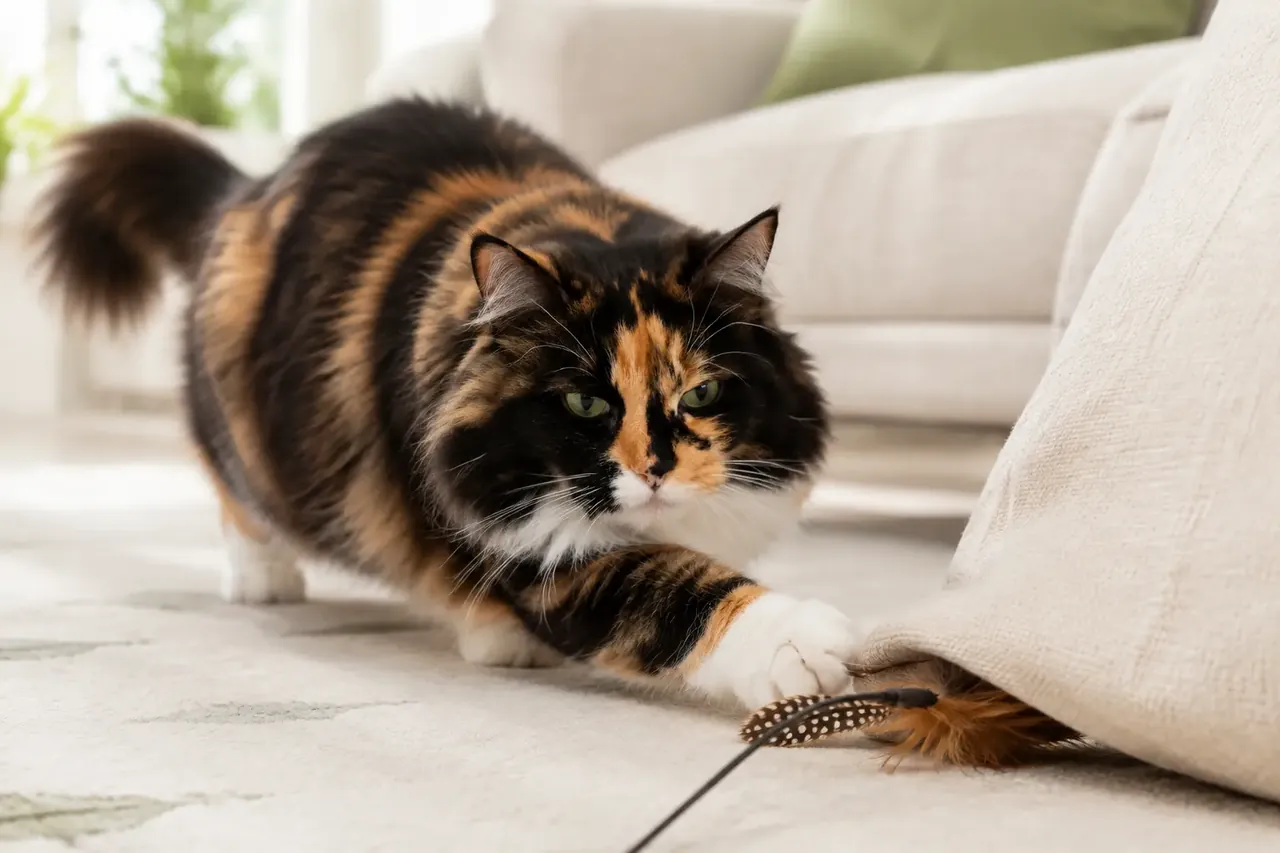 Topic illustration selected for this guide. Some learning images may be AI-assisted.
Why does my cat freeze when the doorbell rings — the quick answer
✓ A sudden predictive sound can trigger an orienting or fear response before the cat chooses where to go.
✓ Observe: Observe recovery time, hiding, appetite and reactions to footsteps or voices.
✓ Try this: Create a quiet retreat and pair low-volume practice sounds with rewards when the cat is relaxed.
A sudden predictive sound can trigger an orienting or fear response before the cat chooses where to go. The useful question is not only what the moment resembles, but whether it fits this cat’s normal pattern. Context, frequency, recovery and accompanying changes make the interpretation safer and more accurate.
Measure the full response
Notice posture at the sound, where the cat goes and how long recovery takes. A short pause followed by normal activity differs from crouching, flattened ears, prolonged hiding, food refusal or frantic escape. Also check reactions to knocking, footsteps and unfamiliar voices.
Create a visitor-safe retreat
Provide a quiet room or covered resting place with water, litter and a familiar bed before visitors arrive. Keep doors and windows secure during entry. Tell visitors not to reach into hiding places or follow the cat, and never carry the cat out for a greeting.
Practise below the fear threshold
At a calm time, play a very low-volume recording or make a softer related sound, then offer a valued reward while the cat remains relaxed. Stop before freezing. Increase only one part—volume, distance or visitor cue—over many short sessions. Real arrivals should remain managed separately.
Change the prediction
A visual door alert, lower chime volume or message asking visitors not to ring may reduce unavoidable exposure. Pair everyday hallway sounds with calm activities away from the door. Do not punish hiding, spray water or ring repeatedly to make the cat get used to it.
When to seek help
Veterinary advice is appropriate when sound sensitivity appears suddenly, spreads to ordinary noises or comes with ear pain, balance change, confusion, injury or appetite loss. Persistent panic can benefit from a qualified cat behaviour professional after medical causes are considered.
Your quick checklist
Loading saved progress…
Three simple things you can do
You do not have to change everything today. Pick one step that feels realistic, try it and see how your cat responds.
- 1Observe your cat’s individual baseline.
- 2Make one gentle change at a time.
- 3Ask a qualified professional when health or safety is involved.
Common mistakes
×Waiting for a dramatic symptom instead of noticing smaller changes from the cat’s normal routine.
×Changing several things at once, making it difficult to learn what actually helped.
×Treating general guidance as a substitute for advice from a veterinarian who knows the individual cat.
Questions cat people ask
Does every cat follow the same rule?+
No. Age, health, history, temperament and environment all change what works for an individual.
When should I seek professional help?+
Seek veterinary advice for sudden, persistent or concerning changes and urgent help for breathing difficulty, collapse, seizures, poisoning or urinary obstruction signs.
Still looking for the right answer?
Search the full EverYes Cats encyclopedia with your own words — a symptom, food, behaviour, breed or everyday question.
Checked, dated and transparent
- Prepared by
- EverYes Cats editorial team
- Last updated
- Source checked
- Primary reference
- FelineVMA: Feline Environmental Needs Guidelines ↗
We begin with the named reference, rewrite the information in plain language and add practical cat-parent steps. Urgent health statements are checked against veterinary sources. This guide has not been individually reviewed by a veterinarian unless explicitly stated. It provides education, not diagnosis or treatment.
How we choose and use sources →
Spotted something unclear or outdated? Tell us so we can review it.
Loading your saved choice…
A cat may drop toys in water through carrying, play or an individual storage routine. The important questions are whether the toy stays intact and whether dye, filler or debris contaminates the drinking water.
 02
 03
 04
 06