Do cats have a sense of time?
Cats learn daily sequences and can anticipate events linked with light, hunger and household routines.
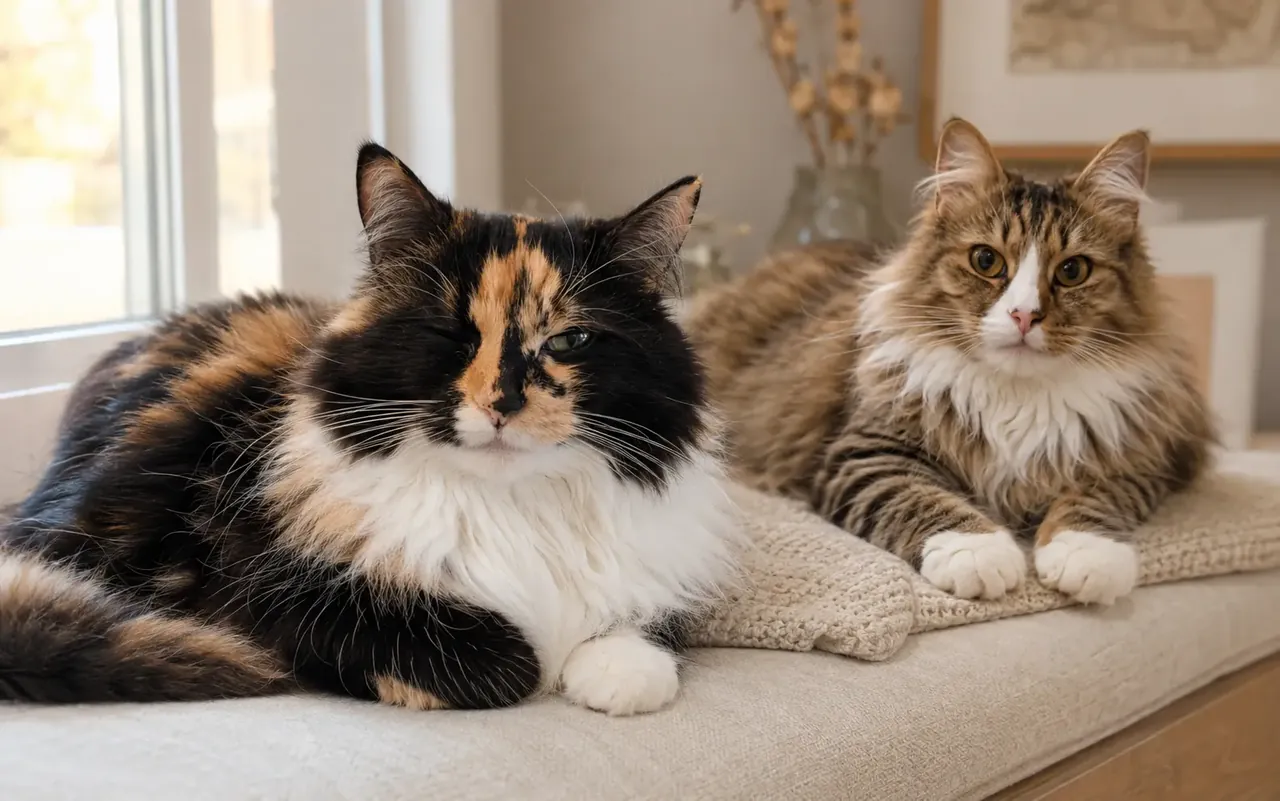 Topic illustration selected for this guide. Some learning images may be AI-assisted.
Do cats have a sense of time — the quick answer
✓ Cats learn daily sequences and can anticipate events linked with light, hunger and household routines.
✓ Use predictable anchors while keeping some flexibility so small delays are tolerable.
✓ New night waking, confusion or lost routines in a senior cat can have medical causes.
Cats learn daily sequences and can anticipate events linked with light, hunger and household routines. They do not need a clock-face concept to notice that breakfast or a person is late. Here is the useful version of the answer: what the behaviour may mean, what it does not prove and when it stops being just a fun cat fact.
The short answer
Cats learn daily sequences and can anticipate events linked with light, hunger and household routines. A single moment never tells the whole story, so compare the setting, the cat's posture and what happens next.
Why cats do this
They do not need a clock-face concept to notice that breakfast or a person is late. Cats combine scent, sound, sight, touch, memory and learning. That is why the same visible action can have more than one reasonable explanation.
Read the whole cat
Look at ear direction, pupils in the current light, tail movement, muscle tension, distance and freedom to leave. Relaxed behaviour is loose and changeable; concern is more likely when the body stays tense, the cat cannot disengage or normal routines change.
What to do at home
Use predictable anchors while keeping some flexibility so small delays are tolerable. Avoid forcing a repeat for a photo or testing a viral claim. The most cat-friendly response gives choice, protects safety and rewards calm alternatives.
What this does not prove
This behaviour does not prove that every cat feels the same emotion or shares a human intention. Personality labels can be fun, but age, health, experience, environment and reinforcement explain much more than coat colour, sex or a single gesture.
When to contact a veterinarian
New night waking, confusion or lost routines in a senior cat can have medical causes. Seek faster help for breathing difficulty, collapse, seizures, major trauma, suspected poisoning, severe pain or repeated unsuccessful attempts to urinate.
Your quick checklist
Your progress is saved on this device.
Three simple things you can do
You do not have to change everything today. Pick one step that feels realistic, try it and see how your cat responds.
- 1Keep dependable anchors such as morning food, evening play and quiet rest while allowing small timing variation.
- 2Use an automatic feeder when an early meal cue repeatedly wakes the household.
- 3Track new night waking, confusion or missed routines in senior cats alongside health changes.
Common mistakes
×Assuming anticipation means a cat reads clock time like a person.
×Feeding immediately after increasingly disruptive behaviour every day.
×Dismissing a senior cat's changed daily rhythm as normal ageing.
Questions cat people ask
How does my cat know when it is dinner time?+
Light, household activity, hunger and a learned sequence of events can all predict a meal. A clock-face concept is not required for accurate anticipation.
Do cats know how long I have been away?+
Cats can notice changes in routine and duration-related cues, but we cannot translate their experience into human hours. Reliable care matters more than assuming a precise internal clock.
Still looking for the right answer?
Search the full EverYes Cats encyclopedia with your own words — a symptom, food, behaviour, breed or everyday question.
Checked, dated and transparent
- Prepared by
- EverYes Cats editorial team
- Last updated
- 8 August 2026
- Source checked
- 8 August 2026
- Primary reference
- International Cat Care ↗
We begin with the named reference, rewrite the information in plain language and add practical cat-parent steps. Urgent health statements are checked against veterinary sources. This guide has not been individually reviewed by a veterinarian unless explicitly stated. It provides education, not diagnosis or treatment.
Spotted something unclear or outdated? Tell us so we can review it.
Your answer helps us improve the cat encyclopedia.
Your head is warm, relatively still and carries a strongly familiar scent.