Why does my cat meow without making a sound?
A silent meow can be a normal soft communication style when the cat otherwise breathes, eats and behaves normally. A new weak or absent voice with illness signs needs attention.
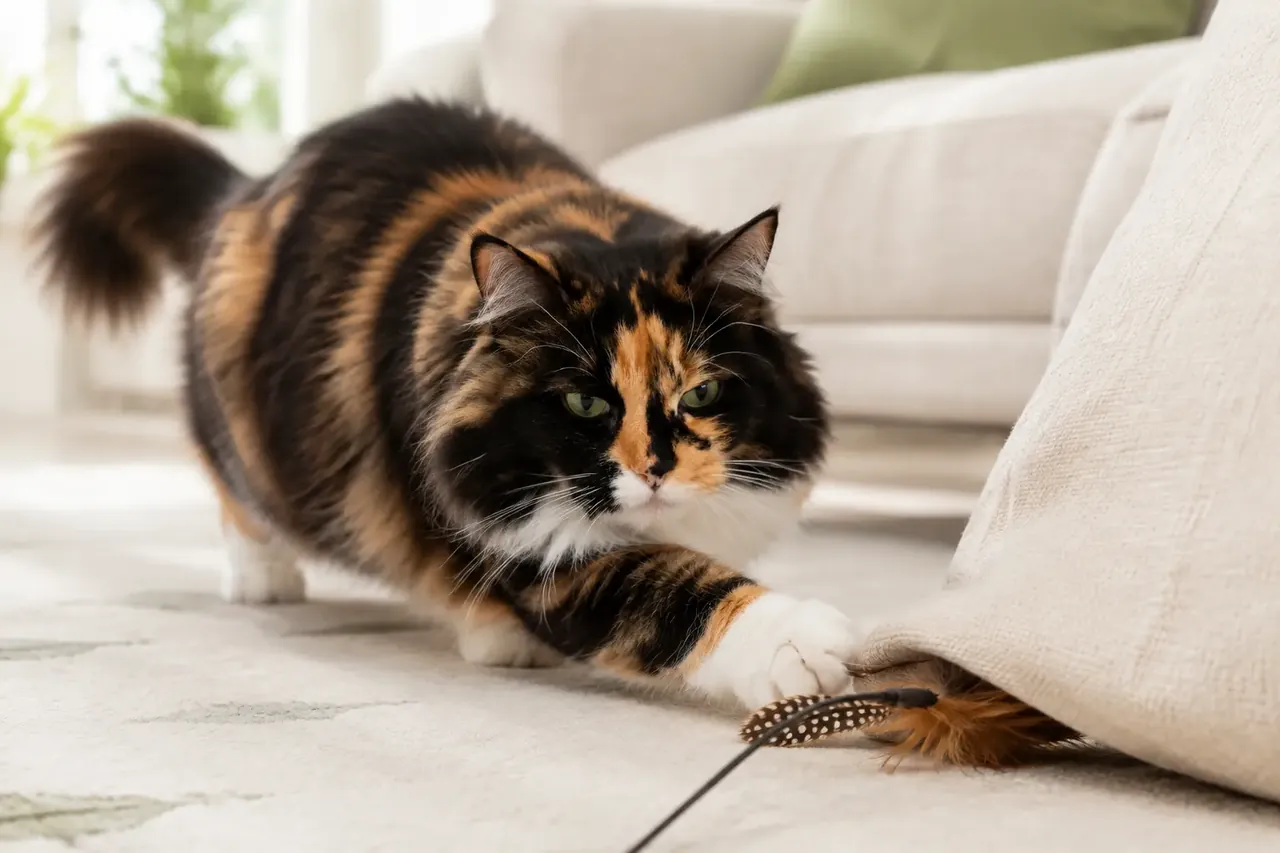 Topic illustration selected for this guide. Some learning images may be AI-assisted.
Why does my cat meow without making a sound — the quick answer
✓ Some cats open their mouth for a very quiet meow during social interaction.
✓ Watch for context and respond calmly rather than encouraging repeated performance.
✓ A hoarse, lost or changed voice with coughing, swallowing trouble or breathing change needs care.
Some cats open their mouth for a very quiet meow during social interaction. It may be an individual communication style when the voice is otherwise normal. The useful answer comes from the whole situation—not one pose, sound or viral claim.
What a silent meow may be
Some cats open the mouth in a familiar meow movement but produce a sound too soft or high for a person to notice. In a relaxed cat with a normal voice at other times, it may simply be an individual greeting or request.
Compare with the usual voice
Record whether the pattern is lifelong or new, occasional or constant, and whether other sounds such as purring, chirping or a normal meow are unchanged. A natural audio or video can help without repeatedly prompting the cat.
Check throat and breathing clues
Note coughing, gagging, swallowing, drooling, nasal discharge, noisy breathing, open-mouth breathing, appetite and energy. Do not force the mouth open or offer human throat remedies.
Reduce irritation
Keep the cat away from smoke, aerosols, fragrance and dusty litter while maintaining good ventilation. Provide fresh water and ordinary food access, but do not steam, medicate or place liquids in the mouth without veterinary advice.
Know when to call
Arrange veterinary advice for a sudden voice loss, persistent hoarseness or silent meow with coughing, swallowing difficulty, pain, poor appetite or lethargy. Open-mouth breathing, marked effort, blue or pale gums or collapse is an emergency.
Your quick checklist
Loading saved progress…
Three simple things you can do
You do not have to change everything today. Pick one step that feels realistic, try it and see how your cat responds.
- 1Observe your cat’s individual baseline.
- 2Make one gentle change at a time.
- 3Ask a qualified professional when health or safety is involved.
Common mistakes
×Waiting for a dramatic symptom instead of noticing smaller changes from the cat’s normal routine.
×Changing several things at once, making it difficult to learn what actually helped.
×Treating general guidance as a substitute for advice from a veterinarian who knows the individual cat.
Questions cat people ask
Does every cat follow the same rule?+
No. Age, health, history, temperament and environment all change what works for an individual.
When should I seek professional help?+
Seek veterinary advice for sudden, persistent or concerning changes and urgent help for breathing difficulty, collapse, seizures, poisoning or urinary obstruction signs.
Still looking for the right answer?
Search the full EverYes Cats encyclopedia with your own words — a symptom, food, behaviour, breed or everyday question.
Checked, dated and transparent
- Prepared by
- EverYes Cats editorial team
- Last updated
- Source checked
- Primary reference
- Cornell Feline Health Center ↗
We begin with the named reference, rewrite the information in plain language and add practical cat-parent steps. Urgent health statements are checked against veterinary sources. This guide has not been individually reviewed by a veterinarian unless explicitly stated. It provides education, not diagnosis or treatment.
How we choose and use sources →
Spotted something unclear or outdated? Tell us so we can review it.
Loading your saved choice…
A cat may place a paw on you to seek contact, steady the body, pause your hand or ask for something. The rest of the posture shows whether to continue or give space.
 01
 02
 03
 05