Why your cat waits at the door when you come home
A cat waiting at the door may recognise arrival cues and anticipate social contact, food, play or access. The greeting can reflect attachment and routine without proving that the cat understood exactly how long you were away.
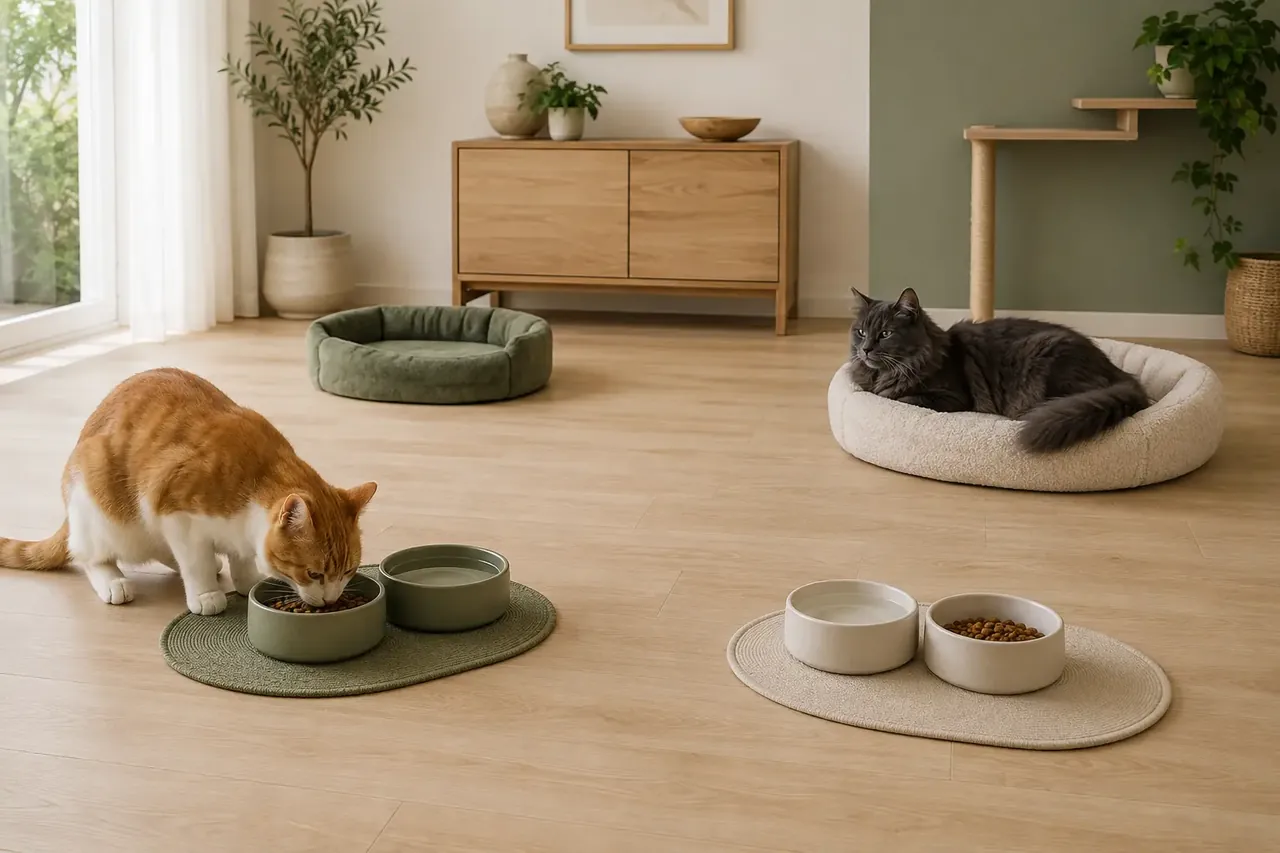 Topic illustration selected for this guide. Some learning images may be AI-assisted.
Why your cat waits at the door when you come home — the quick answer
✓ Footsteps, a car, scent and time of day form a learned arrival sequence. The greeting can combine social attachment, curiosity and anticipation.
✓ Create a calm reunion ritual. Secure the door, offer a brief greeting, then follow with predictable play, dinner or quiet company.
✓ Read the complete body and setting
✓ Frantic escape attempts, destruction, food refusal or prolonged distress while alone deserves veterinary and behaviour support.
The key turns and your cat appears, perhaps trilling, rubbing or walking beside you. Footsteps, a car, scent and time of day form a learned arrival sequence. The greeting can combine social attachment, curiosity and anticipation. This guide helps you read the moment, protect the relationship and choose a response that works for the cat as well as the household.
Find what keeps the behaviour going
Your arrival predicts scent, movement, food, play, opened doors and social contact. Notice what the cat requests next: leading you to a bowl, stretching near a toy, checking bags or settling beside you helps explain the greeting better than one universal story.
Read the whole cat
A raised tail, soft eyes, relaxed approach and rubbing fit a friendly greeting. Loud calling, frantic pacing, drooling, scratching or taking a long time to settle can indicate stronger distress, unmet needs or a medical change rather than simply extra affection.
A practical plan for home
Enter calmly, check doors before opening them and offer a predictable greeting away from the threshold. Provide a perch or mat nearby, then meet food, play and litter needs on a steady schedule so rushing the doorway is not the only route to attention.
The warm, honest answer
Waiting at the door usually means your return has become an important and rewarding part of the cat's routine. It can reflect recognition and attachment, but the whole body and what happens next reveal whether the cat is relaxed, requesting something or struggling with absences.
When greetings change
New absence, hiding, clinginess or frantic escape behaviour can accompany fear, pain, stress or illness. Seek veterinary advice when the change appears with appetite, thirst, litter, sleep, weight or mobility differences; inability to breathe normally or collapse is urgent.
Your quick checklist
Loading saved progress…
Three simple things you can do
You do not have to change everything today. Pick one step that feels realistic, try it and see how your cat responds.
- 1Observe your cat’s individual baseline.
- 2Make one gentle change at a time.
- 3Ask a qualified professional when health or safety is involved.
Common mistakes
×Waiting for a dramatic symptom instead of noticing smaller changes from the cat’s normal routine.
×Changing several things at once, making it difficult to learn what actually helped.
×Treating general guidance as a substitute for advice from a veterinarian who knows the individual cat.
Questions cat people ask
Does every cat follow the same rule?+
No. Age, health, history, temperament and environment all change what works for an individual.
When should I seek professional help?+
Seek veterinary advice for sudden, persistent or concerning changes and urgent help for breathing difficulty, collapse, seizures, poisoning or urinary obstruction signs.
Still looking for the right answer?
Search the full EverYes Cats encyclopedia with your own words — a symptom, food, behaviour, breed or everyday question.
Checked, dated and transparent
- Prepared by
- EverYes Cats editorial team
- Last updated
- Source checked
- Primary reference
- FelineVMA: Healthy feline environment ↗
We begin with the named reference, rewrite the information in plain language and add practical cat-parent steps. Urgent health statements are checked against veterinary sources. This guide has not been individually reviewed by a veterinarian unless explicitly stated. It provides education, not diagnosis or treatment.
How we choose and use sources →
Spotted something unclear or outdated? Tell us so we can review it.
Loading your saved choice…
A cat may follow a person to the bathroom because the routine is predictable, access suddenly changes and the room contains interesting sounds, scents and a temporarily still human. Relaxed following alone does not prove separation anxiety or protection.
 01
 02
 03
 05
 06