Why does my cat lick me?
A cat may lick a familiar person as social grooming, exploration or a learned interaction, and salt or products on skin can add interest. Licking is not always affection, so use context and prevent exposure to unsafe topical substances.
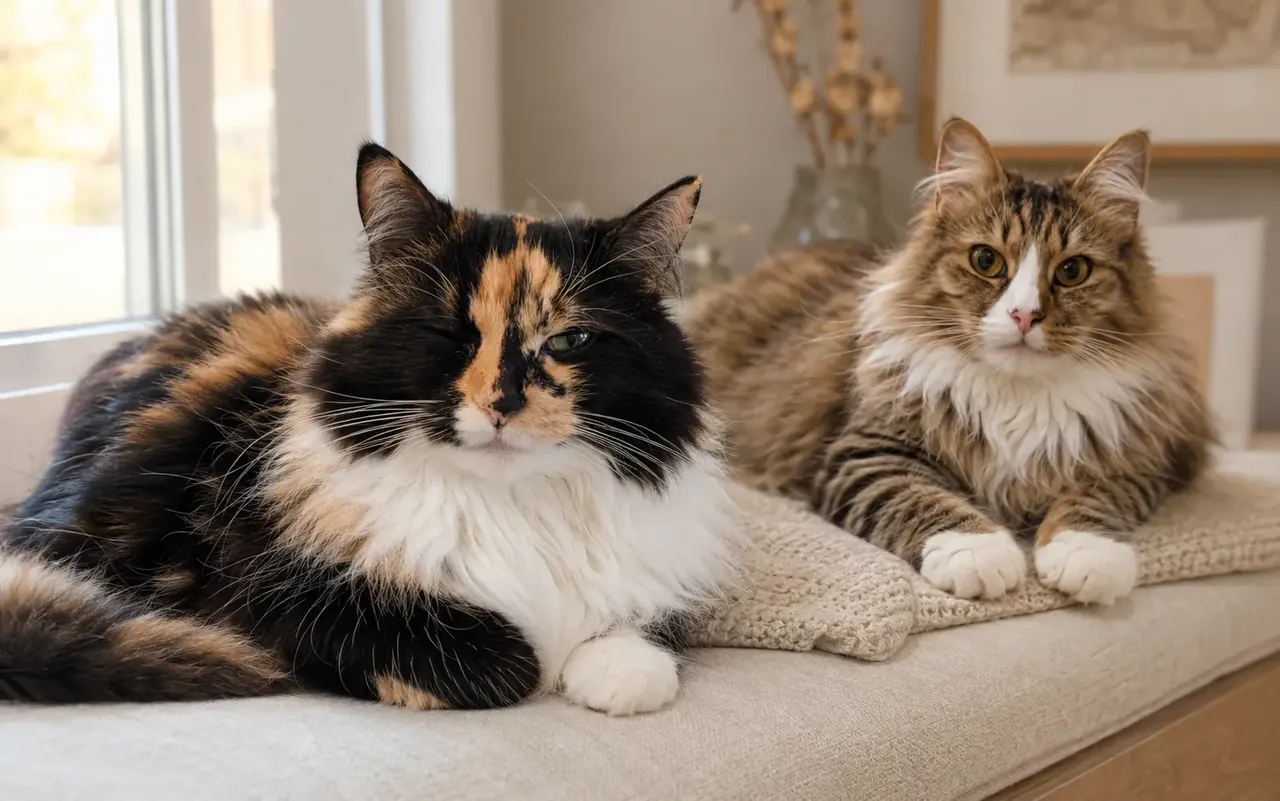
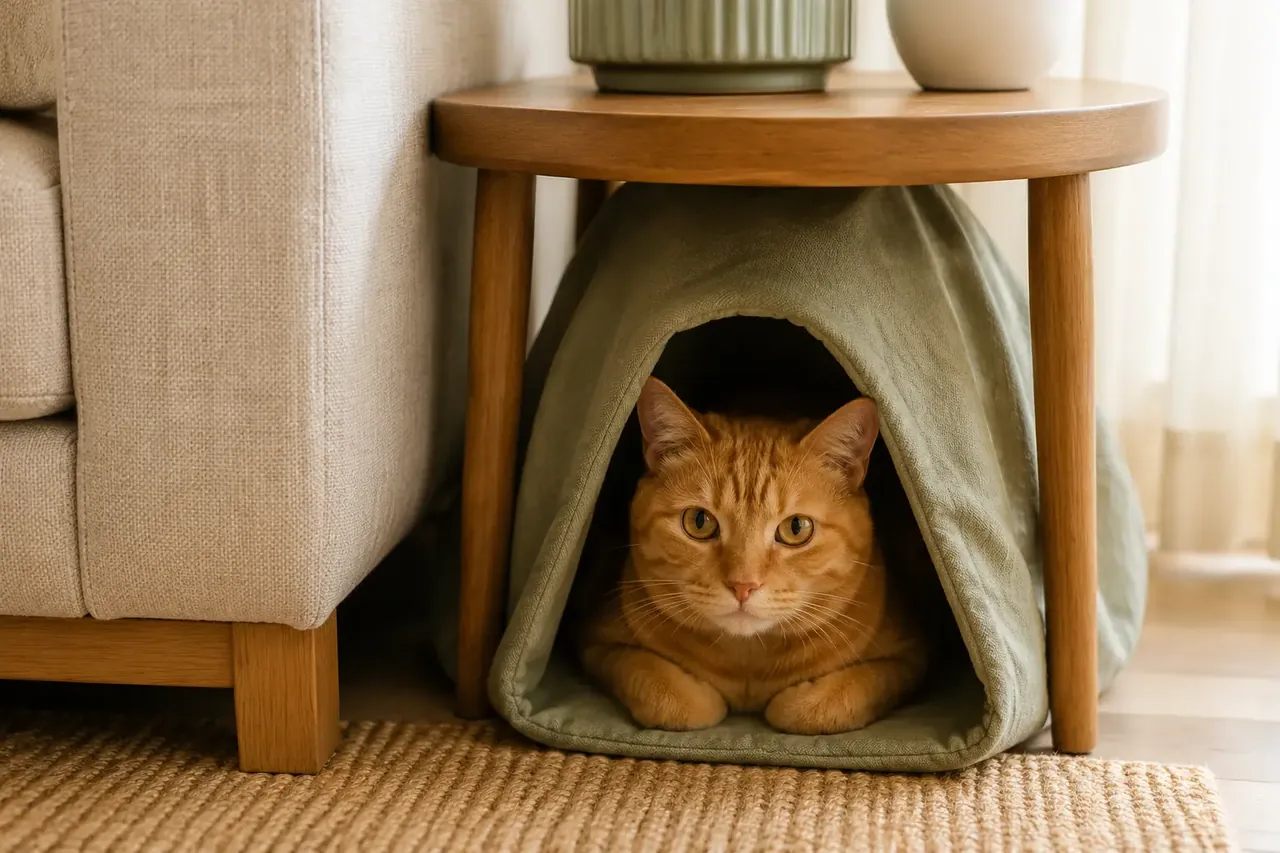 Topic illustration selected for this guide. Some learning images may be AI-assisted.
Why does my cat lick me — the quick answer
✓ Cats groom familiar partners, investigate taste and repeat actions that reliably produce attention. Human skin also carries salt and interesting scent.
✓ Allow a short session on clean skin if you enjoy it, then redirect gently to brushing, a toy or a blanket.
✓ Read the complete body and setting
✓ Keep topical medicines and essential oils away. Sudden obsessive licking can accompany nausea, pain, skin disease or stress.
A rough tongue works across your hand, hair or arm during an otherwise relaxed moment. Cats groom familiar partners, investigate taste and repeat actions that reliably produce attention. Human skin also carries salt and interesting scent. This guide helps you read the moment, protect the relationship and choose a response that works for the cat as well as the household.
Social grooming is one possibility
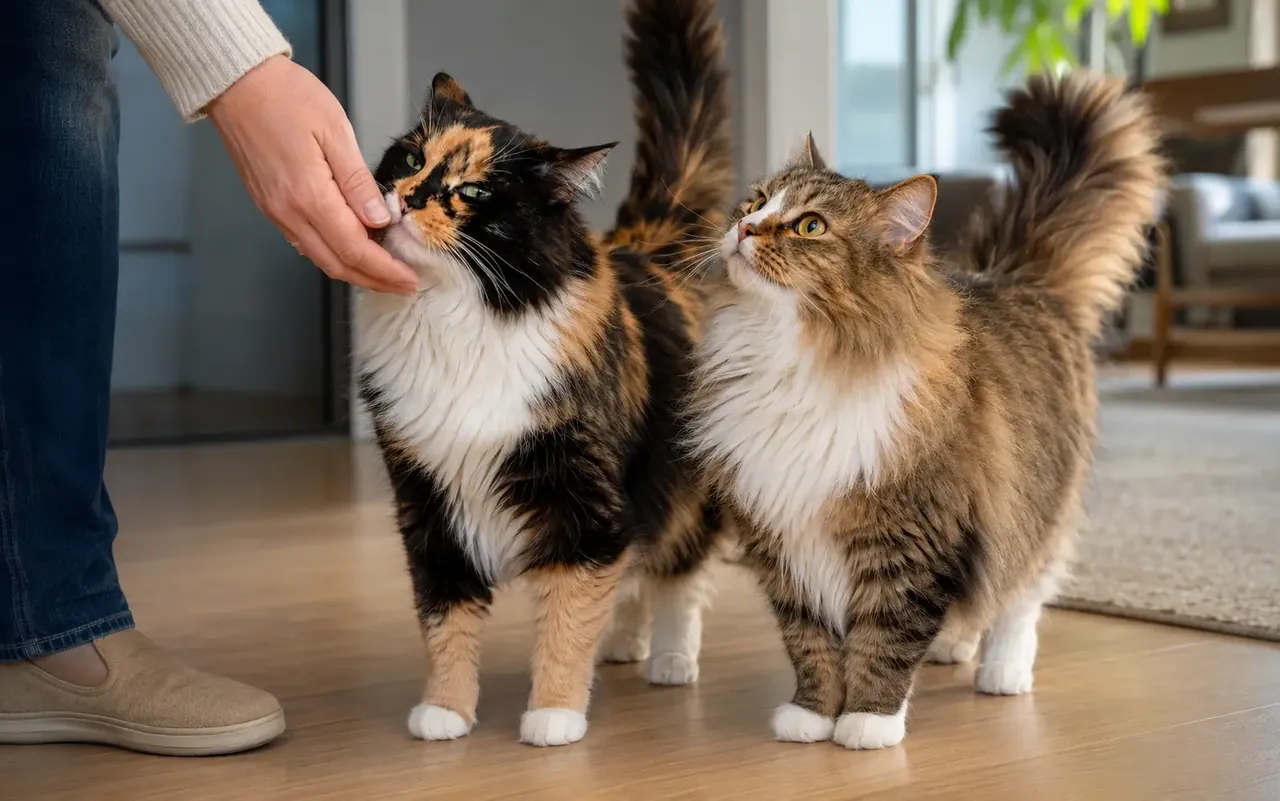
Cats that are comfortable together may groom the head and neck, and a cat can include a person in a similar familiar routine. A loose body and voluntary approach support a social interpretation, but one lick has no fixed translation.
Taste, scent and texture matter
Sweat, food residue, hair and skin products can attract investigation. Do not encourage licking where sunscreen, pain gel, hormone cream, nicotine liquid, essential oil or medication has been applied. Follow product and veterinary advice after possible exposure.
Respect both sets of boundaries
If licking is comfortable, allow a short session on clean skin. If it hurts or you want it to stop, become still, gently move away and offer a nearby resting place or safe activity. Avoid shouting, blowing in the face or turning hands into wrestling toys.
Watch the pattern, not the myth
Licking can be affiliative, soothing, attention-seeking or exploratory; it does not automatically prove ownership, dominance or a nutritional deficiency. Note when it happens, how intense it becomes and whether the cat can settle when the interaction ends.
When licking deserves help
Arrange advice for sudden compulsive licking, drooling, nausea, skin change, pain or inability to settle. Contact a veterinarian or animal poison service promptly after suspected ingestion of a topical medicine or chemical; bring the exact product information.
Your quick checklist
Loading saved progress…
Three simple things you can do
You do not have to change everything today. Pick one step that feels realistic, try it and see how your cat responds.
- 1Observe your cat’s individual baseline.
- 2Make one gentle change at a time.
- 3Ask a qualified professional when health or safety is involved.
Common mistakes
×Waiting for a dramatic symptom instead of noticing smaller changes from the cat’s normal routine.
×Changing several things at once, making it difficult to learn what actually helped.
×Treating general guidance as a substitute for advice from a veterinarian who knows the individual cat.
Questions cat people ask
Does every cat follow the same rule?+
No. Age, health, history, temperament and environment all change what works for an individual.
When should I seek professional help?+
Seek veterinary advice for sudden, persistent or concerning changes and urgent help for breathing difficulty, collapse, seizures, poisoning or urinary obstruction signs.
Still looking for the right answer?
Search the full EverYes Cats encyclopedia with your own words — a symptom, food, behaviour, breed or everyday question.
Checked, dated and transparent
- Prepared by
- EverYes Cats editorial team
- Last updated
- Source checked
- Primary reference
- FelineVMA: Healthy feline environment ↗
We begin with the named reference, rewrite the information in plain language and add practical cat-parent steps. Urgent health statements are checked against veterinary sources. This guide has not been individually reviewed by a veterinarian unless explicitly stated. It provides education, not diagnosis or treatment.
How we choose and use sources →
Spotted something unclear or outdated? Tell us so we can review it.
Loading your saved choice…
A cat waiting at the door may recognise arrival cues and anticipate social contact, food, play or access. The greeting can reflect attachment and routine without proving that the cat understood exactly how long you were away.
 02
 03
 04
 05