Why does my cat stare down from a high perch?
A cat staring from a high perch is often resting while monitoring people, animals, sounds and routines from a secure position. Height is a normal resource, not proof of dominance. Posture, access and changes in daily behaviour reveal whether the perch feels comfortable.
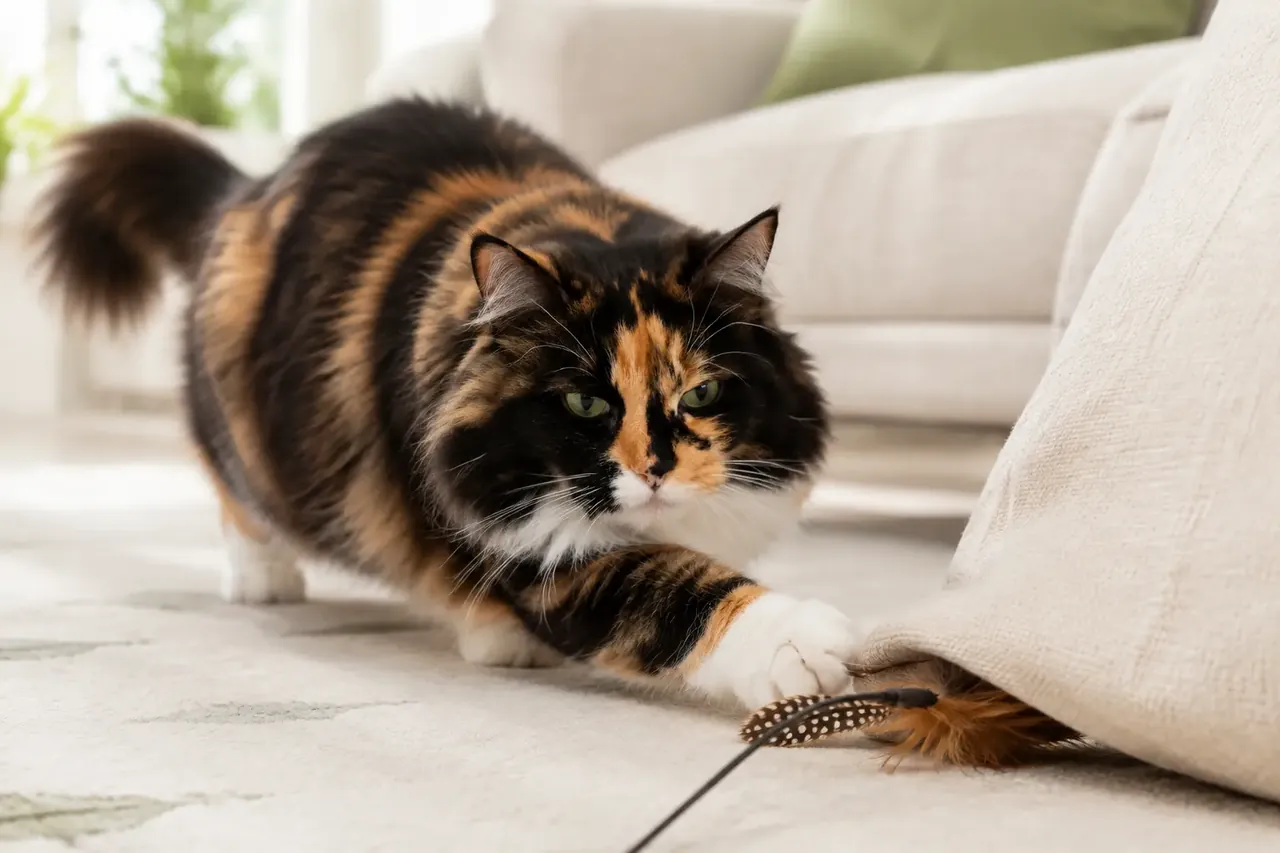
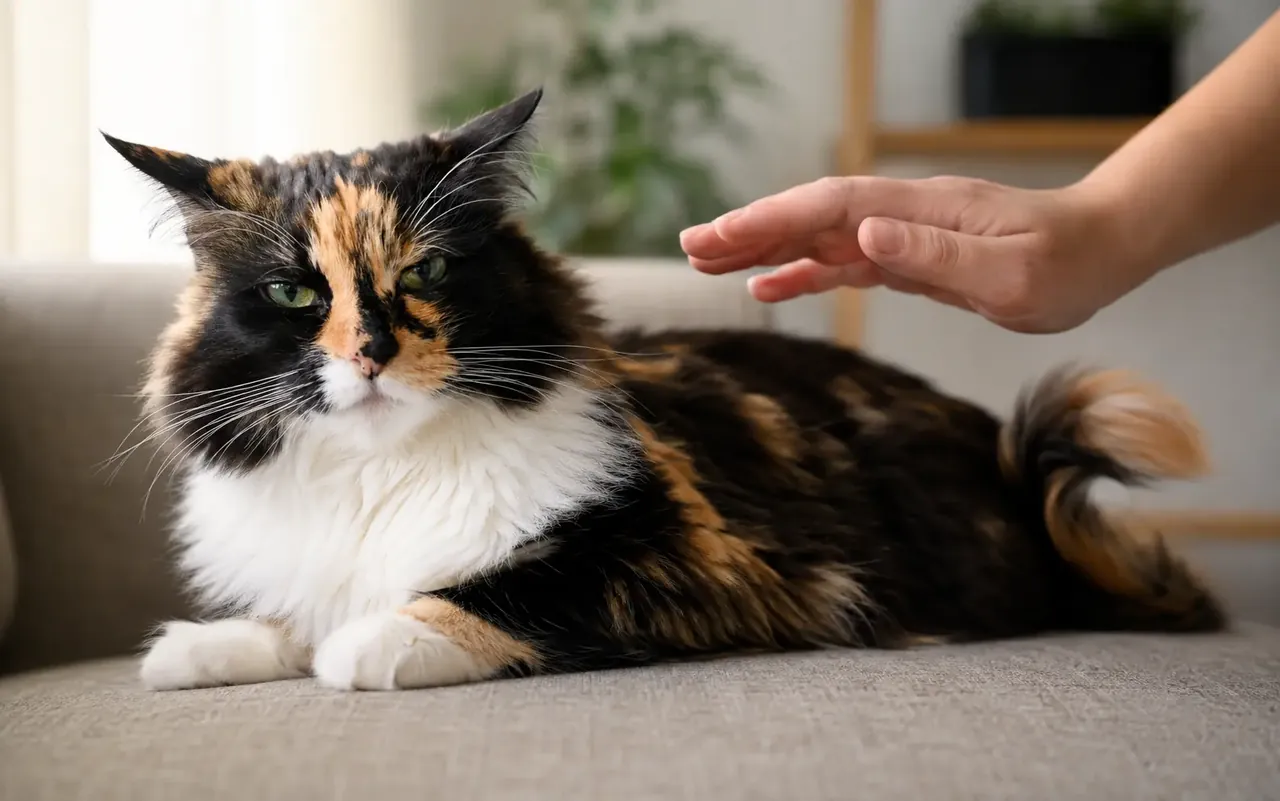 Topic illustration selected for this guide. Some learning images may be AI-assisted.
Why does my cat stare down from a high perch — the quick answer
✓ Height provides visual control, rest and distance without requiring the cat to leave the room
✓ Protect the perch from interruption and provide a stable exit route.
✓ Constant retreat with reduced eating, grooming or litter use may signal stress or illness.
Height provides visual control, rest and distance without requiring the cat to leave the room. Watching quietly from above is often a comfortable form of participation. This guide separates the useful observation from guesswork and gives you one safe next step.
See height as information and choice
A raised position gives a broad view and distance from floor-level movement without requiring the cat to leave the room. Quiet watching may be relaxed participation. The cat could also be waiting for a meal, tracking a sound or anticipating an interaction learned from the household routine.
Read the body attached to the stare
Soft muscles, neutral ears, ordinary blinking and loose paws support calm observation. A crouched body, flattened ears, wide pupils, lashing tail, fixed focus or refusal to descend suggests arousal or concern. Do not interpret eye direction alone as affection, judgement or control.
Identify the actual target
From the cat's angle, check windows, doors, reflections, insects, appliances, another pet and predictable human movements. Note time of day and what happens next. Do not wave at the face or make sudden noises to prove the cat is staring at you.
Make the perch stable and escapable
Secure shelves and cat trees against tipping, add a non-slip surface and keep blind cords, hot lights and weak window screens away. Provide more than one route in a multi-cat home so another animal cannot block the descent. The cat should be able to rest without being grabbed.
Reduce tension around windows or housemates
If staring at an outdoor cat leads to spraying, yowling or redirected aggression, partially block the view and add calm indoor activity. If another cat guards the route, spread vertical and essential resources across separate locations. Never punish staring or pull the cat down.
Investigate a new pattern of withdrawal
A perch preference becomes concerning when the cat rarely comes down to eat, drink, toilet, groom or interact, or when movement appears painful. Sudden hiding, appetite loss, breathing change, confusion or inability to descend warrants veterinary advice; persistent social conflict may need qualified behaviour support.
Your quick checklist
Loading saved progress…
Three simple things you can do
You do not have to change everything today. Pick one step that feels realistic, try it and see how your cat responds.
- 1Provide a stable perch with a clear route up and down.
- 2Observe what sounds, people or animals the cat watches.
- 3Add visual barriers if staring is tense or focused on an outdoor rival.
Common mistakes
×Pulling the cat down for staring.
×Assuming the behaviour is dominance.
×Placing the perch where another cat can block the exit.
Questions cat people ask
Why does my cat stare at me from a high place?+
Height provides safety and a broad view. The cat may be monitoring routine, waiting for interaction or simply resting while facing you.
Does a high perch make a cat dominant?+
No. Vertical space is a normal environmental resource and can reduce conflict by giving cats choice and distance.
Still looking for the right answer?
Search the full EverYes Cats encyclopedia with your own words — a symptom, food, behaviour, breed or everyday question.
Checked, dated and transparent
- Prepared by
- EverYes Cats editorial team
- Last updated
- Source checked
- Primary reference
- International Cat Care: The Cat's Environment ↗
We begin with the named reference, rewrite the information in plain language and add practical cat-parent steps. Urgent health statements are checked against veterinary sources. This guide has not been individually reviewed by a veterinarian unless explicitly stated. It provides education, not diagnosis or treatment.
How we choose and use sources →
Spotted something unclear or outdated? Tell us so we can review it.
Loading your saved choice…
Kneading before sleep is commonly a relaxed settling routine carried forward from kittenhood. Safe fabric, voluntary contact and attention to sudden restlessness help separate normal comfort from pain or material ingestion.
 01
 02
 03
 06