Helping cats with noise fear
Noise fear improves through immediate refuge and carefully controlled learning—not forced exposure. Reduce intensity, preserve escape and seek medical advice when sound sensitivity appears suddenly.
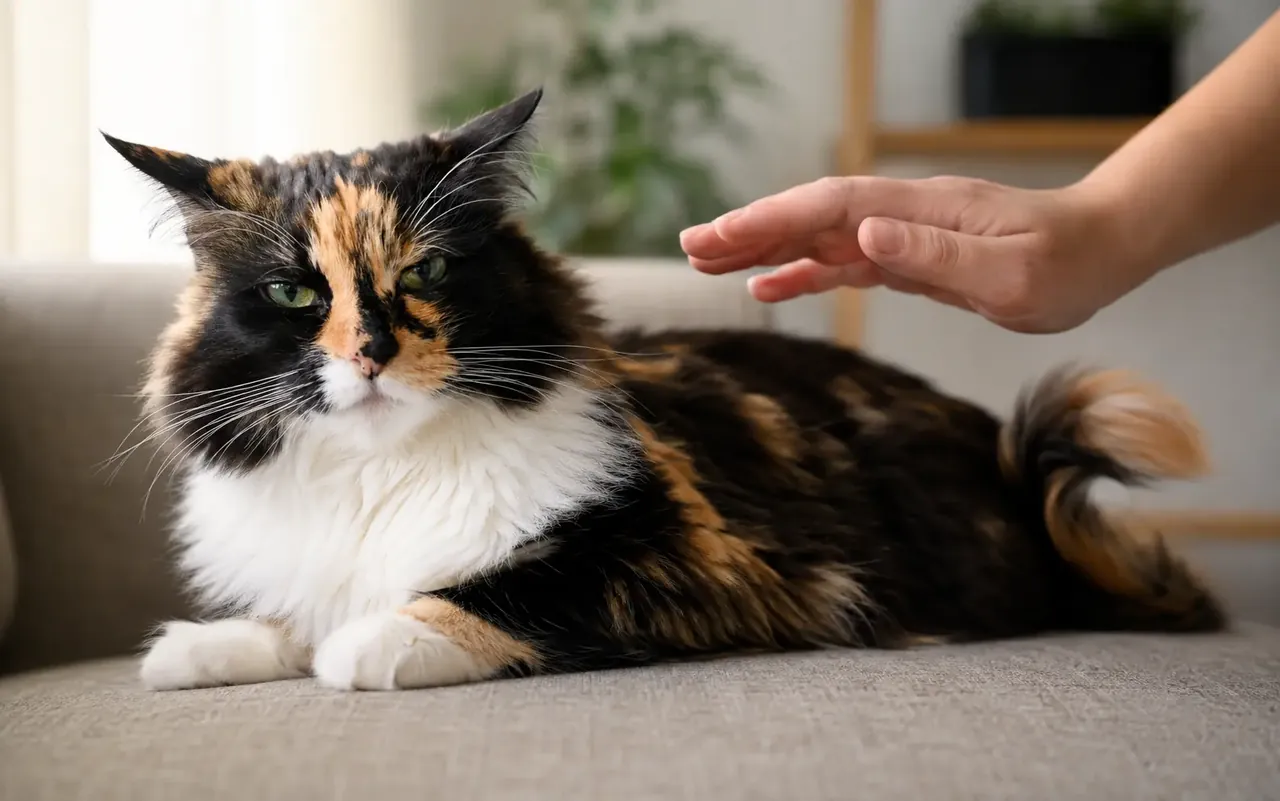
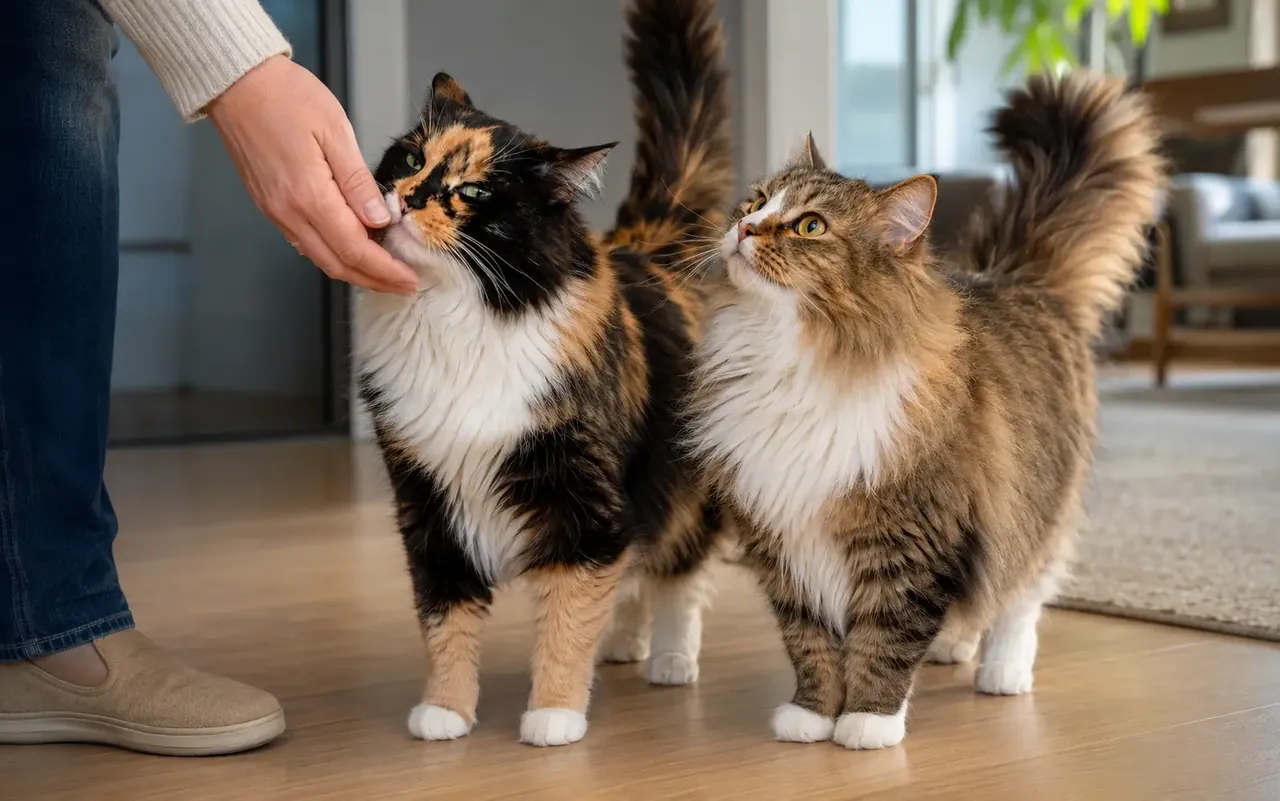 Topic illustration selected for this guide. Some learning images may be AI-assisted.
Helping cats with noise fear — the quick answer
✓ Sudden sound activates protective responses. Vibration, movement and lack of escape add intensity.
✓ Provide a quiet refuge and pair very low-intensity sound with rewards only while the cat stays comfortable.
✓ Read the complete body and setting
✓ New sound sensitivity can accompany pain, hearing or cognitive change and deserves assessment.
A machine starts and the cat crouches, runs or freezes. Sudden sound activates protective responses. Vibration, movement and lack of escape add intensity. This guide helps you read the moment, protect the relationship and choose a response that works for the cat as well as the household.
Protect the cat during real noise
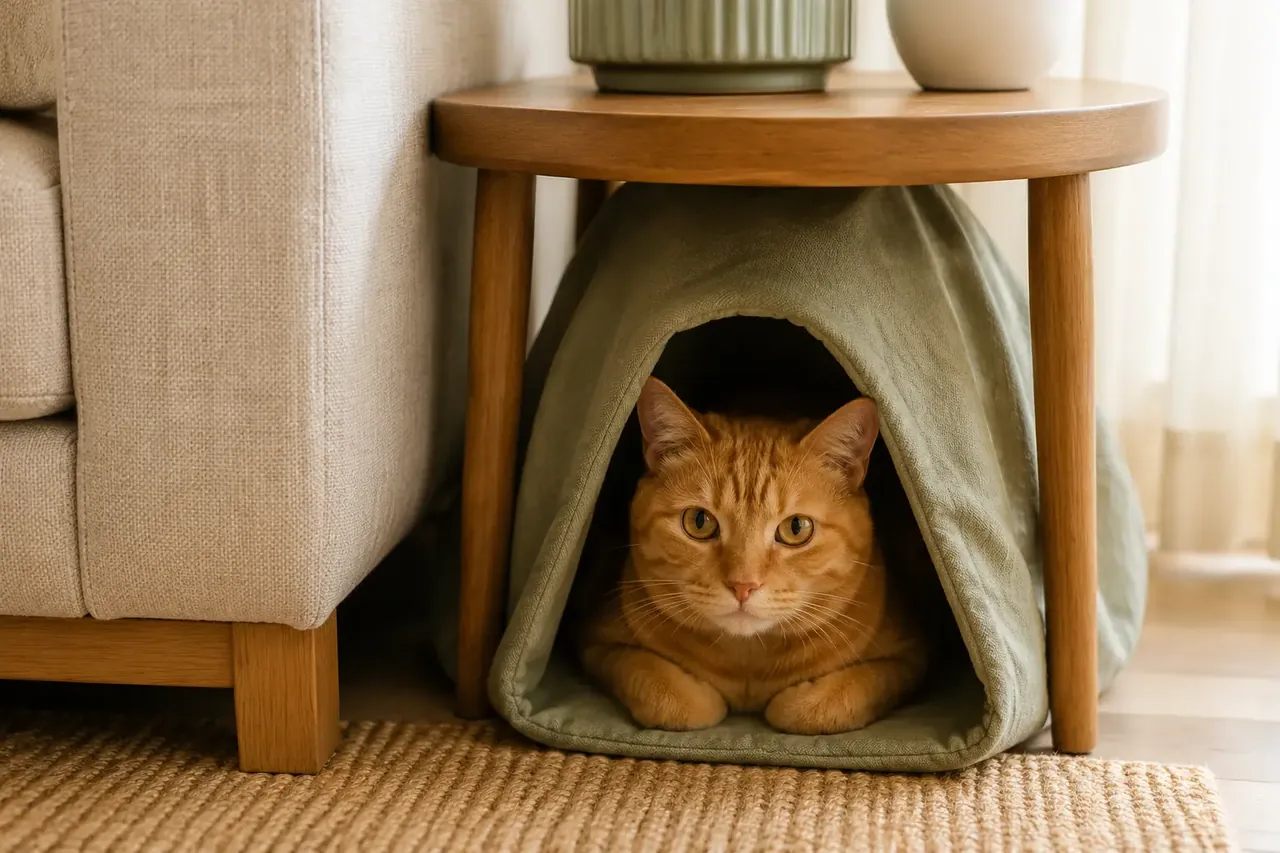
For storms, alarms, construction or appliances, provide a quiet interior refuge with hiding, water, litter and familiar bedding. Close windows and curtains when safe, add steady background sound and allow the cat to choose distance.
Identify the full trigger
Sound may arrive with vibration, flashing light, moving equipment, a person entering or loss of an escape route. Record the earliest fear signal and recovery time. The complete sequence explains more than volume alone.
Practise only below the fear threshold
Use a very low recording or distant version paired with food, play or calm activity while the cat remains loose and engaged. Increase one small step only after repeated comfort. Stop if the cat freezes, hides, scans or refuses the reward.
Avoid flooding and punishment
Do not hold the cat near a vacuum, trap it in the noisy room or play recordings until it gives up reacting. Never shout, spray water or remove hiding. A motionless cat may be overwhelmed rather than learning that the sound is safe.
When noise sensitivity needs assessment
New sound fear can accompany pain, ear disease, hearing change or cognitive decline and deserves veterinary advice. Self-injury, prolonged food refusal, panic escape or inability to recover may require a veterinary and qualified behaviour plan.
Your quick checklist
Loading saved progress…
Three simple things you can do
You do not have to change everything today. Pick one step that feels realistic, try it and see how your cat responds.
- 1Observe your cat’s individual baseline.
- 2Make one gentle change at a time.
- 3Ask a qualified professional when health or safety is involved.
Common mistakes
×Waiting for a dramatic symptom instead of noticing smaller changes from the cat’s normal routine.
×Changing several things at once, making it difficult to learn what actually helped.
×Treating general guidance as a substitute for advice from a veterinarian who knows the individual cat.
Questions cat people ask
Does every cat follow the same rule?+
No. Age, health, history, temperament and environment all change what works for an individual.
When should I seek professional help?+
Seek veterinary advice for sudden, persistent or concerning changes and urgent help for breathing difficulty, collapse, seizures, poisoning or urinary obstruction signs.
Still looking for the right answer?
Search the full EverYes Cats encyclopedia with your own words — a symptom, food, behaviour, breed or everyday question.
Checked, dated and transparent
- Prepared by
- EverYes Cats editorial team
- Last updated
- Source checked
- Primary reference
- FelineVMA: Healthy feline environment ↗
We begin with the named reference, rewrite the information in plain language and add practical cat-parent steps. Urgent health statements are checked against veterinary sources. This guide has not been individually reviewed by a veterinarian unless explicitly stated. It provides education, not diagnosis or treatment.
How we choose and use sources →
Spotted something unclear or outdated? Tell us so we can review it.
Loading your saved choice…
Hiding after a veterinary visit may reflect stress, fatigue, pain, medication or unfamiliar clinic scent. Provide quiet recovery and follow the clinic's instructions while monitoring appetite, breathing, movement and alertness.
 01
 03
 04
 05
 06