Why does my cat grab my hand and bunny-kick?
A cat grabbing a hand and kicking is usually treating the hand as prey, ending unwanted touch or defending against restraint. Freeze, disengage calmly and change future interaction.
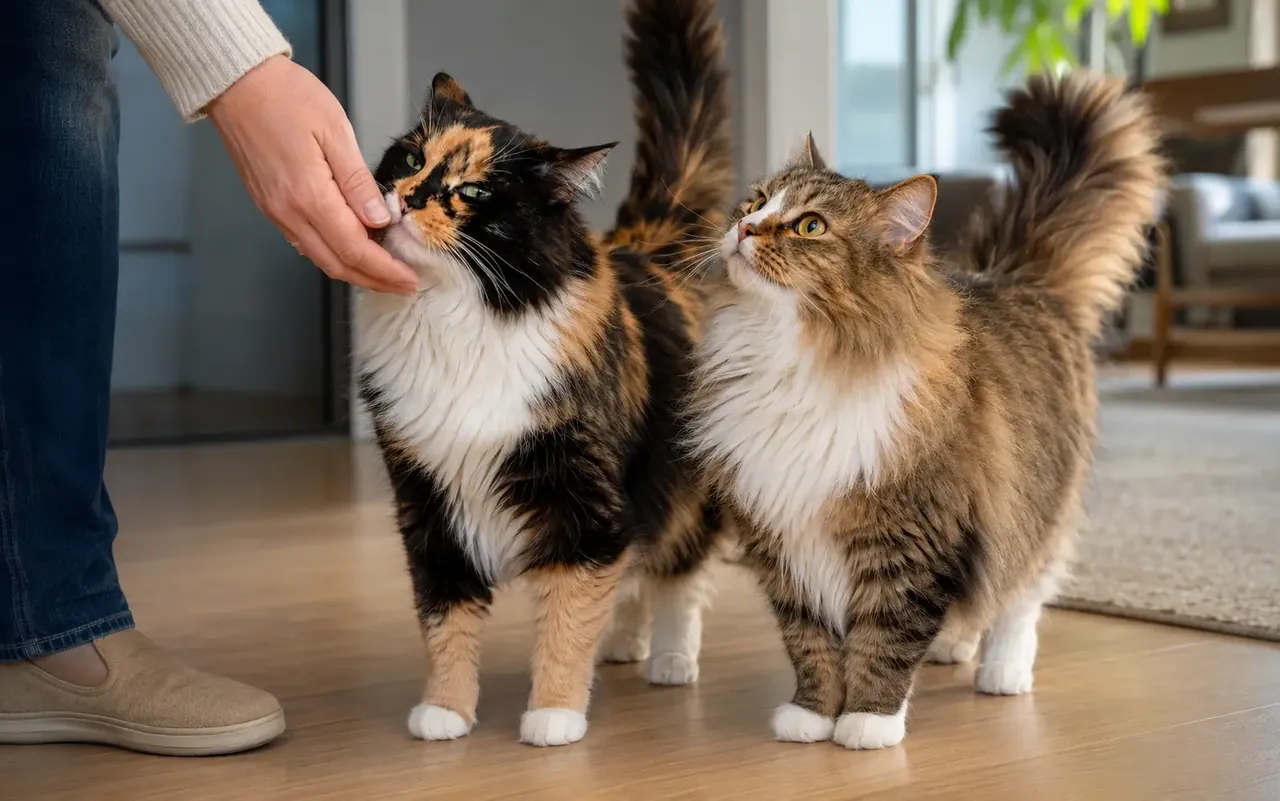 Topic illustration selected for this guide. Some learning images may be AI-assisted.
Why does my cat grab my hand and bunny-kick — the quick answer
✓ Grabbing and hind-leg kicking are parts of prey handling and defensive behaviour.
✓ Freeze, disengage calmly and use long kicker toys and wand toys instead.
✓ Deep bites need human medical advice; sudden aggression in the cat warrants a health review.
Grabbing and hind-leg kicking are parts of prey handling and defensive behaviour. Hands can become targets when rough play has taught the cat that skin is a toy. The useful answer comes from the whole situation—not one pose, sound or viral claim.
Identify what came first
Record whether the grab followed hand wrestling, belly touch, prolonged petting, lifting or a sudden approach. A playful ambush and a defensive response can look similar in the final seconds but need different prevention.
Notice the early signals
Skin rippling, tail flicking, ears rotating, pupils widening, a head turn toward the hand or sudden stillness may precede a grab. Stop at the earliest sign rather than waiting for claws and teeth.
Disengage without escalating
Freeze instead of pulling rapidly, protect the face and wait for grip to ease before moving away. Do not pry the jaws, scruff, strike or spray the cat. Give quiet space after release.
Change the future setup
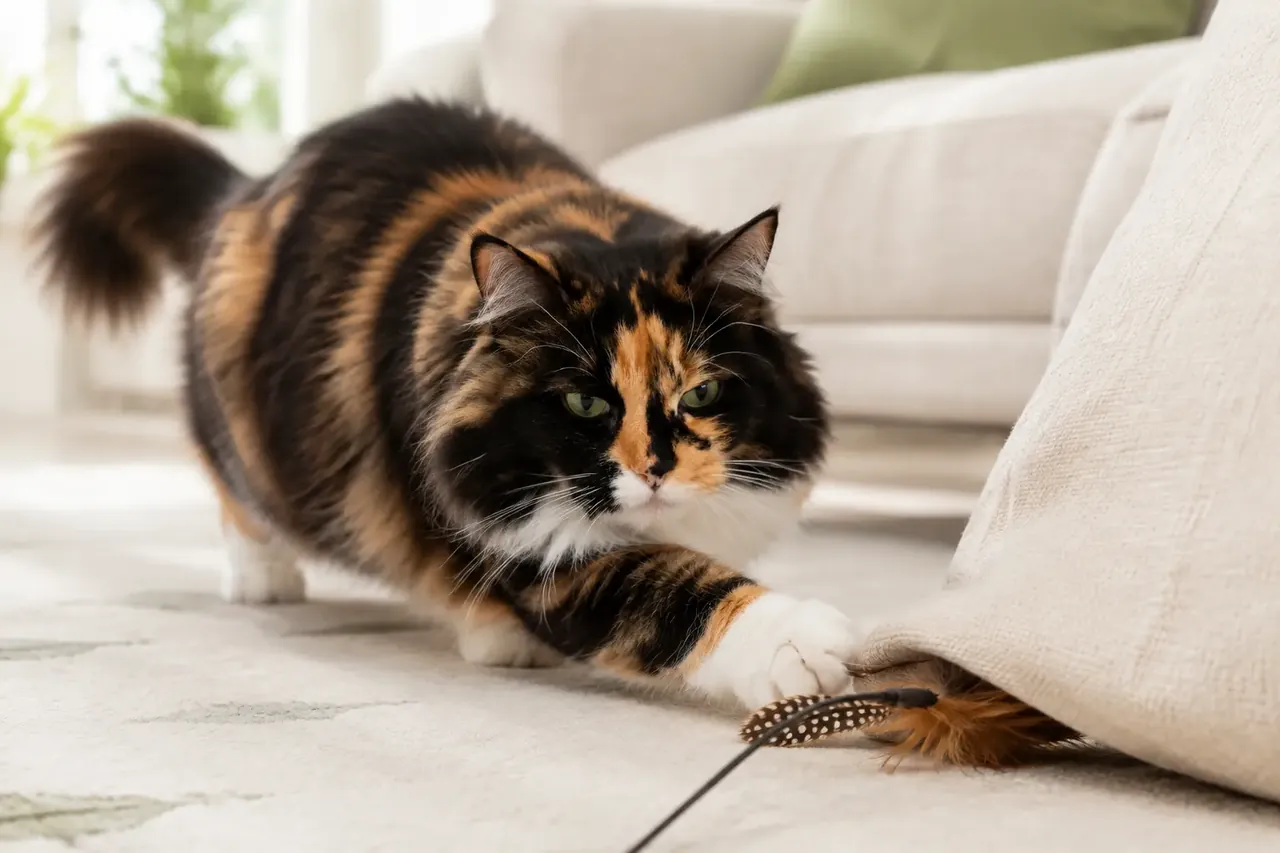
End hand wrestling, use wand and kicker toys and keep petting brief with frequent consent pauses. Let the cat approach and leave freely. Children need close supervision and should never use fingers under fabric as a toy.
Treat injuries and sudden change seriously
Wash bites and scratches promptly and seek human medical advice for punctures, hand bites, swelling, redness or worsening pain. A cat with new aggression, touch sensitivity or limping needs veterinary assessment.
Your quick checklist
Loading saved progress…
Three simple things you can do
You do not have to change everything today. Pick one step that feels realistic, try it and see how your cat responds.
- 1Observe your cat’s individual baseline.
- 2Make one gentle change at a time.
- 3Ask a qualified professional when health or safety is involved.
Common mistakes
×Waiting for a dramatic symptom instead of noticing smaller changes from the cat’s normal routine.
×Changing several things at once, making it difficult to learn what actually helped.
×Treating general guidance as a substitute for advice from a veterinarian who knows the individual cat.
Questions cat people ask
Does every cat follow the same rule?+
No. Age, health, history, temperament and environment all change what works for an individual.
When should I seek professional help?+
Seek veterinary advice for sudden, persistent or concerning changes and urgent help for breathing difficulty, collapse, seizures, poisoning or urinary obstruction signs.
Still looking for the right answer?
Search the full EverYes Cats encyclopedia with your own words — a symptom, food, behaviour, breed or everyday question.
Checked, dated and transparent
- Prepared by
- EverYes Cats editorial team
- Last updated
- Source checked
- Primary reference
- Cats Protection ↗
We begin with the named reference, rewrite the information in plain language and add practical cat-parent steps. Urgent health statements are checked against veterinary sources. This guide has not been individually reviewed by a veterinarian unless explicitly stated. It provides education, not diagnosis or treatment.
How we choose and use sources →
Spotted something unclear or outdated? Tell us so we can review it.
Loading your saved choice…
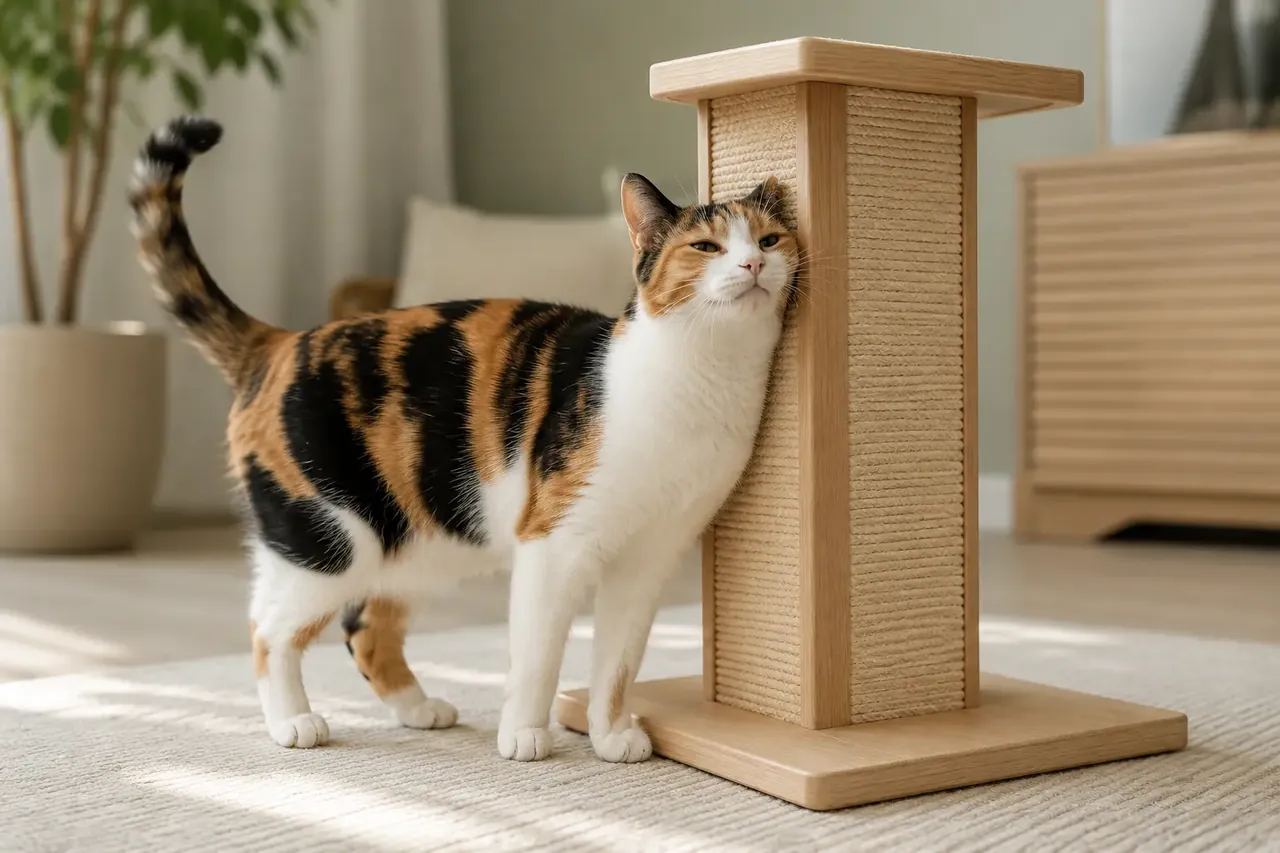
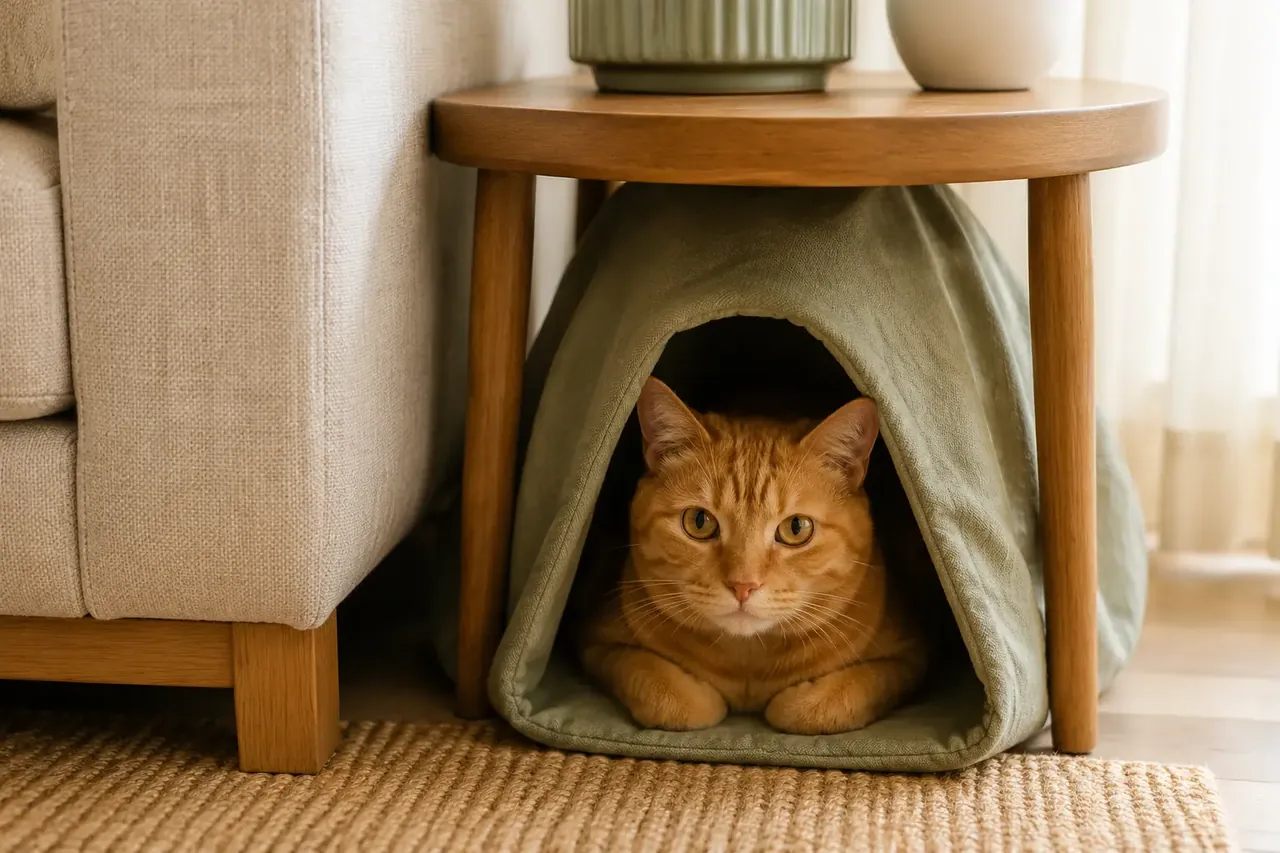
A cat may place a paw on you to seek contact, steady the body, pause your hand or ask for something. The rest of the posture shows whether to continue or give space.
 01
 02
 03
 04