Why does my cat rub its face on corners?
Cats rub cheeks and the side of the face on corners to deposit scent, explore texture and include places in a familiar routine. New forceful rubbing with facial signs can indicate discomfort.
 Topic illustration selected for this guide. Some learning images may be AI-assisted.
Why does my cat rub its face on corners — the quick answer
✓ Cheek rubbing deposits facial scent and gathers information from a familiar landmark.
✓ Keep favourite rubbing points stable and avoid applying irritating cleaners or oils.
✓ Constant rubbing with hair loss, sores, eye discharge or ear scratching needs assessment.
Cheek rubbing deposits facial scent and gathers information from a familiar landmark. Repeated bunting can help a place smell socially safe and predictable. The useful answer comes from the whole situation—not one pose, sound or viral claim.
Familiar scent marking
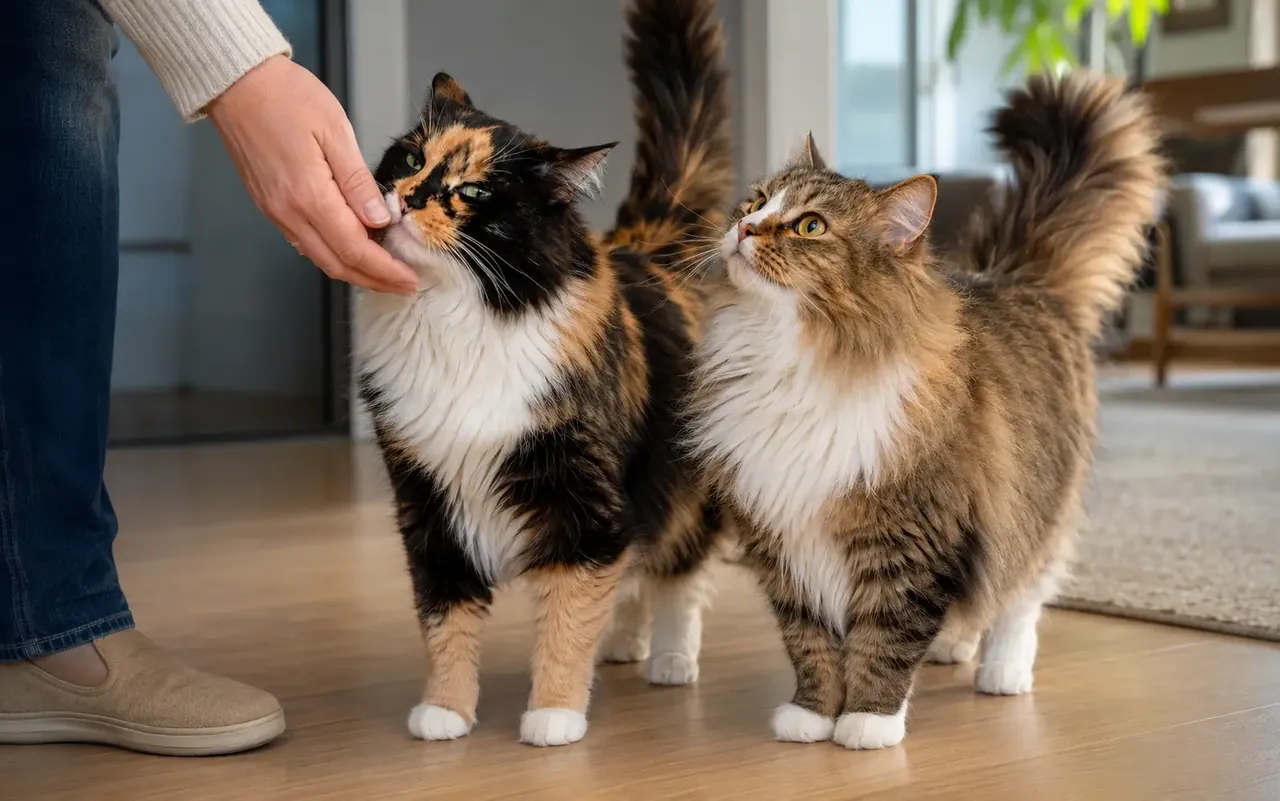
Glands around the cheeks, chin and lips contribute scent during rubbing. Repeated contact with door frames and furniture can help make important routes smell familiar; it is not the same as urine spraying.
Read the relaxed pattern
Normal rubbing is usually smooth and voluntary, with loose posture and ordinary skin afterward. The cat may alternate sides, continue walking or approach socially. Do not hold the head against an object or use strong scents to encourage rubbing.
Make favourite corners safe
Remove sharp edges, splinters, residue and unstable objects at face height. Use cat-safe cleaning without essential oils or heavy fragrance, which can irritate and erase familiar scent cues.
Separate rubbing from irritation
Pawing at the face, squinting, eye or nasal discharge, drooling, bad breath, swelling, hair loss or rubbing one side forcefully is not simply friendly marking. Photograph visible changes and avoid applying creams.
Know when to seek care
Arrange veterinary advice for a sudden increase, self-injury, one-sided rubbing, mouth pain or facial change. Eye injury, major swelling, inability to eat, breathing difficulty, collapse or suspected chemical exposure requires urgent care.
Your quick checklist
Loading saved progress…
Three simple things you can do
You do not have to change everything today. Pick one step that feels realistic, try it and see how your cat responds.
- 1Observe your cat’s individual baseline.
- 2Make one gentle change at a time.
- 3Ask a qualified professional when health or safety is involved.
Common mistakes
×Waiting for a dramatic symptom instead of noticing smaller changes from the cat’s normal routine.
×Changing several things at once, making it difficult to learn what actually helped.
×Treating general guidance as a substitute for advice from a veterinarian who knows the individual cat.
Questions cat people ask
Does every cat follow the same rule?+
No. Age, health, history, temperament and environment all change what works for an individual.
When should I seek professional help?+
Seek veterinary advice for sudden, persistent or concerning changes and urgent help for breathing difficulty, collapse, seizures, poisoning or urinary obstruction signs.
Still looking for the right answer?
Search the full EverYes Cats encyclopedia with your own words — a symptom, food, behaviour, breed or everyday question.
Checked, dated and transparent
- Prepared by
- EverYes Cats editorial team
- Last updated
- Source checked
- Primary reference
- International Cat Care ↗
We begin with the named reference, rewrite the information in plain language and add practical cat-parent steps. Urgent health statements are checked against veterinary sources. This guide has not been individually reviewed by a veterinarian unless explicitly stated. It provides education, not diagnosis or treatment.
How we choose and use sources →
Spotted something unclear or outdated? Tell us so we can review it.
Loading your saved choice…
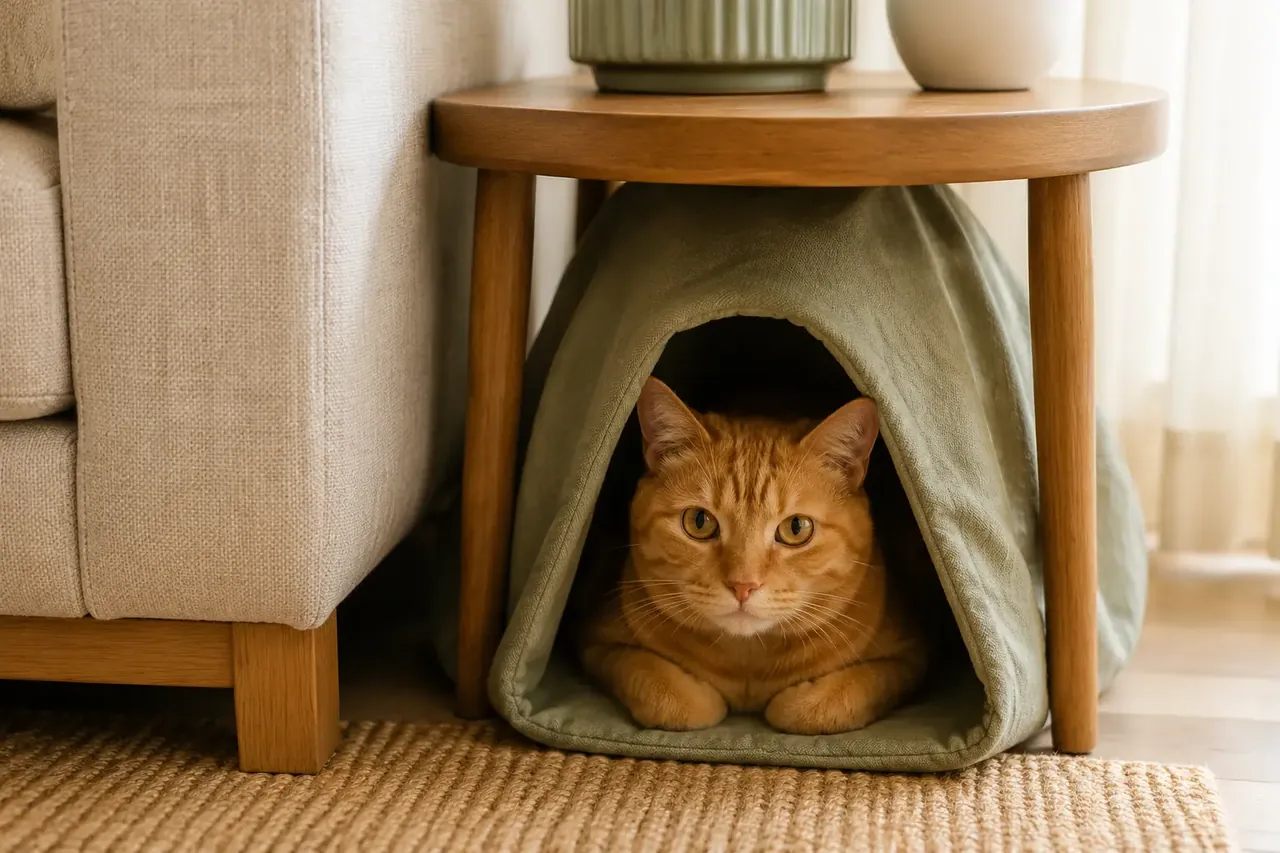
Blankets provide warmth, darkness and a sheltered den-like space.
 01
 02
 03
 04