Why cats walk on their toes
Cats are digitigrade animals: they normally walk on their toes while the heel stays raised. This limb position supports quiet movement, acceleration and jumping.
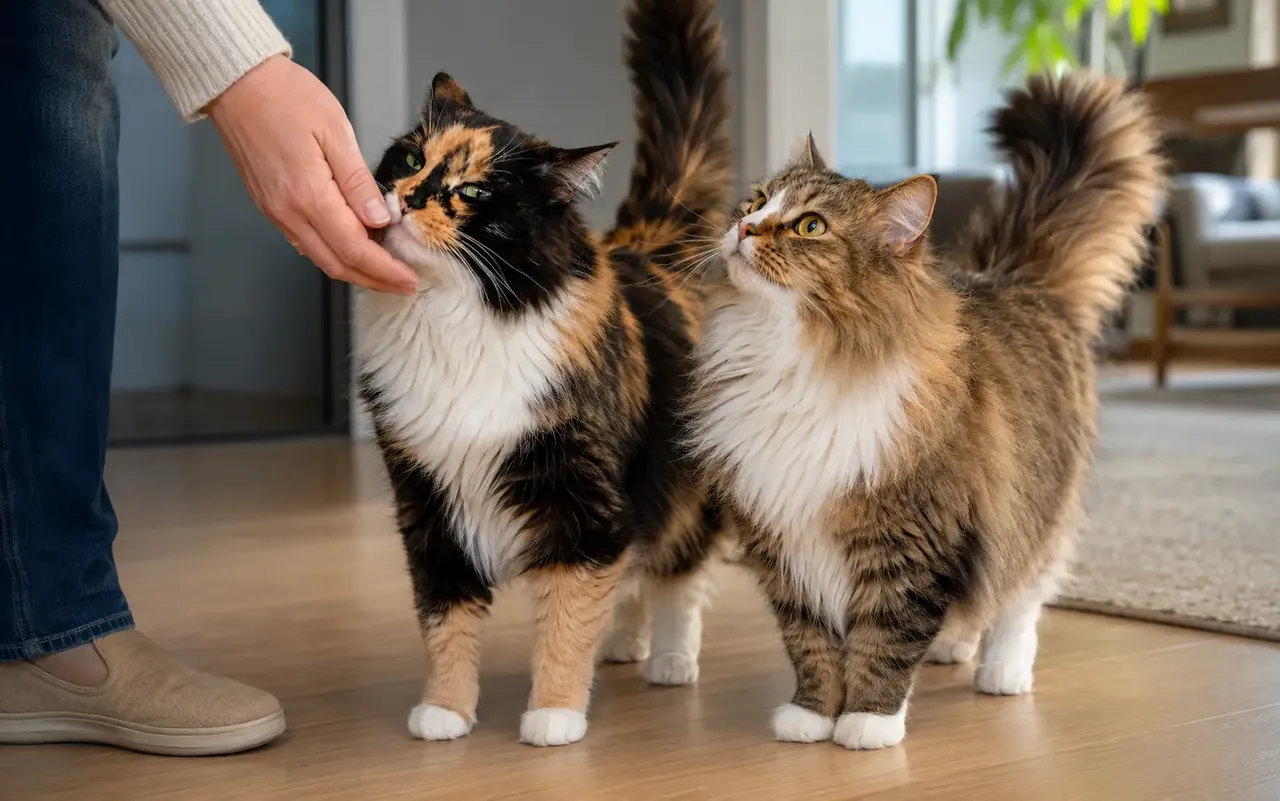 Topic illustration selected for this guide. Some learning images may be AI-assisted.
Why cats walk on their toes — the quick answer
✓ Cats are digitigrade: they walk on their toes while the heel remains raised.
✓ Provide non-slip routes and stable landing places.
✓ A dropped heel, limp or reluctance to bear weight needs examination.
Cats are digitigrade: they walk on their toes while the heel remains raised. The stance lengthens the functional limb and supports quiet stalking, acceleration and jumping. This guide keeps the fascinating detail while separating observation, evidence and internet exaggeration.
The quick fact
Cats are digitigrade: they walk on their toes while the heel remains raised. It describes a common biological or behavioural pattern, not a guarantee about every individual cat. Genetics, age, health, learning and context can all change what you see.
Why it works that way
The stance lengthens the functional limb and supports quiet stalking, acceleration and jumping. Many odd-looking feline features become logical when we remember the cat's history as a small ambush hunter that must gather information quickly while also staying safe.
What it means at home
Provide non-slip routes and stable landing places. Observe without restraint and do not recreate a viral demonstration when it compromises comfort. A good fact should improve curiosity and care, not turn the cat into a prop.
Myth check
The most shareable version is often more absolute than the evidence. Avoid universal personality claims, suspiciously exact numbers and neat evolutionary stories unless a reliable source explains how the conclusion was reached.
What to notice
A dropped heel, limp or reluctance to bear weight needs examination. Compare with your cat's established pattern and include appetite, drinking, litter use, movement, sleep and social behaviour when deciding whether something has genuinely changed.
When it becomes a health question
A fun fact should never explain away pain, breathing difficulty or sudden loss of normal function. Contact a veterinarian for a new, persistent or worsening change. Open-mouth breathing, collapse, seizures, major trauma or inability to urinate requires immediate help.
What digitigrade walking actually means
The pads touching the floor belong to the toes and front of the foot; the longer section above them is not a backward knee. Keeping the heel elevated lengthens the functional limb and lets muscles and tendons store and release energy efficiently during stalking, running and jumping.
When a toe-walking change is not normal
Normal digitigrade posture is balanced and comfortable. A dropped hock, new flat-footed stance, limp, knuckling, dragging toes, uneven claw wear or reluctance to jump can reflect pain, injury, nerve disease or weakness and should be examined by a veterinarian.
Your quick checklist
Your progress is saved on this device.
Three simple things you can do
You do not have to change everything today. Pick one step that feels realistic, try it and see how your cat responds.
- 1Watch the cat walk toward and away from you on a non-slip surface.
- 2Compare both hind legs, paw placement and willingness to jump.
- 3Film a new gait change safely for the veterinary appointment.
Common mistakes
×Mistaking the raised heel for a backward knee.
×Assuming a newly dropped hock is normal toe walking.
×Waiting through limping, dragging or reluctance to bear weight.
Questions cat people ask
Do cats really walk on their toes?+
Yes. Cats are digitigrade, meaning the toes contact the ground while the heel remains raised during ordinary walking.
Why do cats walk on their toes?+
The posture supports quiet movement, acceleration and jumping. A new flat-footed stance, limp or dragging toes is not the same normal anatomy and needs assessment.
Still looking for the right answer?
Search the full EverYes Cats encyclopedia with your own words — a symptom, food, behaviour, breed or everyday question.
Checked, dated and transparent
- Prepared by
- EverYes Cats editorial team
- Last updated
- 20 August 2026
- Source checked
- 20 August 2026
- Primary reference
- Merck Veterinary Manual ↗
We begin with the named reference, rewrite the information in plain language and add practical cat-parent steps. Urgent health statements are checked against veterinary sources. This guide has not been individually reviewed by a veterinarian unless explicitly stated. It provides education, not diagnosis or treatment.
Spotted something unclear or outdated? Tell us so we can review it.
Your answer helps us improve the cat encyclopedia.
Research and everyday observation suggest cats can distinguish familiar words, including their names.