Play aggression in adult cats
Adult cats retain predatory play needs, and a history of hand play can direct stalking, grabbing and biting toward people. Meet the hunting sequence safely while screening new aggression for pain or illness.
 Topic illustration selected for this guide. Some learning images may be AI-assisted.
Play aggression in adult cats — the quick answer
✓ Predatory play continues through life. Limited outlets and a history of hand play can direct it toward people.
✓ Use long wand and kicker toys, food puzzles and several short sessions. Keep hands out of the prey sequence.
✓ Read the complete body and setting
✓ New aggression, touch sensitivity or mobility change should be examined by a veterinarian.
An adult cat grabs hands or bites moving body parts without an obvious defensive trigger. Predatory play continues through life. Limited outlets and a history of hand play can direct it toward people. This guide helps you read the moment, protect the relationship and choose a response that works for the cat as well as the household.
Adult cats still need to hunt
Age does not remove stalking, chasing, grabbing and kicking behaviour. Indoor routines may provide fewer appropriate outlets, while hands and feet offer fast movement and immediate reactions. The cat is not too old for structured play.
Separate play from human skin
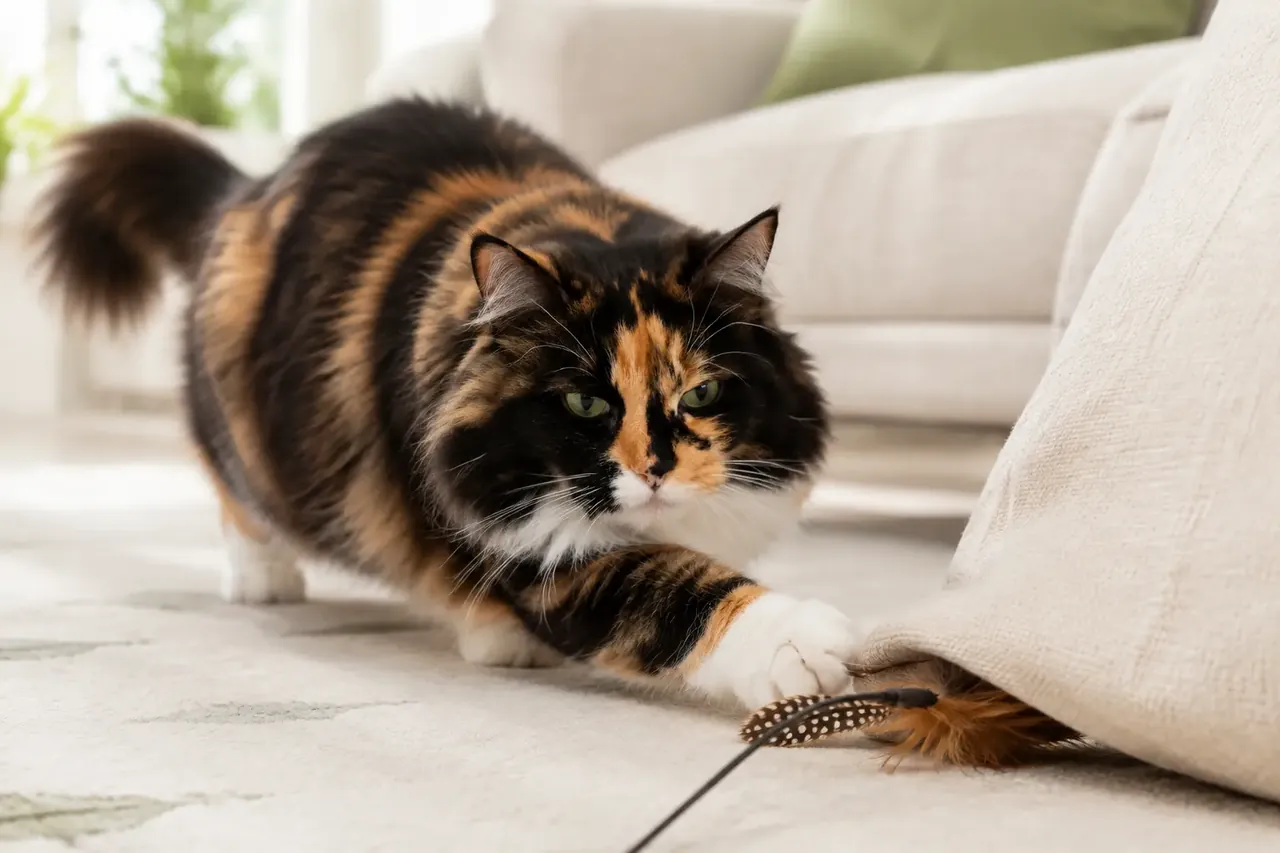
Stop wiggling fingers, wrestling with hands or allowing bites through blankets. Keep toys long enough to create distance and use a large kicker only when it is not beside your body. Everyone in the household should follow the same rule.
Schedule short purposeful sessions
Offer multiple brief wand sessions near the cat's normal activity peaks, with hiding, pauses and a final catch. Follow with part of the planned meal where suitable and count food puzzles or rewards within the daily ration.
Respond to contact without escalating
Become still, protect your face and withdraw calmly when safe rather than pulling into a deeper bite. Redirect earlier next time. Do not shout, strike, scruff or confine as punishment; use barriers and management when safety is at risk.
When adult aggression is not play
New aggression, touch sensitivity, reduced jumping, hiding, skin rippling or appetite change needs veterinary assessment. Seek human medical care for deep cat bites, hand or joint punctures, redness, swelling, fever or increasing pain.
Your quick checklist
Loading saved progress…
Three simple things you can do
You do not have to change everything today. Pick one step that feels realistic, try it and see how your cat responds.
- 1Observe your cat’s individual baseline.
- 2Make one gentle change at a time.
- 3Ask a qualified professional when health or safety is involved.
Common mistakes
×Waiting for a dramatic symptom instead of noticing smaller changes from the cat’s normal routine.
×Changing several things at once, making it difficult to learn what actually helped.
×Treating general guidance as a substitute for advice from a veterinarian who knows the individual cat.
Questions cat people ask
Does every cat follow the same rule?+
No. Age, health, history, temperament and environment all change what works for an individual.
When should I seek professional help?+
Seek veterinary advice for sudden, persistent or concerning changes and urgent help for breathing difficulty, collapse, seizures, poisoning or urinary obstruction signs.
Still looking for the right answer?
Search the full EverYes Cats encyclopedia with your own words — a symptom, food, behaviour, breed or everyday question.
Checked, dated and transparent
- Prepared by
- EverYes Cats editorial team
- Last updated
- Source checked
- Primary reference
- Cornell: Aggression in cats ↗
We begin with the named reference, rewrite the information in plain language and add practical cat-parent steps. Urgent health statements are checked against veterinary sources. This guide has not been individually reviewed by a veterinarian unless explicitly stated. It provides education, not diagnosis or treatment.
How we choose and use sources →
Spotted something unclear or outdated? Tell us so we can review it.
Loading your saved choice…
Licking followed by a bite can occur when grooming shifts into play, arousal rises or the cat ends contact. The sequence is usually easier to prevent by stopping earlier than by punishing the bite afterward.
 01
 02
 04
 05