Why is my cat afraid of the doorbell?
Doorbell fear usually links a sharp sound with strangers, doors opening or loss of control. Reduce intensity and protect a reliable retreat before training.
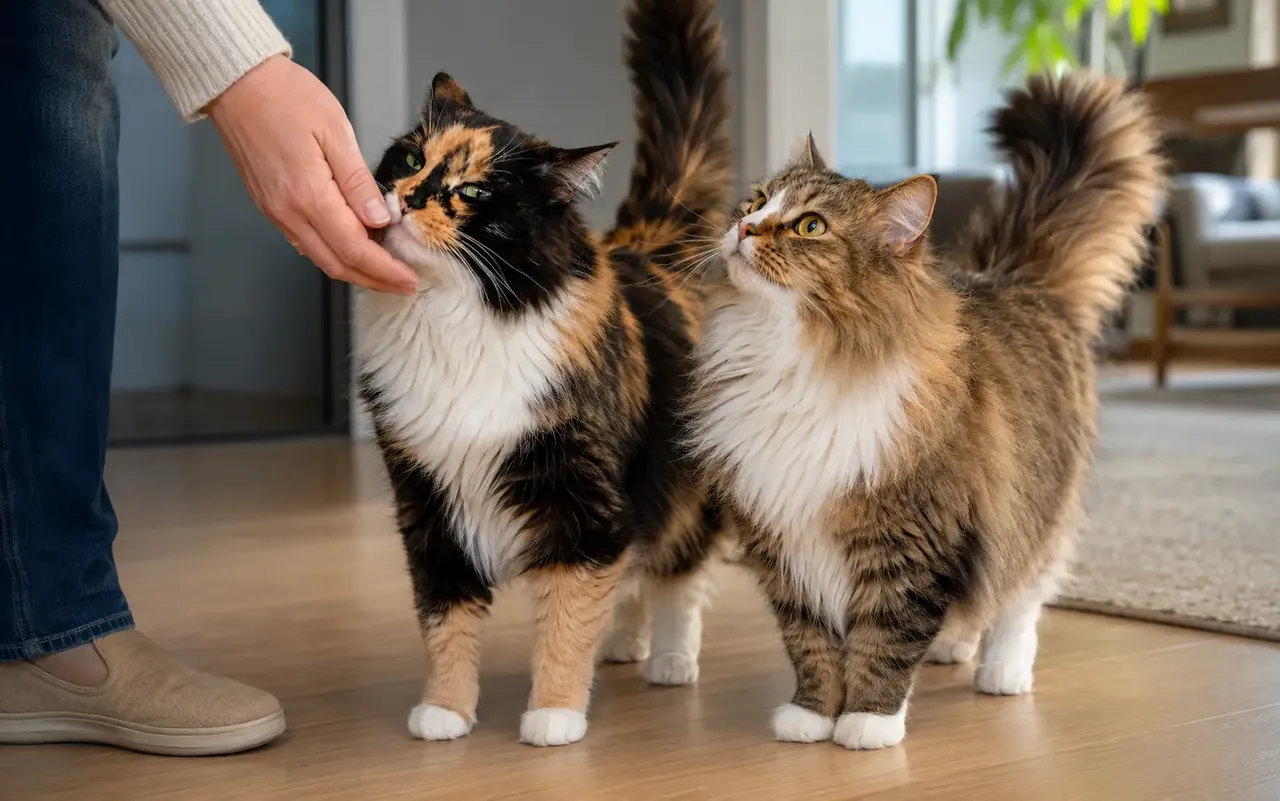 Topic illustration selected for this guide. Some learning images may be AI-assisted.
Why is my cat afraid of the doorbell — the quick answer
✓ The sound reliably predicts footsteps, opening doors and unfamiliar people, so the whole sequence can become a warning cue
✓ Prepare a safe room, reduce bell volume where possible and pair very quiet practice sounds with rewards below the fear threshold.
✓ Panic injury, food refusal, urinary change or fear spreading to ordinary sounds needs professional help.
The sound reliably predicts footsteps, opening doors and unfamiliar people, so the whole sequence can become a warning cue. This guide explains what to check before deciding what the behaviour means.
The short answer
The sound reliably predicts footsteps, opening doors and unfamiliar people, so the whole sequence can become a warning cue. The meaning becomes clearer when you compare the moment with your cat's normal pattern.
What to observe first
Track the first fear signal and whether the cat recovers after visitors settle or remains hidden for hours.
Why context matters
Timing, body language, appetite, litter-box use, mobility and recent household changes often separate a harmless preference from a problem that needs attention.
What to do now
Prepare a safe room, reduce bell volume where possible and pair very quiet practice sounds with rewards below the fear threshold.
A gentle way to test it
Make one safe change at a time and give the cat freedom to approach or leave. Avoid punishment, forced handling and repeatedly recreating a frightening situation.
When to contact a veterinarian
Panic injury, food refusal, urinary change or fear spreading to ordinary sounds needs professional help.
What to record
Note when it began, how often it happens and what occurs immediately before and after. A short video, clear photo, food record or litter record can give a veterinary professional useful context.
The practical takeaway
Start with the environment: Prepare a safe room, reduce bell volume where possible and pair very quiet practice sounds with rewards below the fear threshold. If the pattern is new, frequent or paired with illness signs, use the warning guidance above.
DEEPER GUIDE2 more detailed sectionsOpen +
What to check first
Record the first fear signal, comfortable distance and recovery time without repeatedly ringing the bell to test the cat.
What to do next
Create a guest-free safe area, lower or change the chime and pair very quiet recordings with valued rewards below the cat's fear threshold. Panic, escape injury, food refusal or fear spreading to ordinary sounds needs veterinary and qualified behaviour support.
Your quick checklist
Your progress is saved on this device.
Three simple things you can do
You do not have to change everything today. Pick one step that feels realistic, try it and see how your cat responds.
- 1Observe your cat’s individual baseline.
- 2Make one gentle change at a time.
- 3Ask a qualified professional when health or safety is involved.
Common mistakes
×Waiting for a dramatic symptom instead of noticing smaller changes from the cat’s normal routine.
×Changing several things at once, making it difficult to learn what actually helped.
×Treating general guidance as a substitute for advice from a veterinarian who knows the individual cat.
Questions cat people ask
Does every cat follow the same rule?+
No. Age, health, history, temperament and environment all change what works for an individual.
When should I seek professional help?+
Seek veterinary advice for sudden, persistent or concerning changes and urgent help for breathing difficulty, collapse, seizures, poisoning or urinary obstruction signs.
Still looking for the right answer?
Search the full EverYes Cats encyclopedia with your own words — a symptom, food, behaviour, breed or everyday question.
Checked, dated and transparent
- Prepared by
- EverYes Cats editorial team
- Last updated
- 14 August 2026
- Source checked
- 14 August 2026
- Primary reference
- International Cat Care ↗
We begin with the named reference, rewrite the information in plain language and add practical cat-parent steps. Urgent health statements are checked against veterinary sources. This guide has not been individually reviewed by a veterinarian unless explicitly stated. It provides education, not diagnosis or treatment.
Spotted something unclear or outdated? Tell us so we can review it.
Your answer helps us improve the cat encyclopedia.
Overnight guests change scent, sound, doors and routine. Protect a guest-free safe area, preserve the cat's normal resources and ask visitors to let the cat control every approach.