How to stop a cat stealing food without turning meals into conflict
Human food theft is self-rewarding and can be driven by scent, opportunity, learned sharing or increased hunger. Prevent access, offer a predictable cat-safe routine and investigate a sudden appetite change.
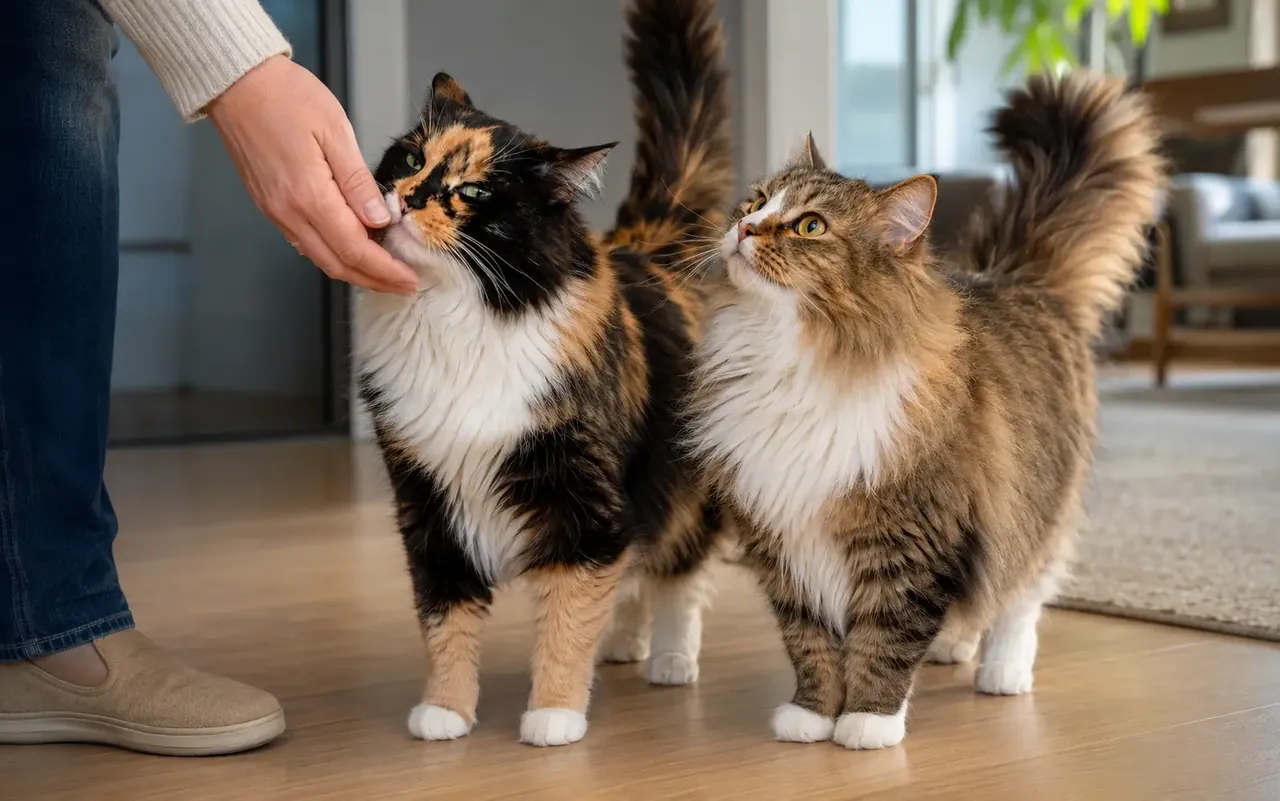 Topic illustration selected for this guide. Some learning images may be AI-assisted.
How to stop a cat stealing food without turning meals into conflict — the quick answer
✓ Successful theft rewards itself. Rich scent, hunger and accidental sharing make human meals even more valuable.
✓ Clear counters and give the cat a measured meal, puzzle or rewarded mat station before people eat.
✓ Read the complete body and setting
✓ Sudden hunger with weight loss, thirst, vomiting or agitation can be medical, especially in older cats.
A paw reaches for the plate or food repeatedly disappears from the counter. Successful theft rewards itself. Rich scent, hunger and accidental sharing make human meals even more valuable. This guide helps you read the moment, protect the relationship and choose a response that works for the cat as well as the household.
Why stealing works so well
A successful grab delivers strong smell, taste, movement and sometimes an exciting human response. Occasional sharing teaches that plates and counters may pay. This learning explains persistence better than spite, greed or a moral failure.
Prevent rehearsal before meals
Clear counters, use closed storage, secure bins and never leave hot pans, bones, string, foil or wrappers accessible. Give the cat a measured meal, easy puzzle or rewarded mat station before people eat. Keep chairs and launch points away when practical.
Do not turn removal into a chase
Trade a stolen non-dangerous item calmly when safe and block access next time. Do not shout, spray, hit or pursue the cat around the home. Avoid feeding from plates, because even tiny exceptions keep checking behaviour worthwhile.
Know which foods raise the stakes
Onion, garlic, chocolate, caffeine, alcohol, grapes or raisins, unsafe sweeteners, cooked bones, dough, medicines and very fatty or salty foods can cause harm. After a suspected exposure, contact a veterinarian or animal poison service with the ingredient, amount and time.
Check a new increase in hunger
Sudden food seeking with weight loss, thirst, vomiting, diarrhoea, agitation or a senior-cat change needs veterinary assessment. Do not simply increase portions or punish theft before medical causes and the complete daily ration are reviewed.
Your quick checklist
Loading saved progress…
Three simple things you can do
You do not have to change everything today. Pick one step that feels realistic, try it and see how your cat responds.
- 1Observe your cat’s individual baseline.
- 2Make one gentle change at a time.
- 3Ask a qualified professional when health or safety is involved.
Common mistakes
×Waiting for a dramatic symptom instead of noticing smaller changes from the cat’s normal routine.
×Changing several things at once, making it difficult to learn what actually helped.
×Treating general guidance as a substitute for advice from a veterinarian who knows the individual cat.
Questions cat people ask
Does every cat follow the same rule?+
No. Age, health, history, temperament and environment all change what works for an individual.
When should I seek professional help?+
Seek veterinary advice for sudden, persistent or concerning changes and urgent help for breathing difficulty, collapse, seizures, poisoning or urinary obstruction signs.
Still looking for the right answer?
Search the full EverYes Cats encyclopedia with your own words — a symptom, food, behaviour, breed or everyday question.
Checked, dated and transparent
- Prepared by
- EverYes Cats editorial team
- Last updated
- Source checked
- Primary reference
- FelineVMA: Healthy feline environment ↗
We begin with the named reference, rewrite the information in plain language and add practical cat-parent steps. Urgent health statements are checked against veterinary sources. This guide has not been individually reviewed by a veterinarian unless explicitly stated. It provides education, not diagnosis or treatment.
How we choose and use sources →
Spotted something unclear or outdated? Tell us so we can review it.
Loading your saved choice…
A clicker is not required for training. If the sound causes a startle, replace it with a soft consistent word or gentler marker and build a positive association below the cat's fear threshold.
 01
 03
 04
 05