Helping a cat who is afraid of new people
Unfamiliar scent, voice, movement and eye contact can make visitors threatening. Prepare a protected refuge, ask guests to ignore the cat and let any approach remain voluntary.
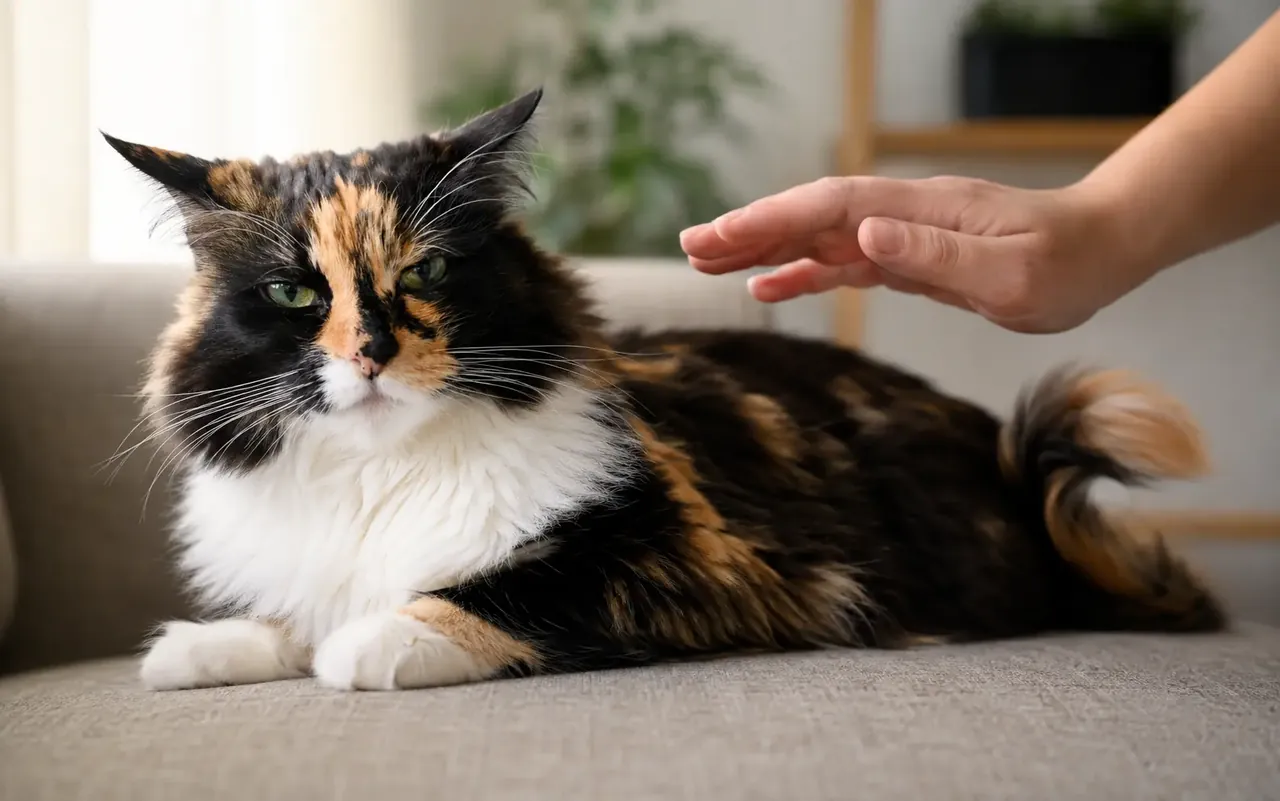 Topic illustration selected for this guide. Some learning images may be AI-assisted.
Helping a cat who is afraid of new people — the quick answer
✓ Unfamiliar voice, scent, movement and eye contact can feel threatening. Confidence varies with early experience.
✓ Prepare a safe room and ask visitors to ignore the cat, sit sideways and toss treats away from themselves.
✓ Read the complete body and setting
✓ Extreme fear, self-injury, prolonged food refusal or a sudden change needs veterinary support.
The doorbell rings and the cat vanishes while a visitor wants to follow and make friends. Unfamiliar voice, scent, movement and eye contact can feel threatening. Confidence varies with early experience. This guide helps you read the moment, protect the relationship and choose a response that works for the cat as well as the household.
Why visitors can feel overwhelming
A new person changes sound, scent, movement, doors and household attention at once. Early experience and individual temperament matter, but fear is protective rather than stubbornness. A social cat and a cautious cat do not need the same introduction.
Prepare before the door opens
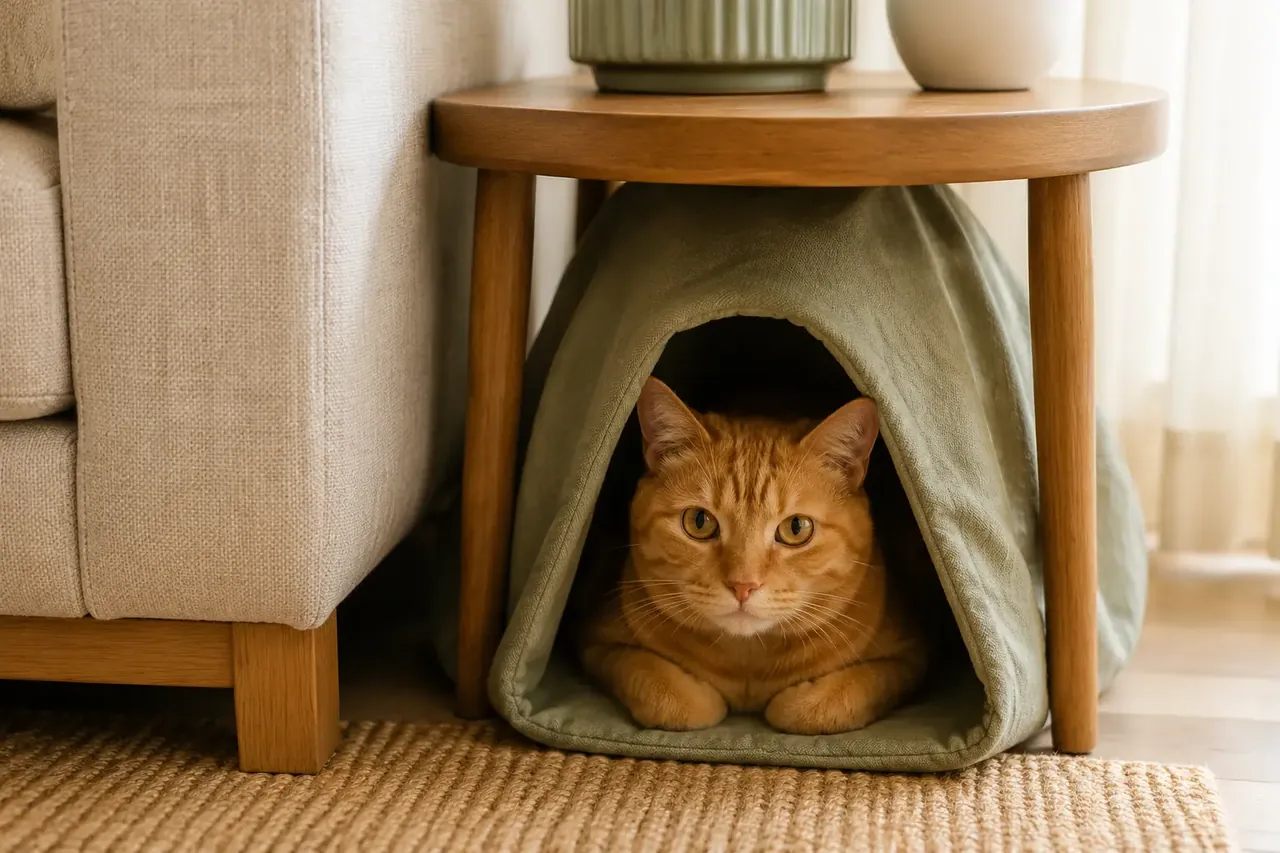
Create a guest-free room or zone with water, litter, hiding, height, scratching and familiar bedding. Secure exterior doors and tell visitors not to enter that area. Move the cat before noise escalates only if this can be done calmly.
Ask the visitor to do less
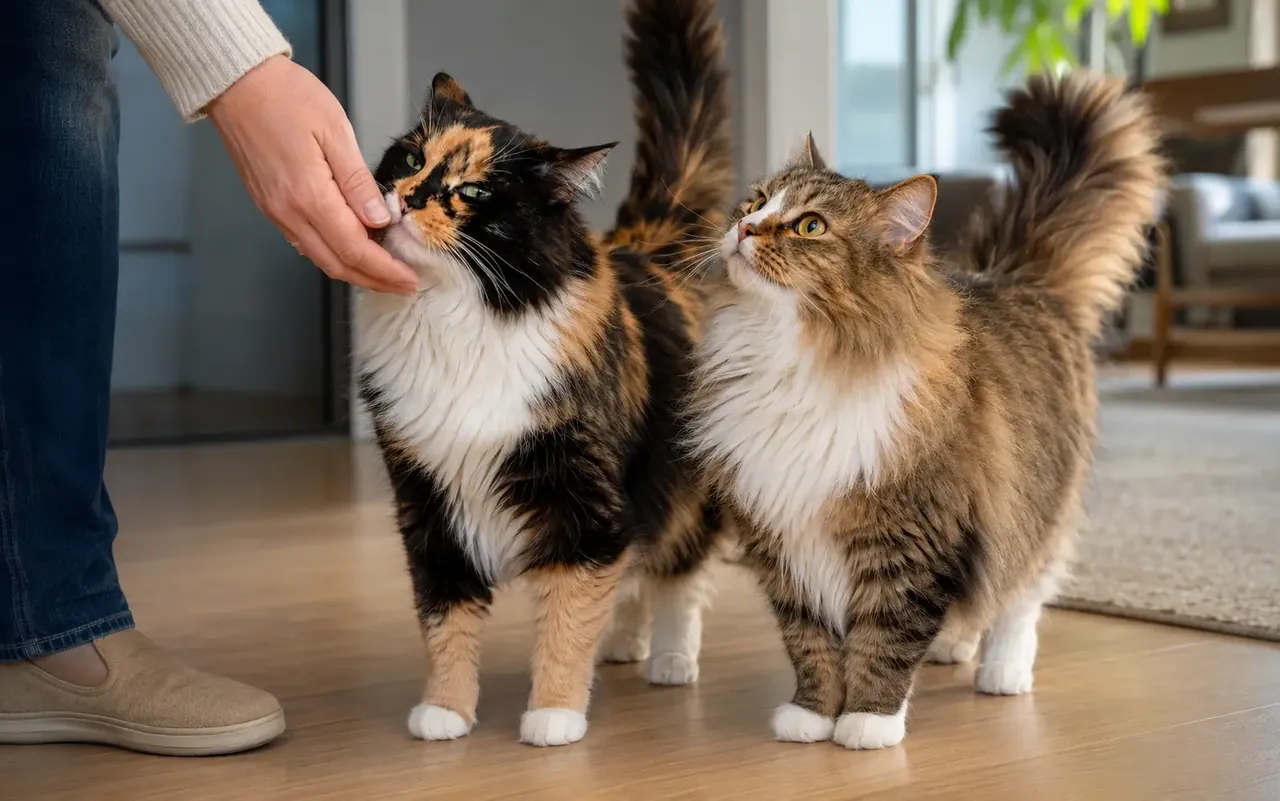
The guest should sit sideways, avoid reaching, staring or following, and speak quietly. If the cat watches comfortably, treats can be tossed away from the visitor so retreat remains easy. The cat does not have to sniff a hand or accept touch.
Progress at the cat's pace
End while the cat is still comfortable and repeat with one calm person before larger gatherings. Watch recovery after guests leave. Do not carry the cat into the room, close escape routes or use hunger to force an approach.
When visitor fear needs help
Veterinary advice is appropriate for sudden fear of familiar people, pain, appetite or litter change. Panic injury, prolonged food refusal, aggression that risks harm or fear spreading to ordinary household activity needs professional support.
Your quick checklist
Loading saved progress…
Three simple things you can do
You do not have to change everything today. Pick one step that feels realistic, try it and see how your cat responds.
- 1Prepare a quiet retreat with food, water, litter, height and hiding before visitors arrive.
- 2Ask visitors to sit sideways, avoid staring and let the cat control the distance.
- 3Toss treats away from the visitor so the cat can retreat after collecting them.
Common mistakes
×Carrying a frightened cat into the room for an introduction.
×Letting visitors follow the cat into a hiding place.
×Removing all hiding options in the hope that exposure will build confidence faster.
Questions cat people ask
Should visitors try to pet a shy cat?+
Only if the cat repeatedly chooses close contact and remains relaxed. Quietly ignoring the cat is often the most helpful first interaction.
Can fear of visitors improve?+
Often yes, with predictable low-pressure experiences at the cat's pace. Severe fear, sudden change or prolonged effects on eating and toileting need professional support.
Still looking for the right answer?
Search the full EverYes Cats encyclopedia with your own words — a symptom, food, behaviour, breed or everyday question.
Checked, dated and transparent
- Prepared by
- EverYes Cats editorial team
- Last updated
- Source checked
- Primary reference
- Cats Protection: Shy cats ↗
We begin with the named reference, rewrite the information in plain language and add practical cat-parent steps. Urgent health statements are checked against veterinary sources. This guide has not been individually reviewed by a veterinarian unless explicitly stated. It provides education, not diagnosis or treatment.
How we choose and use sources →
Spotted something unclear or outdated? Tell us so we can review it.
Loading your saved choice…
Hiding after a veterinary visit may reflect stress, fatigue, pain, medication or unfamiliar clinic scent. Provide quiet recovery and follow the clinic's instructions while monitoring appetite, breathing, movement and alertness.
 01
 02
 04
 06