Resource guarding in cats: the quiet signs owners miss
Cats can control food, litter, beds, routes or people without a visible fight. Watch who waits, retreats or uses fewer resources, then duplicate and separate essentials so every cat can access them safely.
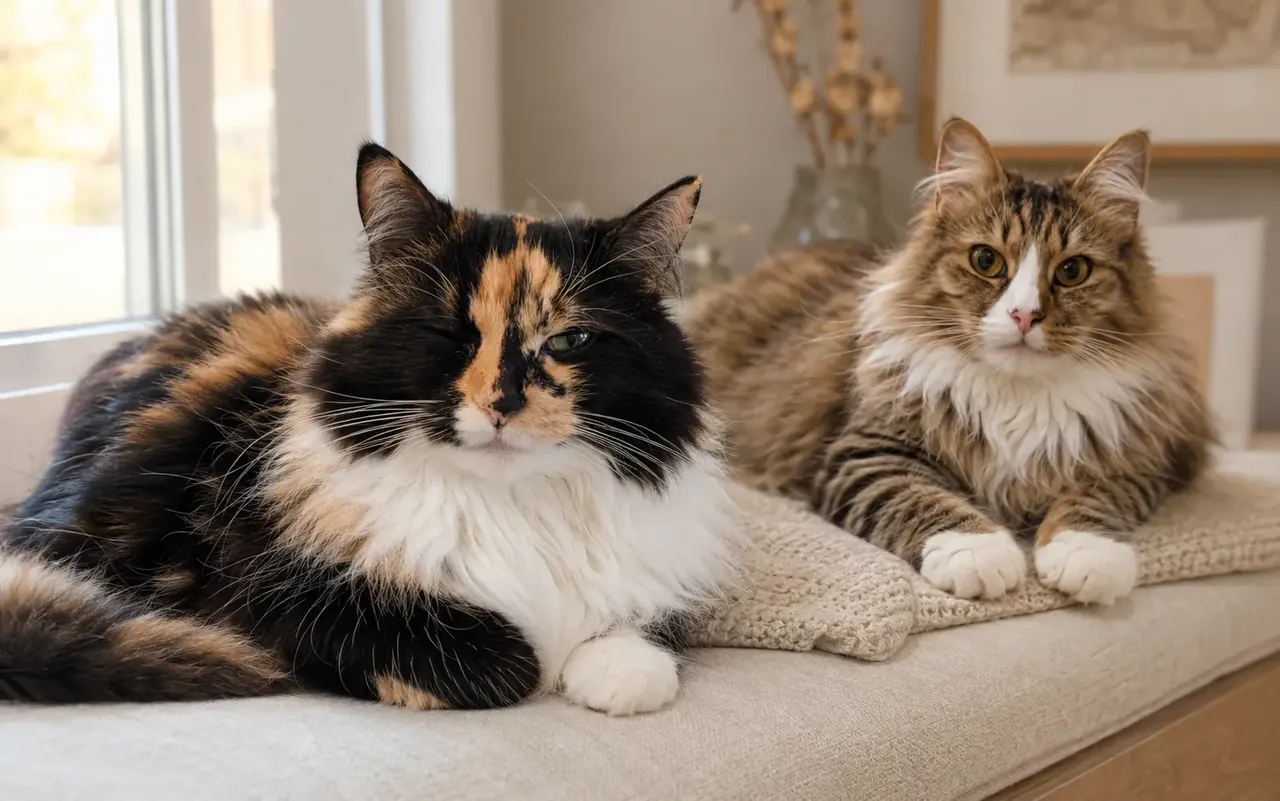
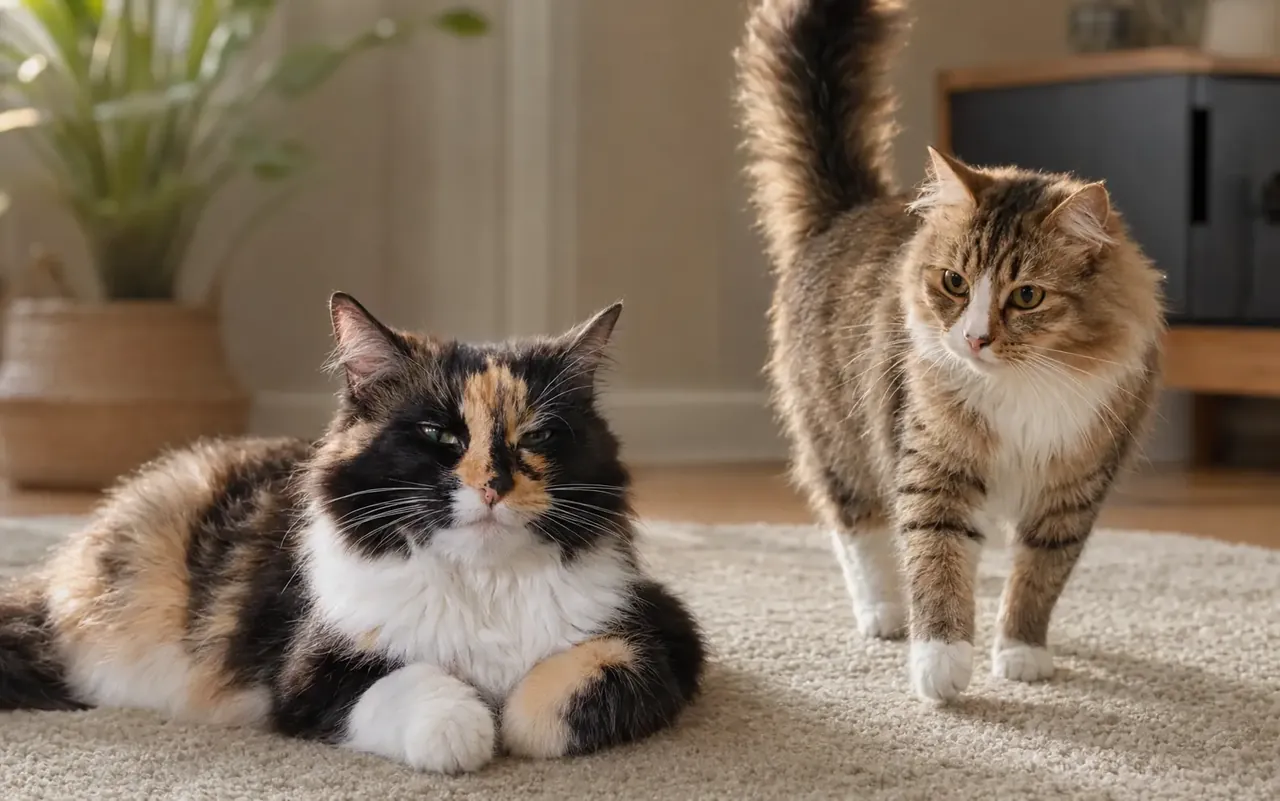 Topic illustration selected for this guide. Some learning images may be AI-assisted.
Resource guarding in cats: the quiet signs owners miss — the quick answer
✓ Cats can control access through position, staring and displacement without dramatic fighting.
✓ Provide one essential resource per cat plus extras in genuinely separate places with safe routes.
✓ Read the complete body and setting
✓ Litter avoidance, weight change, wounds or persistent stress requires veterinary assessment.
One cat waits to eat, avoids a hallway or uses litter only when another cat sleeps. Cats can control access through position, staring and displacement without dramatic fighting. This guide helps you read the moment, protect the relationship and choose a response that works for the cat as well as the household.
Guarding can be almost silent
One cat may sit near a hallway, stare from a distance or arrive whenever another approaches a bowl. The affected cat may eat quickly, toilet at unusual times, remain in fewer rooms or leave without hissing. Absence of fighting does not prove equal access.
Identify the guarded resource
Record the location, time, cats present and who changes direction. Check food, water, litter, scratching, resting height, hiding, doorways, windows and access to people. A camera can reveal waiting and blocking when no person is nearby.
Separate rather than multiply in one place
Place resources out of sight of one another in locations with safe approaches and exits. Several bowls together remain one controllable station. Feed separately, provide enough litter boxes in different areas and avoid dead-end routes.
Rebuild calm access
Prevent rehearsed blocking with doors, screens or scheduling, then reward relaxed behaviour at a distance where both cats can function. Do not carry one cat past another, punish staring or use food to lure cats into unsafe proximity.
When guarding requires professional help
Arrange veterinary checks for both cats when behaviour changes. Weight loss, litter avoidance, wounds, hiding or persistent fear needs prompt action. A qualified feline behaviour professional can guide a gradual plan once pain and illness are assessed.
Your quick checklist
Loading saved progress…
Three simple things you can do
You do not have to change everything today. Pick one step that feels realistic, try it and see how your cat responds.
- 1Observe your cat’s individual baseline.
- 2Make one gentle change at a time.
- 3Ask a qualified professional when health or safety is involved.
Common mistakes
×Waiting for a dramatic symptom instead of noticing smaller changes from the cat’s normal routine.
×Changing several things at once, making it difficult to learn what actually helped.
×Treating general guidance as a substitute for advice from a veterinarian who knows the individual cat.
Questions cat people ask
Does every cat follow the same rule?+
No. Age, health, history, temperament and environment all change what works for an individual.
When should I seek professional help?+
Seek veterinary advice for sudden, persistent or concerning changes and urgent help for breathing difficulty, collapse, seizures, poisoning or urinary obstruction signs.
Still looking for the right answer?
Search the full EverYes Cats encyclopedia with your own words — a symptom, food, behaviour, breed or everyday question.
Checked, dated and transparent
- Prepared by
- EverYes Cats editorial team
- Last updated
- Source checked
- Primary reference
- FelineVMA: Healthy feline environment ↗
We begin with the named reference, rewrite the information in plain language and add practical cat-parent steps. Urgent health statements are checked against veterinary sources. This guide has not been individually reviewed by a veterinarian unless explicitly stated. It provides education, not diagnosis or treatment.
How we choose and use sources →
Spotted something unclear or outdated? Tell us so we can review it.
Loading your saved choice…
Cats that previously coexisted may fight after pain, fear, unfamiliar scent, redirected arousal or a resource conflict. Separate safely, arrange health checks and rebuild familiarity gradually rather than forcing a reunion.
 01
 02
 03
 04
 05
 06