← Cat encyclopedia07
133 GUIDES
Everyday care
Coat, claws, teeth, litter trays and kind cooperative handling.
IN THIS LIBRARY
Everyday cat care made practical
Good care is less about forcing a perfect routine and more about cooperation. This hub covers coat, claws, teeth, litter boxes, cleaning and handling skills that make health checks easier.
WHAT ARE YOU CARING FOR?
Six gentle care pathways
Choose the closest task for short steps, common mistakes and clear signs that home care should stop.
COOPERATIVE CARECooperative care for cats
Build trust with tiny steps, choice and predictable pauses
Open the care guide →CHECK THE MOUTHHow to train a brief look at your cat’s mouthTeach a brief lip lift without holding or forcing
Open the care guide →LITTER ON PAWSWhy Does Cat Litter Stick to My Cat's Paws?Reduce tracking while checking comfort and texture
Open the care guide →START WITH YOUR QUESTION
What this topic covers
Start below the cat’s tolerance limit
Touch for one second, reward and stop. Cooperative care grows through successful repetitions, not restraint.
Choose tools for the individual
Coat, age, mobility and experience change what works. Watch for skin twitching, tail movement or attempts to leave.
Keep cleaning safe and simple
Follow product and fabric labels, ventilate, and prevent access until surfaces are safe and dry. Never mix chemicals.
QUICK QUESTIONS
Important answers before you browse
How often should I groom my cat?+
It depends on coat, shedding, self-grooming and health. Short positive sessions are usually best.
Why does my cat hate being brushed?+
Pulling, static, sensitive skin, pain, the wrong tool or overly long sessions can contribute.
GOOD PLACE TO START · 8 min
Should a cat play immediately after eating?
Cats can usually walk and play gently after eating, but vigorous chasing, twisting and jumping immediately after a large meal may trigger discomfort, regurgitation or vomiting in some cats.
Read the guide →POPULAR IN THIS LIBRARY
See the complete library ↓Useful answers to start with
01 · 8 minShould a cat play immediately after eating?Read guide →02 · 9 minWhy does my cat dig for a long time before pooping?Read guide →03 · 9 minWhy doesn’t my cat cover poop?Read guide →04 · 9 minWhy does my cat scratch the wall beside the litter box?Read guide →05 · 9 minWhy does my cat pee over the edge of the litter box?Read guide →06 · 9 minWhy does my cat use the litter box right after I clean it?Read guide →
All everyday care guides
133 articles01
GUIDE · 8 min
→02Should a cat play immediately after eating?
Cats can usually walk and play gently after eating, but vigorous chasing, twisting and jumping immediately after a large meal may trigger discomfort, regurgitation or vomiting in some cats.
guide · 13–15 min
→03Grooming an arthritic cat more comfortably
Groom an arthritic cat in short, supported sessions on a non-slip surface. Work only where the cat stays comfortable, and treat reduced grooming as possible health information rather than laziness.
GUIDE · 9 min
→04How to train a brief look at your cat’s mouth
A cooperative mouth look is built in seconds: chin touch, brief lip lift and immediate release. It does not replace a veterinary dental examination.
GUIDE · 8 min
→05How to reduce static in a cat’s coat safely
Dry air and synthetic fabrics can create small static shocks in a cat's coat. Improve room humidity and change fabrics rather than applying human anti-static products to the cat.
GUIDE · 8 min
→06Why does my cat’s fur separate into little sections?
A visible line where fur parts can be normal coat direction, but grease, dandruff, thinning or skin change beneath it deserves closer inspection.
GUIDE · 9 min
→07How to reduce litter tracking without upsetting your cat
Box size, litter texture and a gentle exit surface can reduce mess. A calm, practical guide to what it means and what to do next.
GUIDE · 9 min
→08Teach a cat to cooperate with an ear check
Teach ear checks through tiny rewarded steps so you can notice changes without pinning or frightening the cat.
guide · 13–15 min
→09Covered or uncovered litter box: which does a cat prefer?
Choose ventilation, visibility and security based on the individual cat with a calm, practical routine.
guide · 13–15 min
→10A spring care reset for indoor and outdoor cats
Prepare for shedding, parasites, open windows and changing activity with a calm, practical routine.
GUIDE · 9 min
→11Why does my cat dig for a long time before pooping?
Digging before defecating is normal preparation when it is brief and the cat passes stool comfortably. Prolonged digging can signal litter-box or medical discomfort.
GUIDE · 9 min
→12Why doesn’t my cat cover poop?
Some healthy cats simply do not cover stool. A change can also reflect a small or dirty box, disliked litter, social pressure, pain or urgency.
GUIDE · 9 min
→13Why does my cat scratch the wall beside the litter box?
Scratching the wall after toileting is often an extended covering motion caused by a small box, awkward wall position or disliked litter depth.
GUIDE · 9 min
→14Why does my cat pee over the edge of the litter box?
Posture, box height, size and mobility can place urine outside even when the cat enters. A calm, practical guide to what it means and what to do next.
GUIDE · 9 min
→15Why does my cat use the litter box right after I clean it?
Waiting for litter cleaning often means the cat values a fresh tray or has learned the routine. It can also reveal that the box becomes unacceptable between cleanings.
GUIDE · 9 min
→16Why won’t my cat walk across the litter mat?
A cat may avoid a litter mat because it feels sharp, unstable, noisy or difficult for sore paws and joints. The route to the tray must remain comfortable.
GUIDE · 9 min
→17Should a litter box have a flap door?
A flap hides the box from people but can trap odour and reduce a cat’s view and exit choices. A calm, practical guide to what it means and what to do next.
GUIDE · 9 min
→18Why Is My Cat's Fur So Static in Winter?
Dry indoor air and friction can make the coat crackle or lift during colder months. Learn what to check, what to change safely and when professional help matters.
GUIDE · 9 min
→19Why Does My Cat Shed More When the Heating Comes On?
Indoor light and temperature can blur seasonal shedding patterns, while warm dry air loosens coat. Learn what to check, what to change safely and when professional help matters.
GUIDE · 9 min
→20How Do I Safely Handle a Mat Behind My Cat's Ear?
Thin folded skin sits close beneath ear mats, making scissors especially dangerous. Learn what to check, what to change safely and when professional help matters.
GUIDE · 9 min
→21Why Does My Cat's Fur Still Clump After Brushing?
A brush may skim the surface while loose undercoat, grease or small tangles remain underneath. A practical guide to what matters, what to do and when to seek help.
GUIDE · 9 min
→22Why Does My Cat Hate Having the Belly Brushed?
The belly is vulnerable and may also contain tangles, sensitive skin or painful areas. Learn what to check, what to change safely and when professional help matters.
GUIDE · 9 min
→23Why Does My Cat Hate the Comb but Like the Brush?
Different tools change pressure, sound and pulling at the skin, especially where small tangles catch. A practical guide to what matters, what to do and when to seek help.
GUIDE · 9 min
→24Why Does My Cat Lick the Coat After Brushing?
Cats often restore their preferred coat arrangement and scent after handling. Learn what to check, what to change safely and when professional help matters.
GUIDE · 9 min
→25Why Does My Cat Bite During Nail Trimming?
Restraint, paw pressure, previous discomfort or sessions that last too long can trigger defensive biting. A practical guide to what matters, what to do and when to seek help.
GUIDE · 9 min
→26How Much Fur on the Brush Is Normal for a Cat?
The amount varies with coat, season and grooming frequency, so the skin and overall density matter most. Learn what to check, what to change safely and when professional help matters.
GUIDE · 9 min
→27Why Do My Cat's Claws Keep Snagging on Blankets?
Long, curved or rough claw tips can catch soft loops, especially when scratching options are limited. Learn what to check, what to change safely and when professional help matters.
GUIDE · 9 min
→28How to teach a cat to accept a comb
Teach comb contact as a series of tiny voluntary steps: seeing the comb, approaching it, one gentle touch and then one easy stroke.
GUIDE · 9 min
→29Why Does My Cat Bite the Claws While Grooming?
Gentle claw nibbling can remove old sheaths, but repeated biting may signal irritation or pain. Learn what to check, what to change safely and when professional help matters.
GUIDE · 9 min
→30Why does my cat bite the brush?
Biting the brush is usually a request to stop, a response to pulling or a shift into play—not disobedience. End before the bite and lower the difficulty.
GUIDE · 9 min
→How to reduce static when brushing a cat
Static during brushing is more common in dry air and synthetic materials. Reduce friction and change the setup rather than applying human hair products to the coat.
COMPLETE LIBRARYShow 103 more everyday care guidesOpen +
31
GUIDE · 9 min
→32How to perform a gentle cat skin check
A calm home skin check can spot fleas, scabs, redness, lumps and hair loss early, but it should never involve squeezing, scraping or forcing a painful cat.
GUIDE · 9 min
→33Why does my cat hate having the back feet touched?
Vulnerability, limited handling history or pain can make hind-paw contact difficult. A calm, practical guide to what it means and what to do next.
GUIDE · 9 min
→34How to introduce a cat to towel handling
Towel training should teach that a towel predicts safety and rewards, not sudden restraint. Begin with resting near it before any wrapping movement.
GUIDE · 9 min
→35What If My Cat Will Not Let Me Brush Their Teeth?
Toothbrushing must be introduced gradually, and forced restraint can make future care harder. Learn what to check, what to change safely and when professional help matters.
GUIDE · 9 min
→36Why Does Cat Litter Stick to My Cat's Paws?
Litter sticking to paws can reflect damp granules, long paw fur, very fine litter or a dirty box. Persistent licking may indicate irritation or pain.
GUIDE · 9 min
→37Why Is My Cat Carrying Litter Into the Bed?
Granules can travel on paws or long fur, especially when the route from the tray is short. Learn what to check, what to change safely and when professional help matters.
GUIDE · 9 min
→38Why tight mats should not be cut with scissors
Cat skin is thin, mobile and easily pulled into a mat where it cannot be seen. A calm, practical guide to what it means and what to do next.
GUIDE · 9 min
→39Why Does the Litter Box Still Smell After Scooping?
Residue, saturated litter, trapped odor in scratched plastic or an unclean rim can remain after waste is removed. Learn what to check, what to change safely and when professional help matters.
GUIDE · 9 min
→40How long should a cat grooming session last?
The useful session ends before the cat reaches its handling limit. A calm, practical guide to what it means and what to do next.
GUIDE · 9 min
→41Why Does My Cat Avoid the Litter Box After a New Bag of Litter?
A formula, fragrance, texture or dust level can vary even when the packaging looks familiar. Learn what to check, what to change safely and when professional help matters.
GUIDE · 9 min
→42What to write down before your cat’s vet appointment
Useful vet notes show what changed, when it began and how eating, drinking, urine, stool, sleep and movement compare with the cat's normal baseline.
GUIDE · 8 min
→43How to help a cat who slips on smooth floors
Add non-slip routes immediately, but treat new slipping as health information. Smooth floors can expose painful joints, weak muscles, long claws or neurological problems that need assessment.
GUIDE · 8 min
→44Why does my cat balance on the edge of the litter box?
Balancing on the rim often means the cat dislikes touching the litter, lacks room to turn or finds the box uncomfortable. Offer a larger uncovered alternative while checking urgently for urinary or bowel pain.
GUIDE · 9 min
→45Why Does My Cat Scratch the Sides of the Litter Box?
The cat may be trying to cover waste when the tray is small, litter is shallow or the wall is the nearest surface.
GUIDE · 8 min
→46How deep should cat litter be?
Start with about five centimetres of familiar unscented litter, then adjust gradually. The right depth lets a cat dig without hitting bare plastic or sinking into an unstable surface.
GUIDE · 9 min
→47Why Does My Cat Put the Front Paws on the Litter Box Edge?
Balancing on the edge can avoid disliked litter or help posture, but it may also suggest discomfort or a cramped tray.
GUIDE · 9 min
→48Why Does My Cat Leave Waste Uncovered?
Not every cat covers waste, and preference, litter texture, box size and urgency all affect the routine.
GUIDE · 8 min
→49Why does my cat hate being brushed along the back?
A cat may resist back brushing because the tool pulls, static builds, the skin is overstimulated or the area hurts. Stop before resistance and rebuild with one gentle rewarded stroke at a time.
GUIDE · 9 min
→50Why Does My Cat Use the Litter Box Soon After Eating?
Eating can stimulate normal gut movement, but urgency and stool quality determine whether the pattern is concerning.
GUIDE · 8 min
→51Why do I find hollow claw pieces on the floor?
Thin hollow claw pieces on the floor are usually normal shed outer sheaths, not whole claws. Scratching helps cats remove these layers as a sharper claw grows beneath.
GUIDE · 8 min
→52Why won’t my cat let me touch the back paws?
Many cats protect their back paws because handling feels vulnerable, but a new reaction can reveal pain. Build consent gradually and never restrain the leg for practice.
GUIDE · 8 min
→53Do cats shed more with the seasons?
Seasonal shedding can increase with daylight and indoor heating, but bald patches, broken skin or sudden coat change are not normal moulting.
GUIDE · 8 min
→54How to stop a kitten climbing people’s legs
Kittens climb legs for access, attention or because moving fabric resembles play. Prevent rehearsal with safe climbing options and reward four paws on the floor.
GUIDE · 8 min
→55When should you update a cat’s microchip details?
Update a cat's microchip record whenever contact details or ownership change. The chip is useful only when the correct registry can reach the current keeper.
GUIDE · 8 min
→56How to teach a cat to pause before an open door
Teach a door pause by rewarding a station away from the entrance, beginning with the door fully closed. Training never replaces a physical escape barrier.
GUIDE · 8 min
→57Can you train a cat without a clicker?
You can train without a clicker by using one short consistent marker word followed immediately by a small reward. Timing matters more than the device.
GUIDE · 8 min
→58Is a litter box beside the washing machine a problem?
A washing machine can make a litter area unpredictable through vibration, noise and blocked access. Many cats prefer a quieter alternative.
GUIDE · 8 min
→59Why does my cat use only one of several litter boxes?
Choosing one box is normal if it best matches the cat's location, litter and sense of safety. The other boxes still need to be genuinely separate and usable.
GUIDE · 8 min
→60Why does my cat refuse a covered litter box?
A hood can trap odour, restrict turning and create a single guarded exit. Practical observations, a safe next step and clear warning signs.
GUIDE · 8 min
→61How can you clean a cat who hates a wet cloth?
A wet cloth changes temperature, scent and fur sensation, so resistance is understandable. Use the least handling needed and avoid forcing a full wipe-down.
GUIDE · 8 min
→62Can stress make a cat shed suddenly?
Stress can increase grooming and loosen fur, but heavy shedding also has seasonal, nutritional, parasitic and medical causes.
GUIDE · 8 min
→63Why do my cat’s claws keep catching on fabric?
Claws that repeatedly catch fabric may be too long, splitting or shedding an outer sheath. Senior or arthritic cats may need extra nail checks.
GUIDE · 8 min
→64How can you check a cat’s mouth without forcing it open?
Most cats dislike forced mouth handling. Train tiny voluntary steps and leave a painful or urgent examination to a veterinarian.
GUIDE · 8 min
→65How should you handle a mat under a cat’s front leg?
Armpit mats form where fine fur rubs and can pull painfully on thin skin. Do not cut tight mats with scissors.
GUIDE · 8 min
→66Why does my cat bite the brush while being groomed?
Biting the brush usually means discomfort, fear, play arousal or that the session continued past the cat's tolerance. Short consent-based sessions work better.
guide · 8 min
→67Dental pain in cats: the quiet signs
Cats often hide dental pain. New food dropping, one-sided chewing, bad breath, drooling, face rubbing or avoiding hard food deserves a veterinary dental examination.
guide · 8 min
→68How to check your cat's body condition
A body-condition score uses ribs, waist and abdominal shape to judge fat cover more reliably than weight alone. Your veterinary team can show the correct hands-on method.
guide · 8 min
→69How many litter boxes does a cat need?
Start with one litter box per cat plus one extra, then spread them across separate, quiet locations. Several trays in one row do not give a blocked or worried cat a genuine alternative.
GUIDE · 6 min
→70Why cats scratch—and how to save the sofa
Scratching is normal scent marking, stretching and claw care. The practical solution is a stable surface in the right place—not punishment.
GUIDE · 8 min
→71How to brush a long-haired cat
Comb a long-haired cat in short, rewarded sessions and check friction areas before small tangles become painful mats. Never cut a tight mat with scissors close to moving skin.
guide · 8 min
→72Bad breath in cats is not just cosmetic
How dental disease can hide behind a normal appetite.
guide · 8 min
→73Can an indoor cat get fleas?
How parasites enter, what to look for and why dog products can be dangerous.
guide · 8 min
→74How to prepare for your cat's veterinary appointment
Better notes, safer travel and less stressful answers at the clinic.
GUIDE · 7 min
→75What normal cat grooming looks like
Normal grooming is regular but not damaging. Bald patches, broken skin, mats, a greasy coat or a sudden change in grooming can point to pain, parasites, allergy, stress or illness.
guide · 8 min
→76How to introduce tooth brushing to a cat
Build a few calm seconds at a time with cat-safe toothpaste.
guide · 8 min
→77How to trim cat claws without a wrestling match
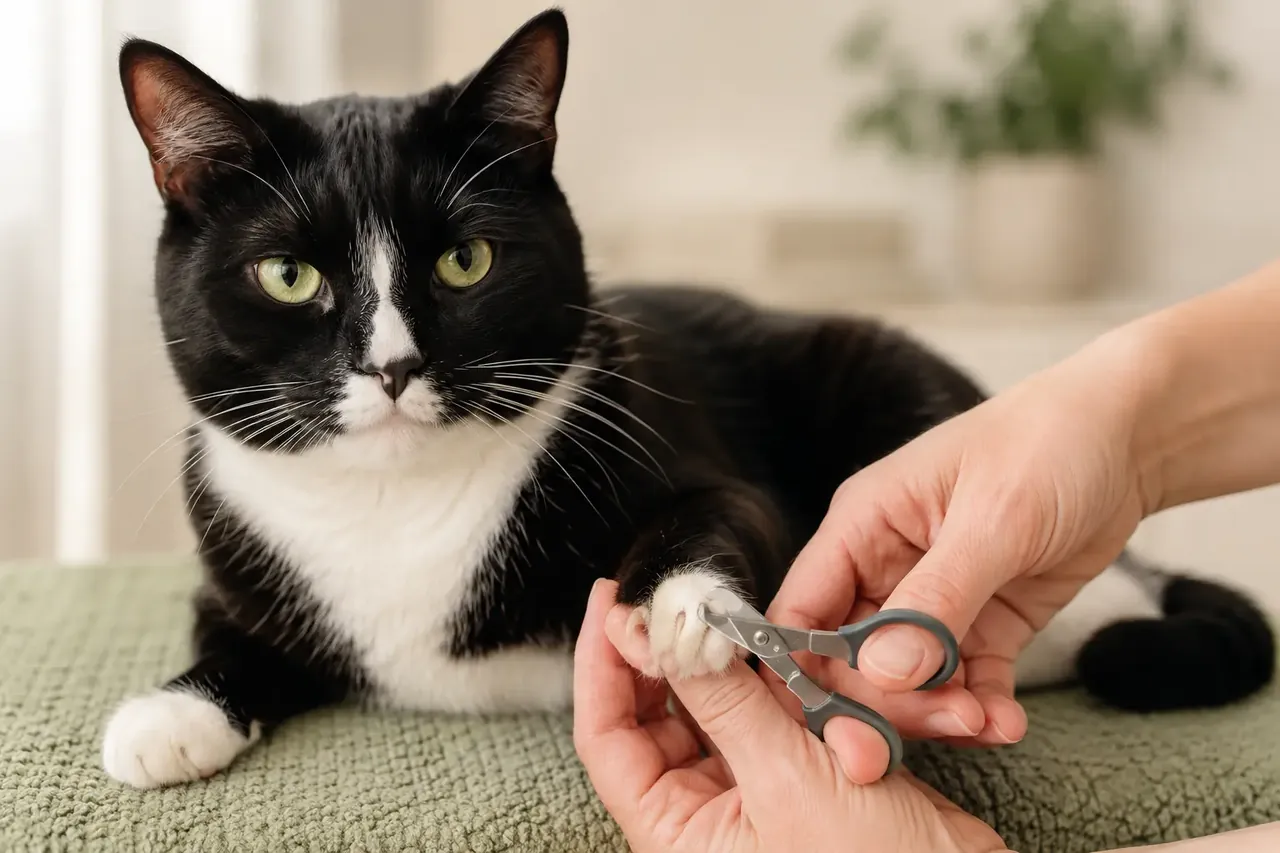
Trim only the clear hooked tip of a cat’s claw in bright light. Teach paw handling in tiny rewarded steps, stop before restraint becomes a fight and ask for a demonstration when the quick is hard to see.
guide · 8 min
→78A litter-box cleaning routine cats actually appreciate
Scoop, wash and replace without turning the tray into a scented mystery.
guide · 13–15 min
→79How to brush a short-haired cat
Remove loose coat without turning grooming into a wrestling match with a calm, practical routine.
GUIDE · 7 min
→80Where to place litter boxes
Place litter boxes in separate quiet areas with easy approach and escape routes. Avoid noisy appliances, dead ends and locations another cat can block; add accessible trays wherever stairs or mobility create a barrier.
guide · 13–15 min
→81How to brush a dense or double-coated cat
Reach loose undercoat while protecting healthy topcoat and skin with a calm, practical routine.
guide · 13–15 min
→82A practical routine for cat shedding season
Manage seasonal loose fur with brief, repeatable sessions with a calm, practical routine.
guide · 13–15 min
→83What to do when your cat hates being brushed
Rebuild grooming through choice, tiny steps and better tools with a calm, practical routine.
guide · 13–15 min
→84How to prevent mats in a long-haired cat
Stop small tangles becoming painful felted mats with a calm, practical routine.
guide · 13–15 min
→85How to handle a small tangle in a cat’s coat
Separate a loose tangle without pulling delicate skin with a calm, practical routine.
guide · 8 min
→86How to weigh your cat at home accurately
Turn a simple number into a useful trend without creating scale stress.
guide · 13–15 min
→87When a cat may need a sanitary trim
Keep urine or stool from collecting in long rear fur while preserving dignity and safety with a calm, practical routine.
guide · 8 min
→88Train a cat to take medication before it is urgent
Cooperative care can make future tablets, liquids and checks less stressful.
guide · 13–15 min
→89Does a cat need a bath?
Decide when bathing helps and when it creates more risk than benefit with a calm, practical routine.
guide · 13–15 min
→90Cat grooming wipes and waterless products: what to check
Choose occasional cleaning products without leaving unsafe residue on a self-grooming animal with a calm, practical routine.
guide · 6 min
→91Cat dental care at home
Dental disease is common and often hidden until it hurts.
guide · 13–15 min
→92Why a cat’s coat may look greasy—and how to help
Improve comfort while finding the reason normal grooming has changed with a calm, practical routine.
guide · 6 min
→93A better litter-box routine
Clean, accessible trays protect comfort and make changes easier to spot.
guide · 13–15 min
→94Teach a kitten to enjoy grooming
Create lifelong comfort with brushes, paws, ears and brief body checks with a calm, practical routine.
guide · 6 min
→95Cooperative care for cats
Cooperative care teaches a cat that simple handling cues predict choice, brief contact and reward. Training can make routine care calmer, but it must never delay urgent examination or treatment.
guide · 13–15 min
→96Grooming a cat after surgery
Keep the coat comfortable without disturbing an incision or recovery plan with a calm, practical routine.
guide · 13–15 min
→97The five-minute skin check to do while grooming
Notice small coat and skin changes before they become hidden by fur with a calm, practical routine.
guide · 13–15 min
→98How to clean a cat’s paws after outdoor mess
Remove salt, mud or household residue before the cat licks it away with a calm, practical routine.
guide · 13–15 min
→99A gentler nail-trimming plan for a fearful cat
Build cooperation without completing every claw in one session with a calm, practical routine.
guide · 13–15 min
→100A split or broken cat claw: safe first steps
Protect a damaged claw without pulling attached tissue with a calm, practical routine.
guide · 13–15 min
→101How scratching supports healthy cat claws
Provide surfaces that let a cat stretch, shed claw sheaths and mark normally with a calm, practical routine.
guide · 13–15 min
→102Dental wipes for cats: useful alternative or false shortcut?
Understand what wipes can and cannot do for plaque control with a calm, practical routine.
guide · 13–15 min
→103How to choose a cat dental product that is worth using
Separate evidence-based home care from attractive packaging and unsupported promises with a calm, practical routine.
guide · 13–15 min
→104Caring for a cat after a professional dental procedure
Support eating, medication and healing during the first days at home with a calm, practical routine.
guide · 13–15 min
→105How to deep-clean a cat litter box
Remove residue without leaving a smell or texture the cat rejects with a calm, practical routine.
guide · 6 min
→106The cat microchip checklist
A microchip only helps when its registration details are current and the chip can be scanned.
guide · 13–15 min
→107How to choose litter your cat will actually use
Match texture, scent and maintenance to feline preference rather than human marketing with a calm, practical routine.
guide · 13–15 min
→108Why litter-box size matters more than clever design
Give the cat room to turn, dig and eliminate without touching every wall with a calm, practical routine.
guide · 13–15 min
→109Set up a low-entry litter box without creating leaks
Make toileting easier for kittens, seniors and cats with pain or disability with a calm, practical routine.
GUIDE · 8 min
→110Set up resources for a multi-cat home
A multi-cat home needs duplicated resources in separate locations, not one large shared station. Spread food, water, litter, scratching, height and hiding so one cat cannot quietly control everything.
guide · 13–15 min
→111Automatic litter boxes: benefits, limits and cat safety
Evaluate whether automation improves hygiene without frightening or excluding the cat with a calm, practical routine.
guide · 13–15 min
→112Litter-box planning for a small apartment
Provide enough clean, private options without hiding every box in one cramped area with a calm, practical routine.
guide · 13–15 min
→113Litter boxes in a multilevel home
Make a safe toilet reachable without stairs becoming the only route with a calm, practical routine.
guide · 13–15 min
→114Control litter-box odor without overwhelming your cat
Solve odor through hygiene, ventilation and health observation rather than perfume with a calm, practical routine.
guide · 13–15 min
→115How to reduce litter tracking without making the box unpleasant
Contain scattered granules while preserving a comfortable entrance and substrate with a calm, practical routine.
guide · 13–15 min
→116How often should cat food bowls be washed?
Reduce old food, grease and bacterial buildup without leaving detergent residue with a calm, practical routine.
guide · 13–15 min
→117How to clean a cat water fountain properly
Keep water appealing while cleaning hidden slime, filters and pump parts with a calm, practical routine.
guide · 13–15 min
→118A cleaner feeding station for cats
Separate food, water and litter while making daily cleaning easy with a calm, practical routine.
guide · 13–15 min
→119How to clean cat toys without ruining the fun
Remove dirt and saliva while preserving safe scent, structure and movement with a calm, practical routine.
guide · 13–15 min
→120How to wash cat bedding and keep it familiar
Clean allergens, parasites or accidents without erasing every reassuring household scent with a calm, practical routine.
guide · 13–15 min
→121How to use a flea comb on a cat
Check for fleas and flea dirt while keeping handling brief and useful with a calm, practical routine.
guide · 13–15 min
→122Build a tick-prevention plan for your cat
Match prevention and daily checks to local exposure, season and the cat's lifestyle with a calm, practical routine.
guide · 13–15 min
→123Why an indoor cat may still need parasite prevention
Assess real exposure from people, other pets, prey, balconies, travel and insects with a calm, practical routine.
guide · 13–15 min
→124Summer grooming without shaving a healthy cat
Support coat function, hydration and comfort during warm weather with a calm, practical routine.
guide · 13–15 min
→125Winter dry skin in indoor cats
Improve the environment without covering up parasites, allergy or illness with a calm, practical routine.
guide · 13–15 min
→126How to clean a cat’s ears safely—and when not to
Remove visible outer-ear dirt only when cleaning is actually recommended with a calm, practical routine.
guide · 13–15 min
→127How to wipe mild eye discharge from a cat
Keep eyelids comfortable without treating an unknown eye problem at home with a calm, practical routine.
guide · 13–15 min
→128Face-fold care for flat-faced cats
Keep folds and the area beneath the eyes dry while monitoring breathing and skin with a calm, practical routine.
guide · 13–15 min
→129Rear-end hygiene for a long-haired cat
Prevent painful contamination while respecting skin and addressing the underlying cause with a calm, practical routine.
guide · 13–15 min
→130Grooming support for an overweight cat
Help reach areas the cat cannot comfortably clean while supporting a veterinary weight plan with a calm, practical routine.
guide · 13–15 min
→131Choose the right grooming tool for your cat’s coat
Match comb, brush and technique to coat length, density and tolerance with a calm, practical routine.
GUIDE · 9 min
→132How to remove cat urine from a wool sofa
Blot cat urine from wool immediately without rubbing or flooding, check the sofa’s care label and test only a wool-compatible cleaner in a hidden area.
GUIDE · 7 min
→133Why won’t my cat use a covered litter box?
A cat may avoid a covered litter box because it traps odour, feels cramped or has one easily blocked entrance. Offer a fair uncovered comparison.
GUIDE · 6 min
→How to remove cat hair from black clothes
Remove cat hair from black clothes while the fabric is dry, then wash without overfilling the machine. This lifts fur instead of spreading it through the load.