Why does my cat gently paw my face?
A gentle paw to the face may ask for contact, food or a change in interaction. Read claw position and body tension, protect your face and reward safer communication.
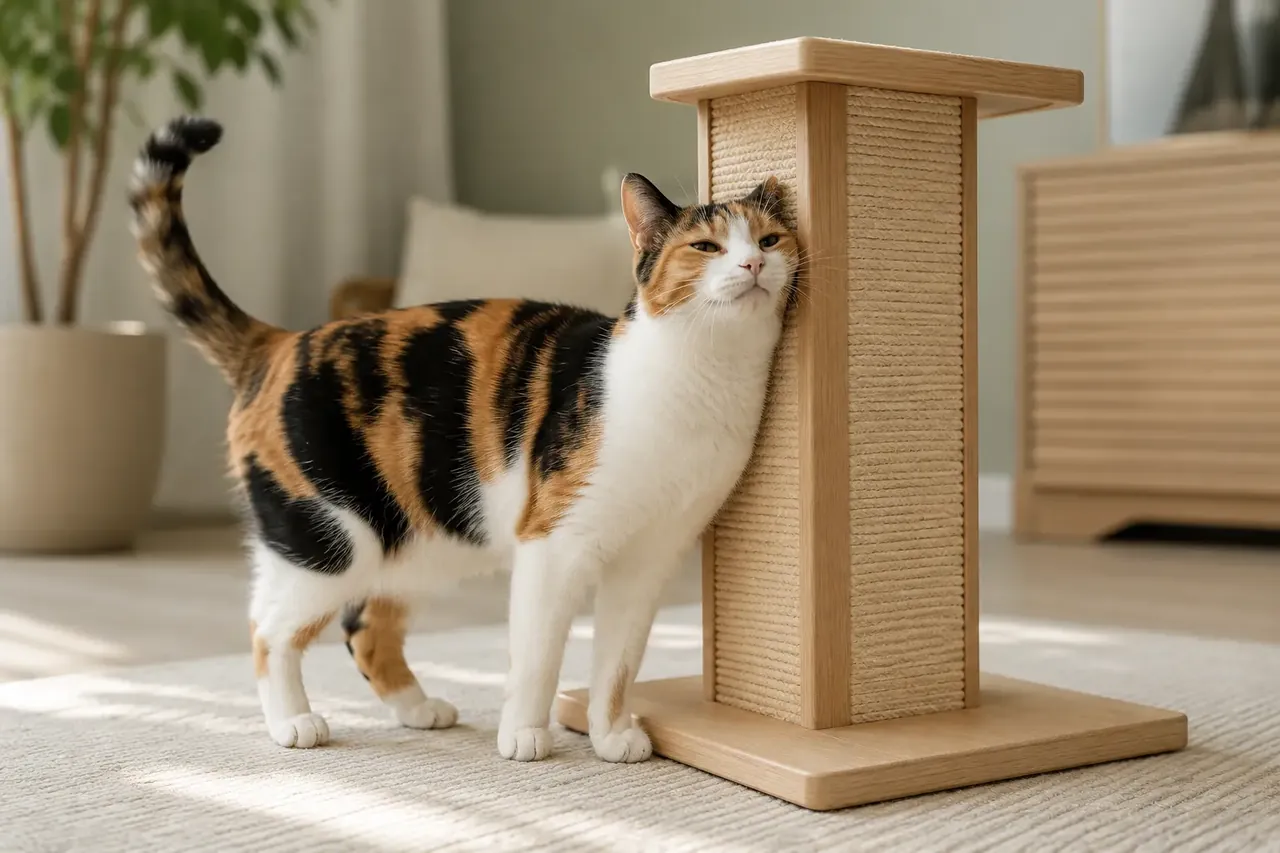 Topic illustration selected for this guide. Some learning images may be AI-assisted.
Why does my cat gently paw my face — the quick answer
✓ The cat may be seeking contact, waking you or trying to change what is happening
✓ Protect your face, redirect to a safe target and reward calm communication such as sitting nearby.
✓ Sudden irritability, uncontrolled striking or pain on handling needs professional assessment.
The cat may be seeking contact, waking you or trying to change what is happening. Claw position, pressure and body tension separate gentle communication from escalating frustration.
The short answer
The cat may be seeking contact, waking you or trying to change what is happening. Claw position, pressure and body tension separate gentle communication from escalating frustration.
What to observe
Check whether it occurs around food, sleep, petting or blocked access.
How to read the situation
Claw position, pressure and body tension separate gentle communication from escalating frustration. Compare the pattern with your cat’s usual behaviour and consider timing, body language, appetite, litter-box use, mobility and recent changes.
What to do now
Protect your face, redirect to a safe target and reward calm communication such as sitting nearby.
What not to do
Do not punish, frighten, force or repeatedly test the cat. Avoid changing several things at once, because that makes the response harder to interpret.
When to contact a veterinarian
Sudden irritability, uncontrolled striking or pain on handling needs professional assessment.
What to record
Write down when it began, how often it happens and what occurs immediately before and after. A short video, clear photo, food record or litter record can give the veterinary team useful context.
What to check first
Note whether it happens during sleep, petting, feeding or blocked access and whether pressure or claws increase when the person responds.
DEEPER GUIDE1 more detailed sectionsOpen +
What to do next
Turn or move calmly, redirect to a safe target and reward sitting nearby or touching a designated object. Do not play with hands near the face. Sudden irritability, uncontrolled striking, confusion or pain on handling needs veterinary or qualified behavioural assessment.
Your quick checklist
Your progress is saved on this device.
Three simple things you can do
You do not have to change everything today. Pick one step that feels realistic, try it and see how your cat responds.
- 1Notice whether it occurs during rest, attention seeking or overstimulation.
- 2Redirect claws to a blanket or toy.
- 3Move calmly rather than startling the cat.
Common mistakes
×Punishing gentle investigation.
×Allowing claws near eyes.
×Assuming one universal meaning.
Questions cat people ask
Why does my cat put a paw on my face?+
It may seek contact, create distance, investigate scent or repeat a behavior that gained attention.
How can I stop it at night?+
Reward settling nearby and gently block or redirect the paw without turning it into an exciting game.
Still looking for the right answer?
Search the full EverYes Cats encyclopedia with your own words — a symptom, food, behaviour, breed or everyday question.
Checked, dated and transparent
- Prepared by
- EverYes Cats editorial team
- Last updated
- 14 August 2026
- Source checked
- 14 August 2026
- Primary reference
- International Cat Care ↗
We begin with the named reference, rewrite the information in plain language and add practical cat-parent steps. Urgent health statements are checked against veterinary sources. This guide has not been individually reviewed by a veterinarian unless explicitly stated. It provides education, not diagnosis or treatment.
Spotted something unclear or outdated? Tell us so we can review it.
Your answer helps us improve the cat encyclopedia.
A mirror reflection may resemble another cat without matching scent or normal movement cues. Calm curiosity is harmless; repeated distress means changing the mirror setup.