Why does my cat wrap its tail around me?
A cat wrapping its tail around you can be a brief friendly contact or a way to stay close while passing. Read the whole body and let the cat decide how long contact lasts.
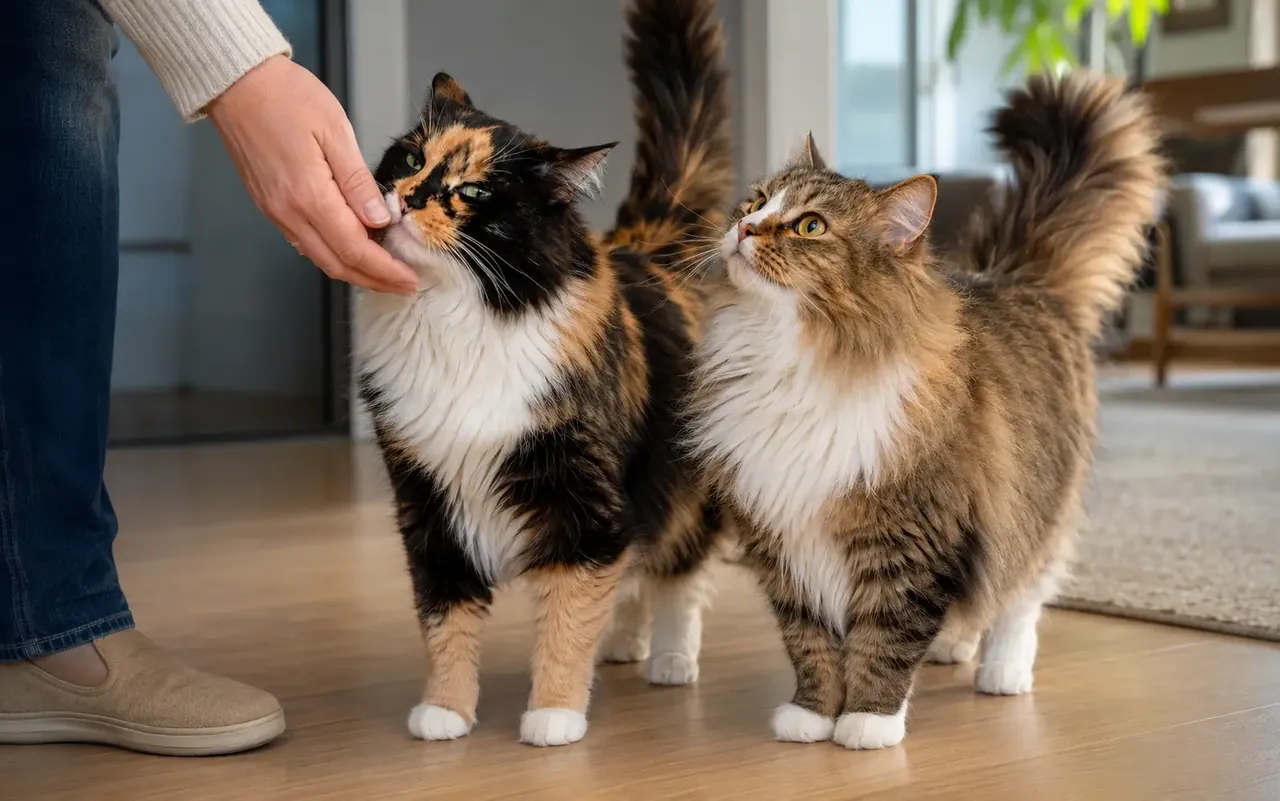
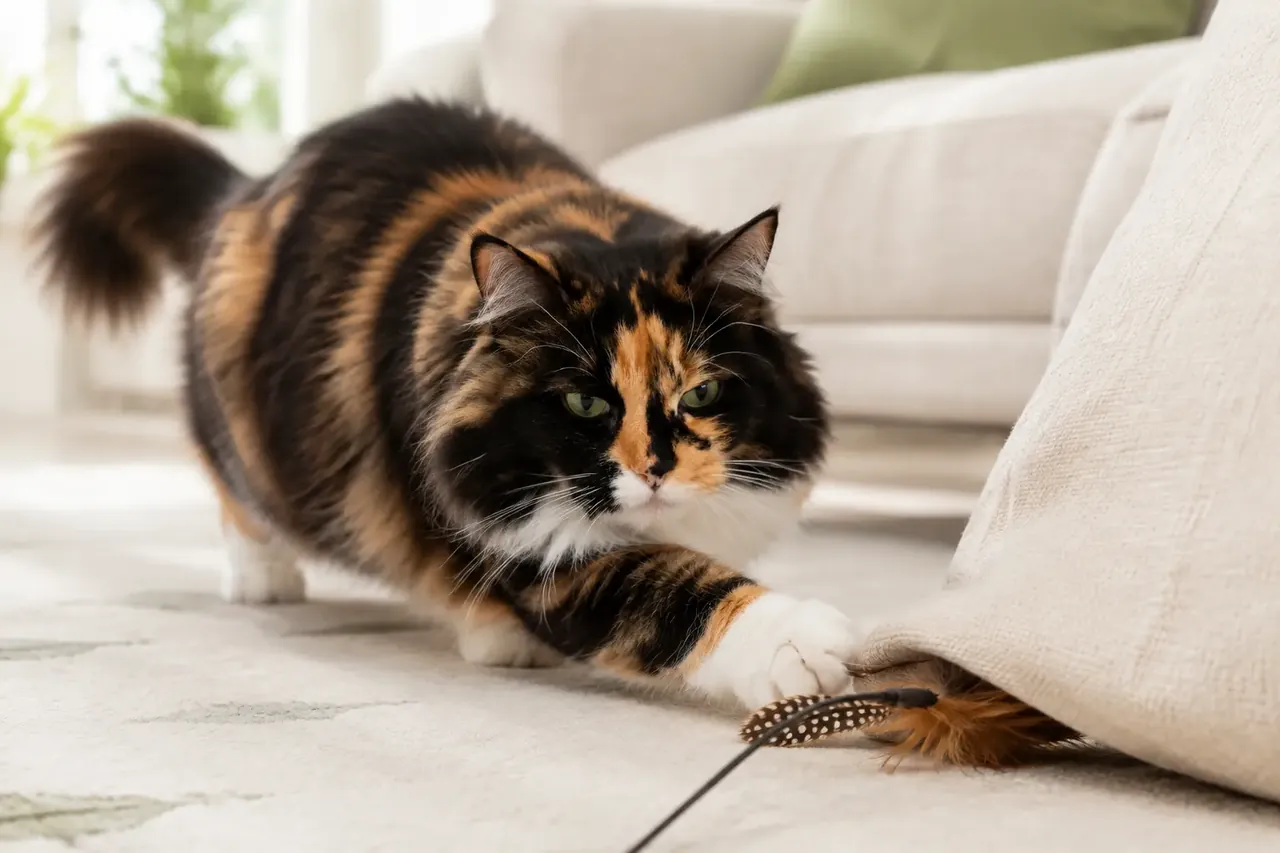 Topic illustration selected for this guide. Some learning images may be AI-assisted.
Why does my cat wrap its tail around me — the quick answer
✓ A relaxed tail curl around a person or another cat can be friendly contact.
✓ Let the cat initiate and avoid grabbing or holding the tail.
✓ Pain, a limp tail or sudden loss of movement requires prompt veterinary care.
A relaxed tail curl around a person or another cat can be friendly contact. It may function like brief tactile communication while the cat passes or settles nearby. Here is the useful version of the answer: what the behaviour may mean, what it does not prove and when it stops being just a fun cat fact.
A flexible social gesture
Cats may curve or wrap the tail around a familiar person, another cat or an object during greeting and close movement. It can accompany affiliation, but one tail position cannot prove a specific emotion by itself.
Read the complete interaction
Soft eyes, neutral ears, rubbing and a loose body support comfort. A rapidly flicking tail, skin twitching, stiff posture or retreat means interaction should pause even if the tail touched you moments earlier.
Let contact remain voluntary
Stand or sit still and allow the cat to pass or remain. Do not grab the tail, pull the cat closer or block departure. If the cat returns, offer brief touch in a preferred area and pause for consent.
Protect the tail
Watch doors, chairs, children and other pets around a tail wrapped near legs. Teach gentle handling and provide open routes. Tail injuries can be painful and may affect movement or toileting depending on severity.
Check a changed tail posture
Seek veterinary advice for a suddenly limp, painful, swollen or persistently tucked tail, reduced movement, dragging or difficulty toileting. Major trauma, severe pain, hind-limb weakness or inability to urinate is urgent.
Your quick checklist
Loading saved progress…
Three simple things you can do
You do not have to change everything today. Pick one step that feels realistic, try it and see how your cat responds.
- 1Stay still for a moment and let the cat complete the contact without grabbing the tail.
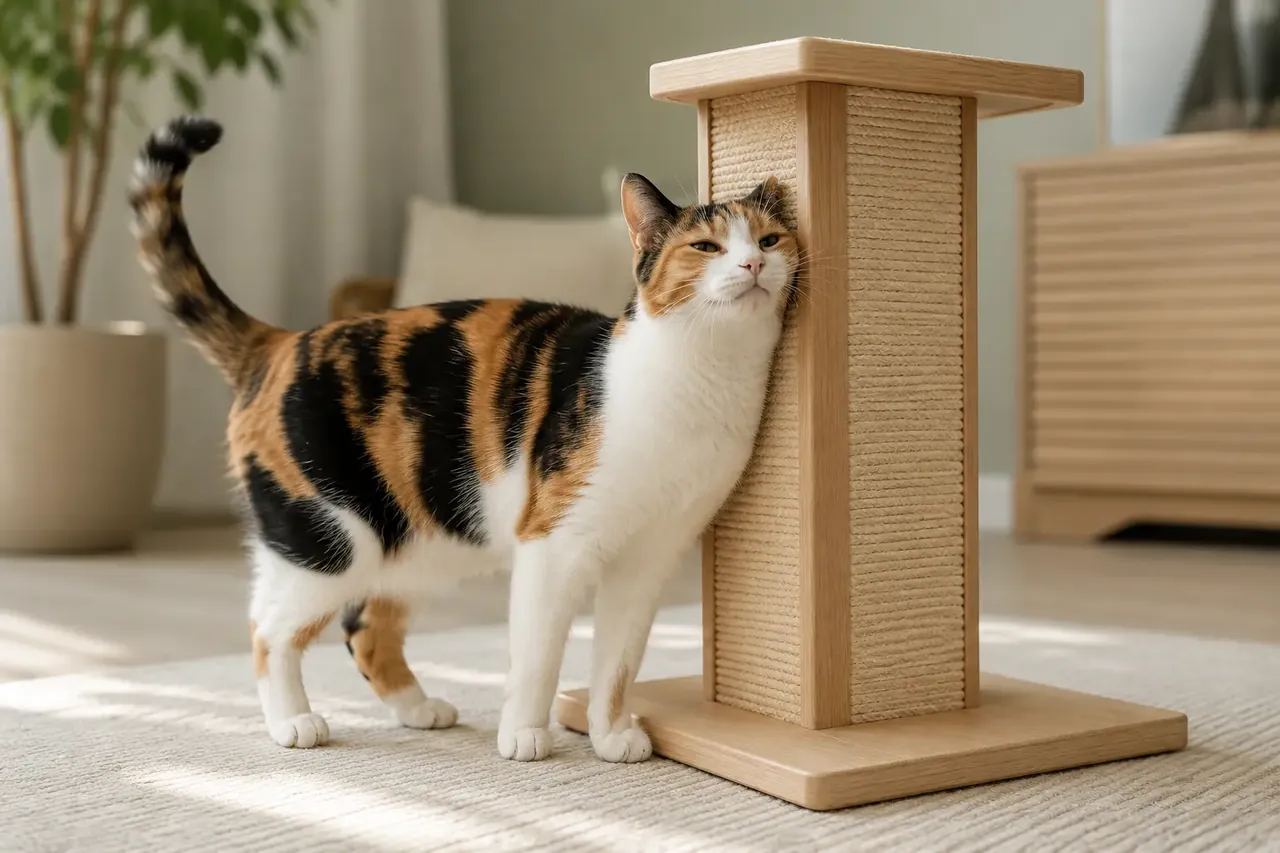
- 2Read the soft tail curl together with loose muscles, neutral ears and freedom to move away.
- 3Offer a hand near cheek level if the cat seeks more contact, then pause for consent.
Common mistakes
×Pulling the tail closer because the gesture seems affectionate.
×Treating one tail movement as a complete emotional translation.
×Ignoring pain, limpness or reduced movement after a tail injury.
Questions cat people ask
Is a tail wrapped around me a cat hug?+
It can be friendly tactile contact, so calling it a cat hug is a charming shorthand. It is not an exact human-language translation, and the relaxed whole body supplies the meaning.
Why does my cat wrap its tail around another cat?+
Friendly cats may use brief tail contact while greeting or resting close. Watch whether both cats remain loose and free to leave.
Still looking for the right answer?
Search the full EverYes Cats encyclopedia with your own words — a symptom, food, behaviour, breed or everyday question.
Checked, dated and transparent
- Prepared by
- EverYes Cats editorial team
- Last updated
- Source checked
- Primary reference
- International Cat Care ↗
We begin with the named reference, rewrite the information in plain language and add practical cat-parent steps. Urgent health statements are checked against veterinary sources. This guide has not been individually reviewed by a veterinarian unless explicitly stated. It provides education, not diagnosis or treatment.
How we choose and use sources →
Spotted something unclear or outdated? Tell us so we can review it.
Loading your saved choice…
A cat may place a paw on you to seek contact, steady the body, pause your hand or ask for something. The rest of the posture shows whether to continue or give space.
 01
 02
 03
 05