← Cat encyclopedia09
23 GUIDES
Adoption & introductions
Slow, practical plans for new cats and multi-cat homes.
IN THIS LIBRARY
Adopting and introducing cats
A successful adoption is not measured by instant cuddles or immediate friendship. This hub supports the first days, gradual introductions, resource planning and realistic expectations for shy cats and multi-cat homes.
WHERE ARE YOU IN THE TRANSITION?
Six new-cat pathways
Choose the closest stage or concern. Progress is measured in comfortable behaviour, not a fixed number of days.
SAFE BASE ROOMThe new-cat safe room
A quiet room, easy resources and realistic expectations
Open the settling guide →FIRST INTRODUCTIONIntroduce a new cat slowlyScent, distance and gradual visual contact
Open the settling guide →THE 3-3-3 RULEThe 3-3-3 rule for adopted catsA flexible guide—not a deadline for confidence
Open the settling guide →RESET A BAD MEETINGWhen a cat introduction went badly: reset the processSeparate, decompress and rebuild below the stress threshold
Open the settling guide →ONE OR TWO KITTENSOne kitten or two? Make the decision for your homeChoose for the cats, people, space and resources
Open the settling guide →ADDING A THIRD CATShould you add a third cat to your home?Assess relationships, territory and long-term capacity
Open the settling guide →START WITH YOUR QUESTION
What this topic covers
Start smaller than the whole home
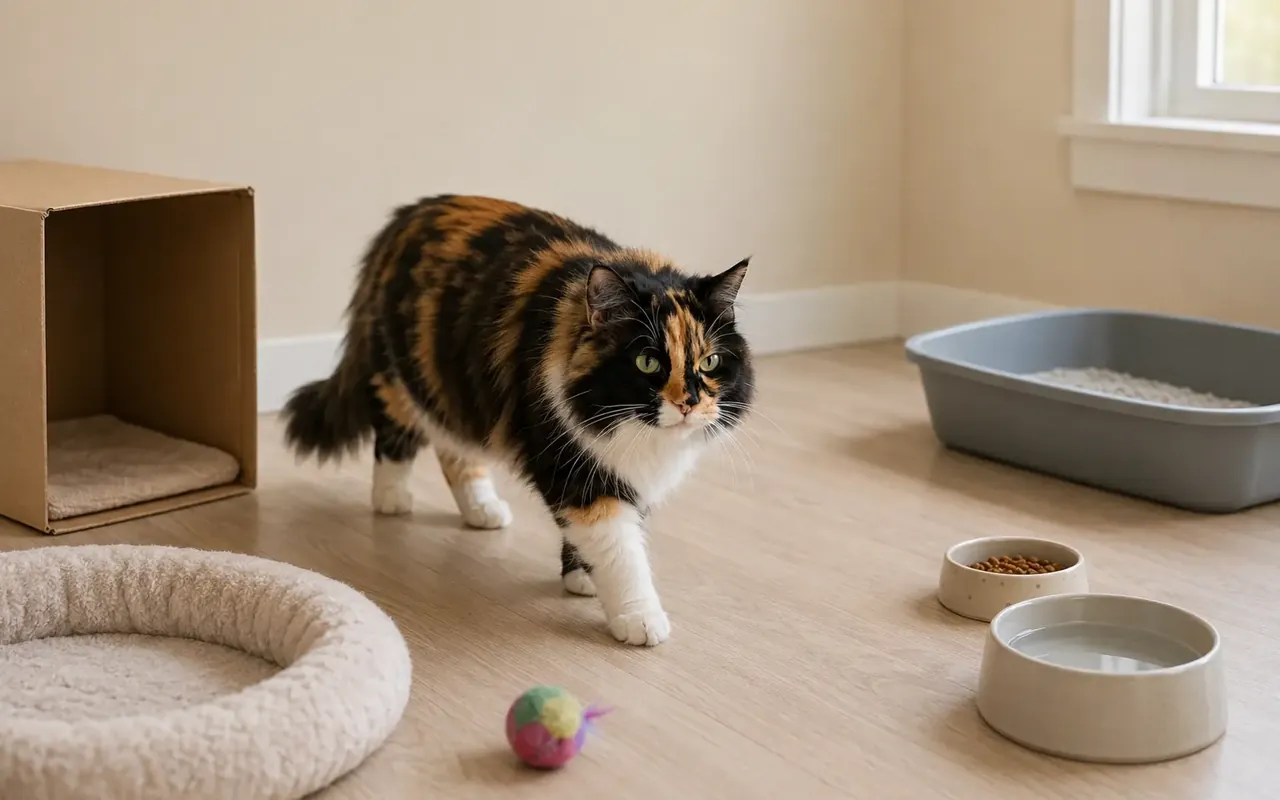
A quiet base room with food, water, litter, hiding and rest makes the new environment easier to understand. Expand territory as confidence grows.
Let scent come before proximity
Exchange bedding and build positive experiences on opposite sides of a closed door before brief visual contact. Move back a step when either cat remains distressed.
Aim for safety, not forced friendship
Cats may become friends, tolerate each other or prefer separate routines. Provide enough distributed resources that peaceful distance remains possible.
QUICK QUESTIONS
Important answers before you browse
How long does a newly adopted cat hide?+
It varies from hours to weeks. Track eating, drinking and toileting, maintain quiet access, and seek advice if basic needs are not being met.
How long do cat introductions take?+
There is no fixed timeline. Progress depends on both cats’ history, health, space and response at each stage.
GOOD PLACE TO START · 9 min
Why Does My Cat Sit in Doorways?
A doorway offers useful views, scents and control over movement between spaces. Learn what to observe, what to try safely and when to seek help.
Read the guide →POPULAR IN THIS LIBRARY
See the complete library ↓Useful answers to start with
01 · 9 minWhy Does My Cat Sit in Doorways?Read guide →02 · 9 minWhy Does One Cat Keep Taking the Other Cat's Bed?Read guide →03 · 9 minWhy Do My Cats Swap Sleeping Places?Read guide →04 · 9 minWhy Does One Cat Watch the Other Cat Eat?Read guide →05 · 9 minWhy Do My Cats Use the Same Litter Box?Read guide →06 · 9 minWhy Does My Cat Hiss and Then Keep Playing?Read guide →
All adoption & introductions guides
23 articles01
GUIDE · 9 min
→02Why Does My Cat Sit in Doorways?
A doorway offers useful views, scents and control over movement between spaces. Learn what to observe, what to try safely and when to seek help.
GUIDE · 9 min
→03Why Does One Cat Keep Taking the Other Cat's Bed?
The bed may offer the best location, warmth or scent rather than proving a fixed dominance relationship. Learn what to observe, what to try safely and when to seek help.
GUIDE · 9 min
→04Why Do My Cats Swap Sleeping Places?
Cats may rotate with temperature, sunlight, scent and household activity. Learn what to observe, what to try safely and when to seek help.
GUIDE · 9 min
→05Why Does One Cat Watch the Other Cat Eat?
Watching can be curiosity, but fixed positioning near food may create subtle pressure. Learn what to observe, what to try safely and when to seek help.
GUIDE · 9 min
→06Why Do My Cats Use the Same Litter Box?
Cats may share a preferred box, but one popular tray does not make the extras unnecessary. Learn what to observe, what to try safely and when to seek help.
GUIDE · 9 min
→07Why Does My Cat Hiss and Then Keep Playing?
A hiss can be a distance request within play and should be respected before arousal rises. Learn what to observe, what to try safely and when to seek help.
GUIDE · 8 min
→08Should you add a third cat to your home?
A third cat will not automatically entertain the others or solve loneliness. Decide based on space, existing relationships, resources, finances and your ability to introduce slowly.
GUIDE · 9 min
→09How Can I Tell if One Cat Is Blocking the Water Bowl?
Quiet staring, doorway sitting or following can restrict access without obvious fighting.
GUIDE · 9 min
→10Why Does One Cat Use Every Scratcher in the House?
Scratchers carry scent and visual marks, so one confident cat may use several valuable locations.
GUIDE · 9 min
→11Why Do My Cats Touch Noses and Then Hiss?
A close greeting can provide scent information, while a hiss may immediately request more distance.
GUIDE · 9 min
→12Why Does One Cat Sleep Near the Other Cat's Litter Route?
The location may be comfortable, but it can accidentally or deliberately make access feel unsafe.
GUIDE · 9 min
→13Why Do My Cats Take Turns at the Window?
Cats may naturally rotate a valued view, but subtle displacement can look like polite turn-taking.
GUIDE · 9 min
→14Why Does My Cat Meow When the Other Cat Leaves the Room?
The call may seek contact, predict play or reflect uncertainty when a familiar companion disappears.
GUIDE · 9 min
→15Why Does One Cat Wait Until the Other Finishes Drinking?
Waiting can be polite spacing, but it may also show that only one cat feels comfortable approaching the shared bowl at a time.
GUIDE · 9 min
→16Why Does One Cat Hide When the Other Cat Plays?
Fast movement and noisy play can overwhelm a cautious, older or less mobile cat. Schedule separate play, add high and low escape routes and protect quiet zones.
GUIDE · 9 min
→17Why Does My Cat Scratch Right After the Other Cat?
Sequential scratching can add scent and visual marks to a socially important shared location. Provide multiple sturdy scratchers across different rooms and routes.
GUIDE · 9 min
→18Why Do My Cats Move Carefully Past Each Other in a Narrow Hallway?
A narrow route removes easy escape choices, so even cats who coexist peacefully may slow, stare or wait.
guide · 8 min
→19When a cat introduction went badly: reset the process
Separate, decompress and rebuild from scent instead of forcing another meeting.
GUIDE · 7 min
→20The 3-3-3 rule for adopted cats
The 3-3-3 rule is a flexible adoption reminder, not a countdown: some cats decompress in days, while others need many weeks or months. Measure safety, eating and voluntary exploration—not a deadline.
guide · 8 min
→21One kitten or two? Make the decision for your home
Companionship can help, but two kittens still require twice the planning.
guide · 8 min
→22When one cat smells different after the vet
Prevent non-recognition aggression during the homecoming.
guide · 6 min
→23The new-cat safe room
A complete safe room gives a newly adopted cat a manageable territory with every essential resource. Expand the home according to confidence, not a fixed timetable.
guide · 6 min
→Introduce a new cat slowly
Introduce a new cat through separate resources, scent exchange and short controlled meetings. The goal is calm coexistence first; friendship cannot be forced or guaranteed.