Why does one cat wait outside another cat’s litter box?
Waiting outside another cat's litter box can be curiosity, play or subtle blocking. The cat inside needs an exit that cannot be controlled from one doorway.
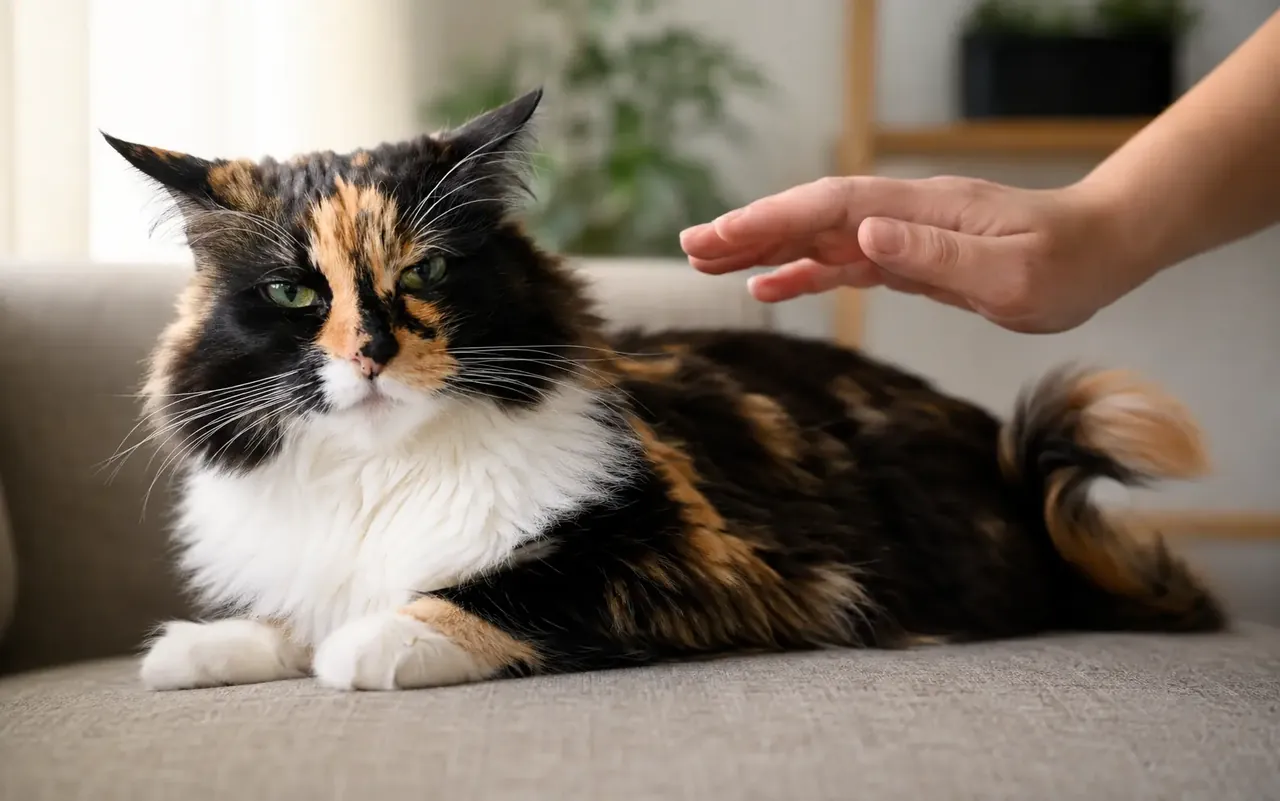 Topic illustration selected for this guide. Some learning images may be AI-assisted.
Why does one cat wait outside another cat’s litter box — the quick answer
✓ Waiting may be curiosity, play or subtle blocking in a multi-cat home
✓ Add boxes in separate locations with multiple approach and exit routes and interrupt stalking with calm redirection.
✓ Litter avoidance, urinary signs or escalating conflict needs veterinary and behaviour support.
Waiting may be curiosity, play or subtle blocking in a multi-cat home. The cat inside can feel trapped even without hissing or fighting.
The short answer
Waiting may be curiosity, play or subtle blocking in a multi-cat home. The cat inside can feel trapped even without hissing or fighting.
What to observe first
Compare the moment with your cat’s usual pattern. Note timing, frequency, body language, appetite, litter-box use, mobility and any recent household change.
Why the setting matters
The cat inside can feel trapped even without hissing or fighting. One isolated detail rarely explains behaviour or health on its own, so look at the whole cat and the immediate environment.
What you can do
Add boxes in separate locations with multiple approach and exit routes and interrupt stalking with calm redirection.
A gentle way to test it
Make one small safe adjustment and give the cat time and choice. Avoid punishment, forced handling and several changes at once, because they make the response harder to understand.
When to contact a veterinarian
Litter avoidance, urinary signs or escalating conflict needs veterinary and behaviour support.
Prepare useful information
Write down when it began and how often it occurs. A short video, clear photo, food record or litter record can help a veterinary professional assess a pattern that may not appear during the appointment.
Look for quiet pressure
Watch for staring, crouching, following, chasing after exit or one cat delaying toileting until the other leaves. Conflict can exist without hissing. Record the route and timing instead of punishing either cat.
DEEPER GUIDE1 more detailed sectionsOpen +
Separate boxes and escape routes
Provide one box per cat plus one extra as a starting point, in genuinely separate locations. Choose open approaches with more than one exit and add visual barriers where needed. Litter avoidance or urinary signs require veterinary assessment.
Your quick checklist
Your progress is saved on this device.
Three simple things you can do
You do not have to change everything today. Pick one step that feels realistic, try it and see how your cat responds.
- 1Add boxes in separate areas with multiple escape routes.
- 2Watch quietly for blocking, staring or chasing.
- 3Reduce conflict with distributed food, water, beds and heights.
Common mistakes
×Placing all boxes side by side.
×Assuming no fight means no intimidation.
×Trapping either cat near the box.
Questions cat people ask
Why does one cat wait outside the litter box?+
It may be curiosity, play or subtle resource guarding; the other cat’s response is important.
How many boxes do cats need?+
One per cat plus one extra is a common starting point, placed in different locations.
Still looking for the right answer?
Search the full EverYes Cats encyclopedia with your own words — a symptom, food, behaviour, breed or everyday question.
Checked, dated and transparent
- Prepared by
- EverYes Cats editorial team
- Last updated
- 13 August 2026
- Source checked
- 13 August 2026
- Primary reference
- International Cat Care ↗
We begin with the named reference, rewrite the information in plain language and add practical cat-parent steps. Urgent health statements are checked against veterinary sources. This guide has not been individually reviewed by a veterinarian unless explicitly stated. It provides education, not diagnosis or treatment.
Spotted something unclear or outdated? Tell us so we can review it.
Your answer helps us improve the cat encyclopedia.
Two cats can share a window perch only when it is large, stable and easy to leave. Quiet crowding can still create conflict.