Why a cat bites during petting
Petting bites are often preceded by small signs of rising arousal. Shorter contact, frequent pauses and letting the cat choose can prevent many incidents.
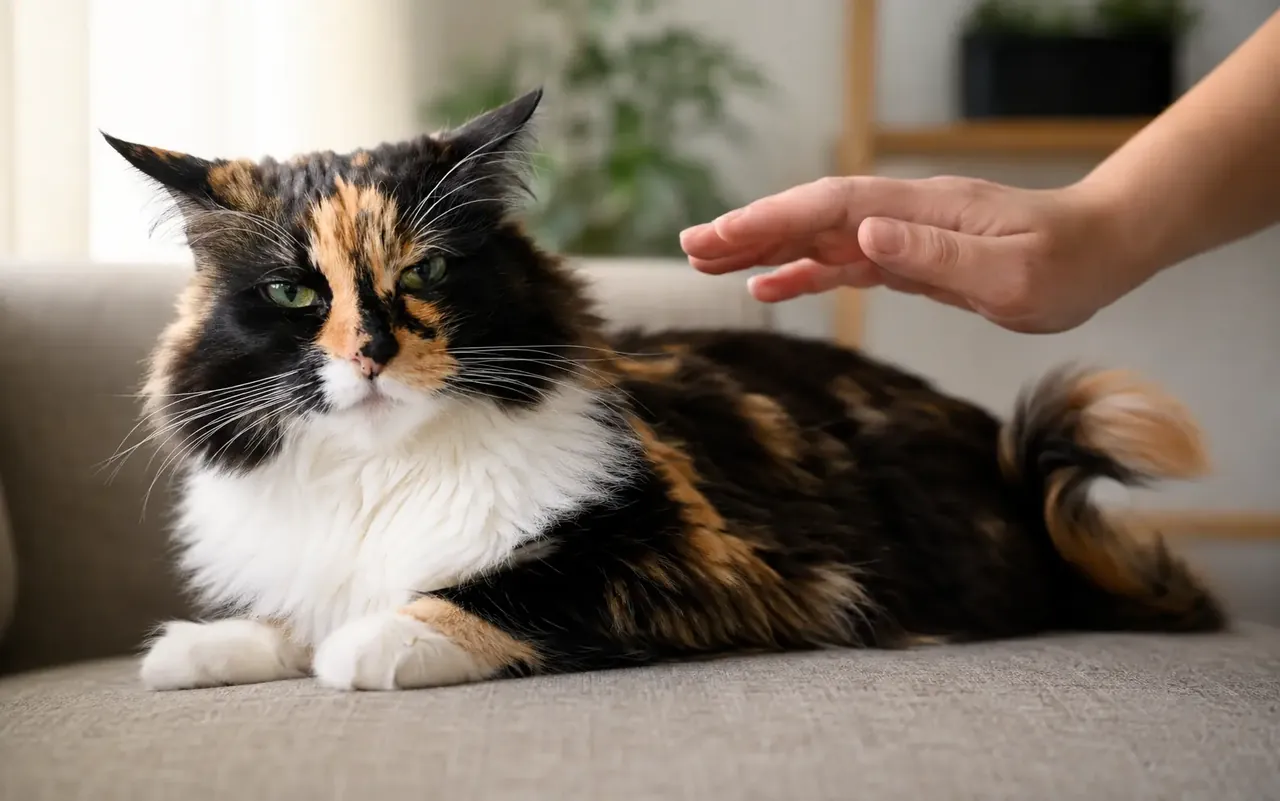 Topic illustration selected for this guide. Some learning images may be AI-assisted.
Why a cat bites during petting — the quick answer
✓ Watch for tail flicks, skin twitching and turned ears
✓ Stop before your cat has to use teeth
✓ Let the cat choose whether petting continues
One moment your cat is purring; the next, your hand gets a warning bite. This often means the petting went on longer than the cat wanted. It is communication, not a sudden personality change.
The early warning signs
A moving tail tip, tense back, rippling skin, wide pupils or ears turning sideways can mean 'I have had enough.' The signs can be very small at first.
Try a consent check
Pet for two or three seconds, then pause with your hand still. If the cat leans in, you can continue briefly. If they turn away or stay still, stop.
When biting is new
Pain can make touch uncomfortable. If a normally relaxed cat suddenly reacts to handling, arrange a veterinary check.
Look for the moment before the bite
Tail flicks, skin rippling, ears turning, a head turn toward the hand, pupils changing or the body becoming still may appear first. Stop at the earliest sign rather than waiting for a hiss or bite. Some cats enjoy contact only on the cheeks and head or only for a few seconds.
Use a three-second consent check
Pet a preferred area briefly, remove your hand and wait. Leaning in, rubbing or returning supports another short round; turning away, tension or leaving ends the interaction. Do not restrain, scold or immediately resume. New sensitivity to touch can indicate pain and deserves a veterinary check.
Your quick checklist
Your progress is saved on this device.
Three simple things you can do
You do not have to change everything today. Pick one step that feels realistic, try it and see how your cat responds.
- 1Pet briefly and pause for a consent check.
- 2Learn your cat's favorite and least favorite touch areas.
- 3Stop at the first tail flick, skin twitch or ear change.
Common mistakes
×Calling the cat unpredictable after missing small warning signs.
×Holding the cat still to continue petting.
×Punishing a warning bite and removing the cat's gentler communication options.
Questions cat people ask
Why does my cat purr and bite at the same time?+
Purring can continue while arousal or discomfort increases. Read the whole body and stop when tension appears.
Should I stop petting forever?+
No. Use shorter interactions, let the cat initiate them and pause often. New sensitivity to touch should be checked by a veterinarian.
Still looking for the right answer?
Search the full EverYes Cats encyclopedia with your own words — a symptom, food, behaviour, breed or everyday question.
Checked, dated and transparent
- Prepared by
- EverYes Cats editorial team
- Last updated
- 8 August 2026
- Source checked
- 8 August 2026
- Primary reference
- FelineVMA Healthy Feline Environment ↗
We begin with the named reference, rewrite the information in plain language and add practical cat-parent steps. Urgent health statements are checked against veterinary sources. This guide has not been individually reviewed by a veterinarian unless explicitly stated. It provides education, not diagnosis or treatment.
Spotted something unclear or outdated? Tell us so we can review it.
Your answer helps us improve the cat encyclopedia.
Hiding is a normal safety and rest behaviour, but new or prolonged hiding can be an early sign of pain, fear or illness. Compare appetite, litter use, movement and social contact with the cat’s baseline.