Why does my cat bite a toy and refuse to let go?
Holding a captured toy can complete the hunting sequence and does not automatically mean aggression. Keep hands away, let the cat hold the catch and use a calm trade only when the item must be removed.
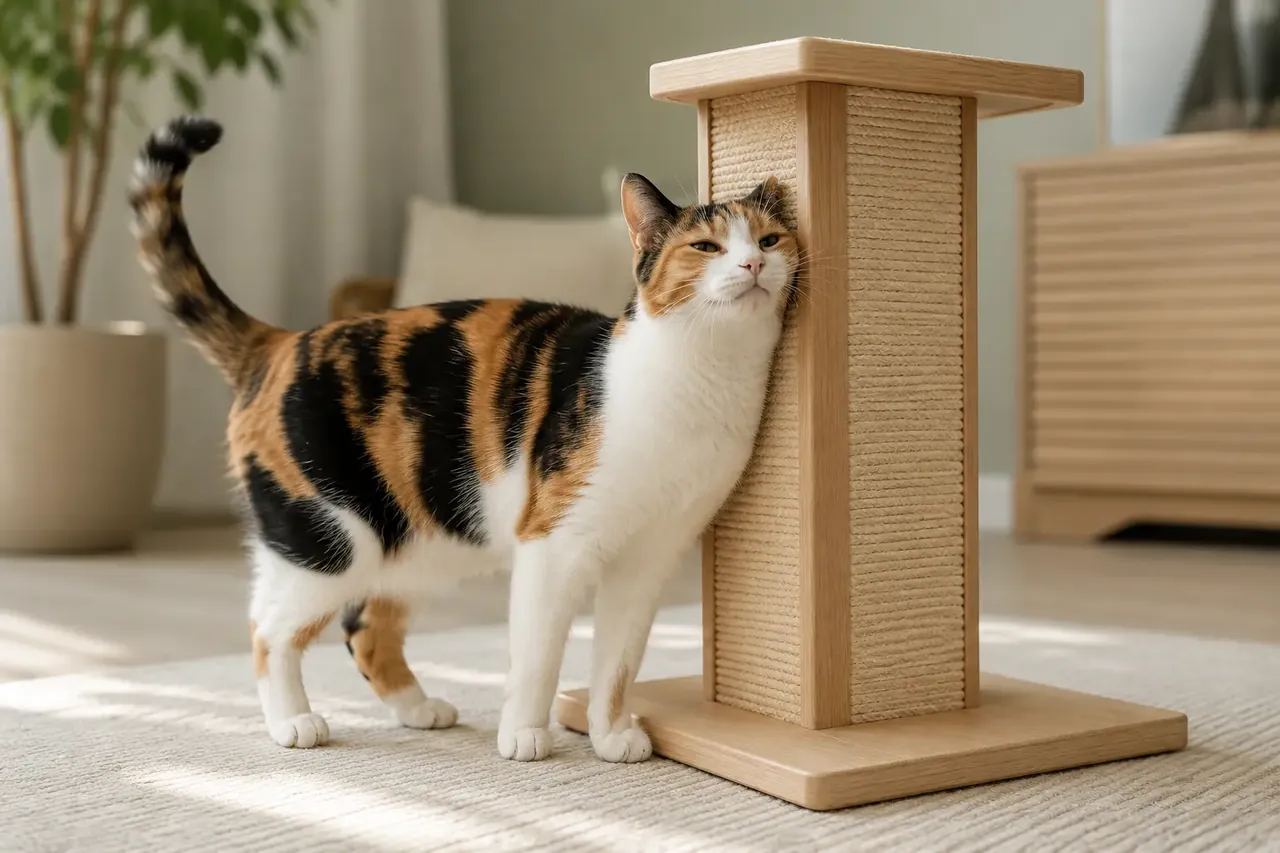
 Topic illustration selected for this guide. Some learning images may be AI-assisted.
Why does my cat bite a toy and refuse to let go — the quick answer
✓ Holding captured prey is a normal part of play, especially after an exciting chase.
✓ Observe: Watch body tension and keep hands away from the captured toy.
✓ Try this: Let the cat complete the catch, then trade calmly for a treat or second toy.
Holding captured prey is a normal part of play, especially after an exciting chase. The useful question is not only what the moment resembles, but whether it fits this cat’s normal pattern. Context, frequency, recovery and accompanying changes make the interpretation safer and more accurate.
Read play versus guarding
A cat may bite, kick and settle with a toy after a chase. Loose recovery differs from a rigid body, growling, swatting at anyone approaching or carrying unsafe household objects. Do not reach toward the mouth to test the response.
Allow a safe catch
With an intact cat-sized toy, stop pulling and let the cat hold it. Continuing a tug can increase arousal or damage teeth. When the cat releases voluntarily, move a second toy away to restart play or end with calm recovery.
Trade when removal is necessary
For a damaged or unsafe object, toss a valued treat or second toy a short distance away rather than grabbing. Remove the object only after the cat moves. Do not pry the jaws open, chase, shout or punish; these responses can increase swallowing or defensive behaviour.
Prevent unsafe captures
Store hair ties, elastic, string, foam, small toys and children's pieces in closed storage. Inspect play items before and after use and remove damaged seams or missing parts. Supervision does not make a swallowable item safe.
When care is urgent
Choking, repeated gagging, breathing difficulty, collapse or suspected string or battery ingestion is urgent. Never pull visible string from the mouth. Mouth bleeding, broken teeth, repeated vomiting or appetite loss also needs veterinary advice.
Your quick checklist
Loading saved progress…
Three simple things you can do
You do not have to change everything today. Pick one step that feels realistic, try it and see how your cat responds.
- 1Observe your cat’s individual baseline.
- 2Make one gentle change at a time.
- 3Ask a qualified professional when health or safety is involved.
Common mistakes
×Waiting for a dramatic symptom instead of noticing smaller changes from the cat’s normal routine.
×Changing several things at once, making it difficult to learn what actually helped.
×Treating general guidance as a substitute for advice from a veterinarian who knows the individual cat.
Questions cat people ask
Does every cat follow the same rule?+
No. Age, health, history, temperament and environment all change what works for an individual.
When should I seek professional help?+
Seek veterinary advice for sudden, persistent or concerning changes and urgent help for breathing difficulty, collapse, seizures, poisoning or urinary obstruction signs.
Still looking for the right answer?
Search the full EverYes Cats encyclopedia with your own words — a symptom, food, behaviour, breed or everyday question.
Checked, dated and transparent
- Prepared by
- EverYes Cats editorial team
- Last updated
- Source checked
- Primary reference
- FelineVMA: Positive Reinforcement Training Toolkit ↗
We begin with the named reference, rewrite the information in plain language and add practical cat-parent steps. Urgent health statements are checked against veterinary sources. This guide has not been individually reviewed by a veterinarian unless explicitly stated. It provides education, not diagnosis or treatment.
How we choose and use sources →
Spotted something unclear or outdated? Tell us so we can review it.
Loading your saved choice…
A doorbell can trigger a brief orienting pause or a stronger fear response because it predicts voices, footsteps and entry. Give the cat a protected retreat and train only below the point where it freezes or flees.
 01
 02
 04
 06