Why your cat sleeps on you
Your cat may sleep on you because your body provides warmth, familiar scent, security and a predictable resting routine. It often fits trust and comfort, but it does not prove one single emotion—and a sudden increase in clinginess should be read with the cat's health and behaviour as a whole.
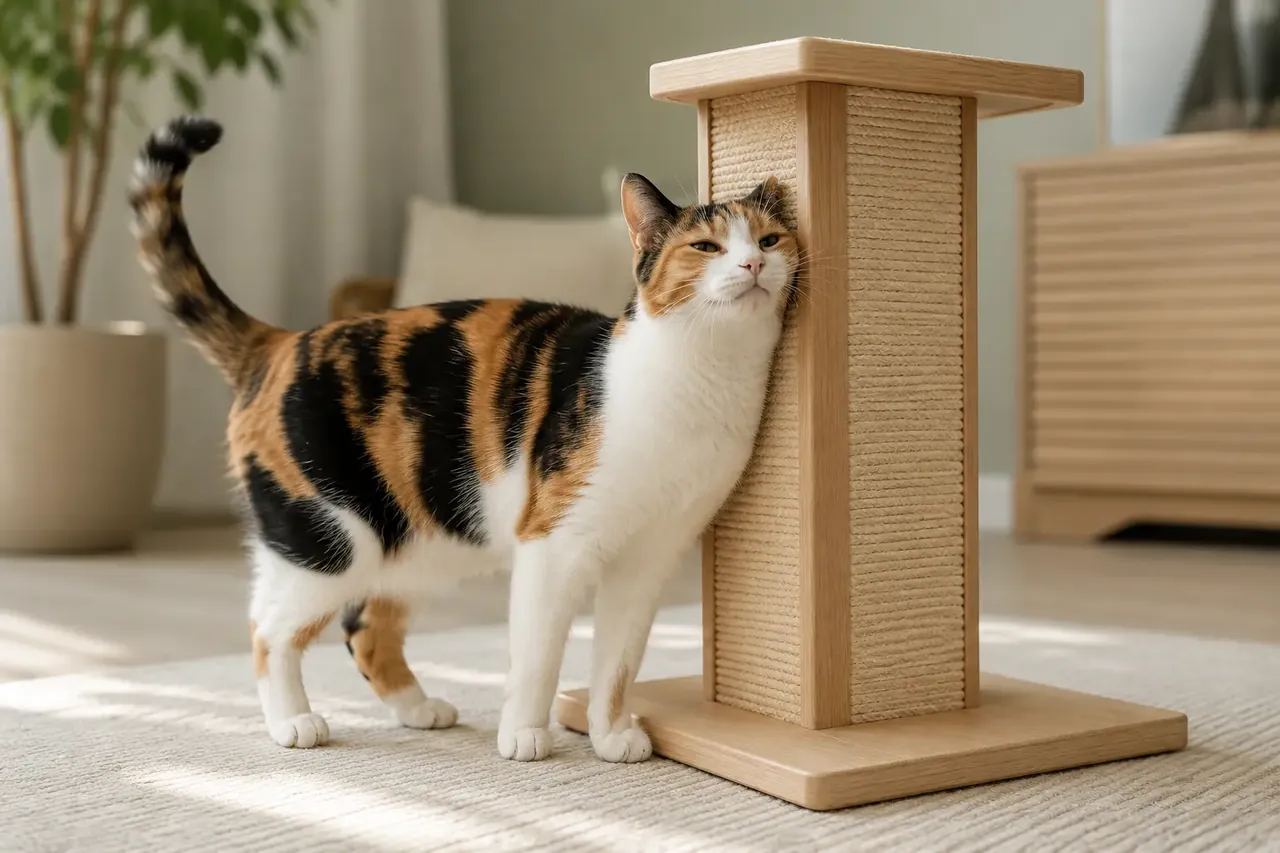
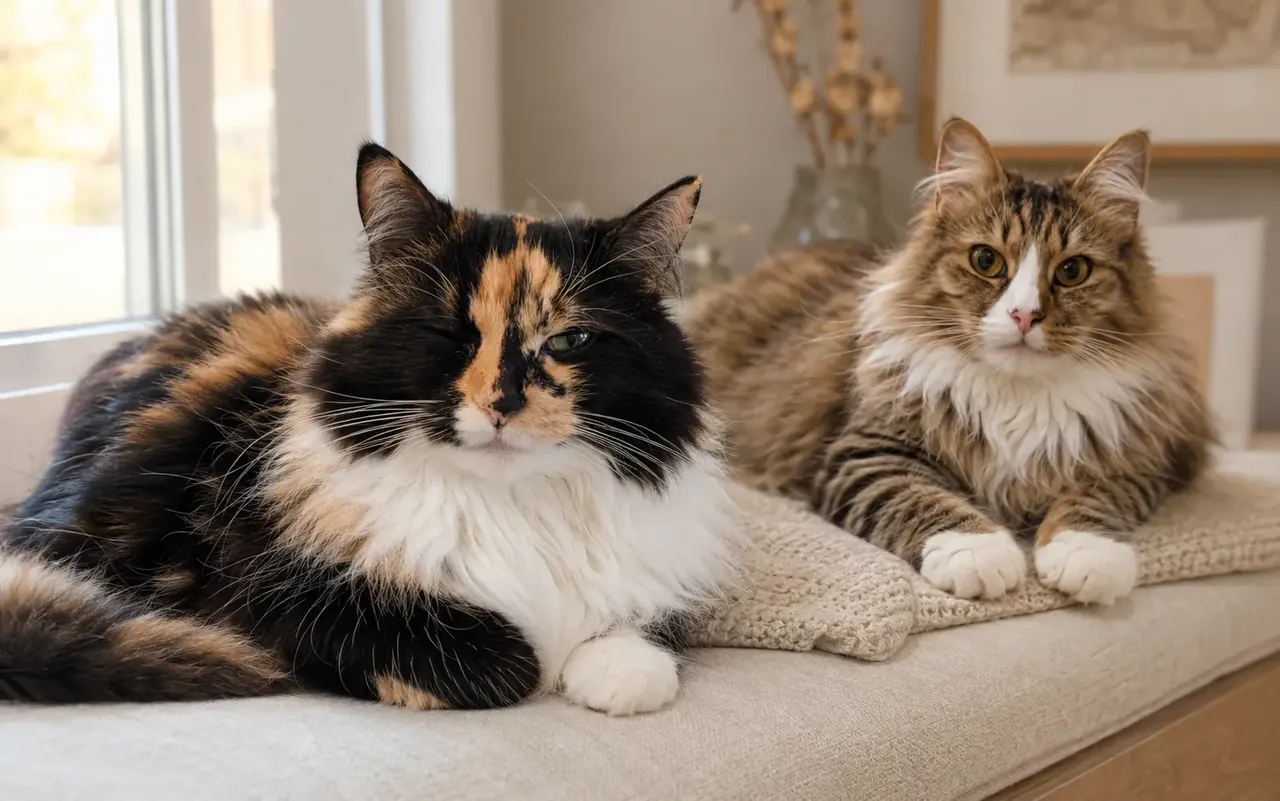 Topic illustration selected for this guide. Some learning images may be AI-assisted.
Why your cat sleeps on you — the quick answer
✓ A familiar person provides warmth, scent, softness and predictable movement. Rest is vulnerable, so close sleep can fit social security as well as practical comfort.
✓ Offer a folded blanket or safe heated pet bed beside you so closeness remains a choice. Move slowly before standing.
✓ Read the complete body and setting
✓ A sudden need to cling, altered breathing, restlessness or reluctance to jump can signal illness or pain.
Your cat circles, kneads the blanket and chooses your chest, legs or side as a bed. A familiar person provides warmth, scent, softness and predictable movement. Rest is vulnerable, so close sleep can fit social security as well as practical comfort. This guide helps you read the moment, protect the relationship and choose a response that works for the cat as well as the household.
Warmth and trust can look different from one nap to the next
Sleeping on you can combine warmth, familiar scent, security and habit. The strongest sign of comfort is that the cat can choose where to settle.
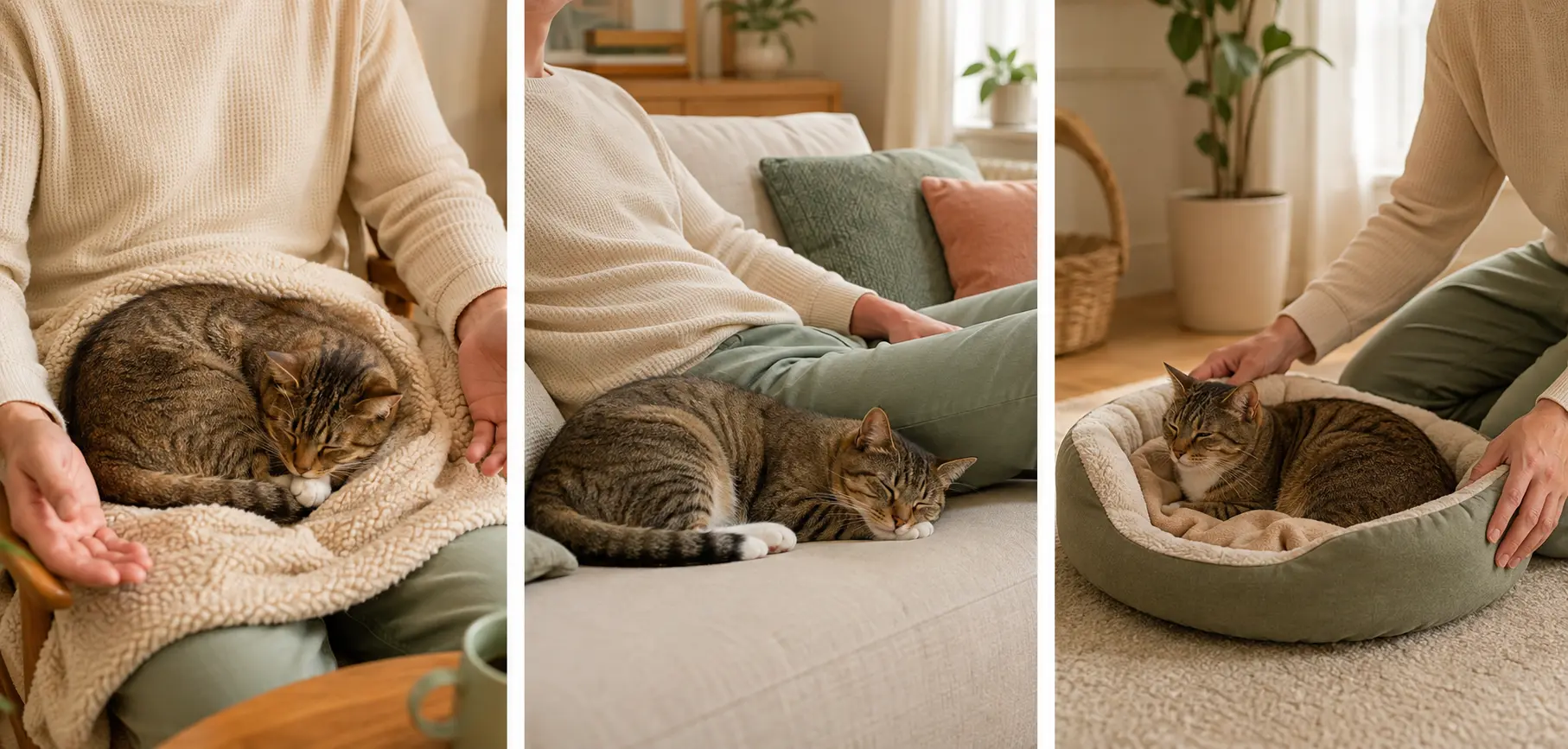
- 1Warmth makes a lap attractive
A relaxed cat may curl against a warm blanket or body when the posture feels stable and undisturbed.
- 2Closeness does not require contact
Resting beside you can express the same familiarity while giving the cat more space to stretch, cool down or leave.
- 3Keep another comfortable choice
Offer a warm nearby bed and let your cat move freely instead of holding them in place or assuming every sleep change has one emotional meaning.
Why your body makes an appealing bed
Your body offers warmth, familiar scent, breathing rhythm and a stable place close to a trusted person. The choice can reflect comfort and learned routine without proving that the cat is protecting you, detecting illness or ranking one household member above everyone else.
What the sleeping position can—and cannot—mean
Relaxed muscles, ordinary breathing and freely returning to the spot support comfort. Sleeping on you does not prove the cat is protecting you, detecting illness, showing dominance or choosing a permanent favourite person. Cats may express the same secure relationship by sleeping beside you or elsewhere.
Make closeness comfortable for both of you
Let the cat approach and leave freely, keep claws from catching loose bedding and place an equally warm bed beside you for times when you need space. Reward the nearby bed before moving the cat so closeness remains predictable rather than becoming a nightly conflict.
Set sensible safety boundaries
Keep cats out of an infant's sleep space and take extra care when allergies, breathing problems, reduced mobility or medicines make close sleep unsafe. Avoid loose cords, electric heat sources and heavy bedding that can trap the cat. Both person and cat must be able to breathe, move and sleep comfortably.
When health may be part of the picture
A new increase in heat-seeking or clinginess deserves context. Check room temperature, appetite, weight, thirst, movement and tolerance of touch. Sudden behaviour change with weakness, pain, breathing change or poor intake needs veterinary advice.
The warm, honest answer
Sleeping on you usually means your cat finds the combination of warmth, scent, safety and routine rewarding. Enjoy it when both of you are comfortable, while remembering that cats also express secure attachment by resting nearby, greeting, playing and choosing relaxed distance.
Your quick checklist
Loading saved progress…
Three simple things you can do
You do not have to change everything today. Pick one step that feels realistic, try it and see how your cat responds.
- 1Let the cat choose when to arrive and leave.
- 2Move slowly before standing so the cat can adjust safely.
- 3Offer an adjacent warm bed when you need personal space.
Common mistakes
×Holding the cat in place to prolong contact.
×Assigning one fixed meaning to every sleeping position.
×Ignoring sudden extreme clinginess with other health changes.
Questions cat people ask
Does my cat sleep on me because it trusts me?+
Trust can be part of the choice, along with warmth, familiar scent, habit and security. Relaxed posture and voluntary return provide useful context.
Why does my cat sleep on my chest?+
The chest is warm and carries familiar scent, breathing and heartbeat sounds. Some cats prefer it; others choose legs or feet for stability and an easier exit.
Still looking for the right answer?
Search the full EverYes Cats encyclopedia with your own words — a symptom, food, behaviour, breed or everyday question.
Checked, dated and transparent
- Prepared by
- EverYes Cats editorial team
- Last updated
- Source checked
- Primary reference
- FelineVMA: Environmental Needs Guidelines ↗
We begin with the named reference, rewrite the information in plain language and add practical cat-parent steps. Urgent health statements are checked against veterinary sources. This guide has not been individually reviewed by a veterinarian unless explicitly stated. It provides education, not diagnosis or treatment.
How we choose and use sources →
Spotted something unclear or outdated? Tell us so we can review it.
Loading your saved choice…
Walking across a pillow at night can reflect warmth, scent, access or a learned way to wake someone. Make the route safe and build a predictable evening and morning routine.
 01
 03
 05