Why does my cat follow me into the bathroom?
The room combines access to you, predictable routines and interesting scents or surfaces. Practical observations, a safe next step and clear warning signs.
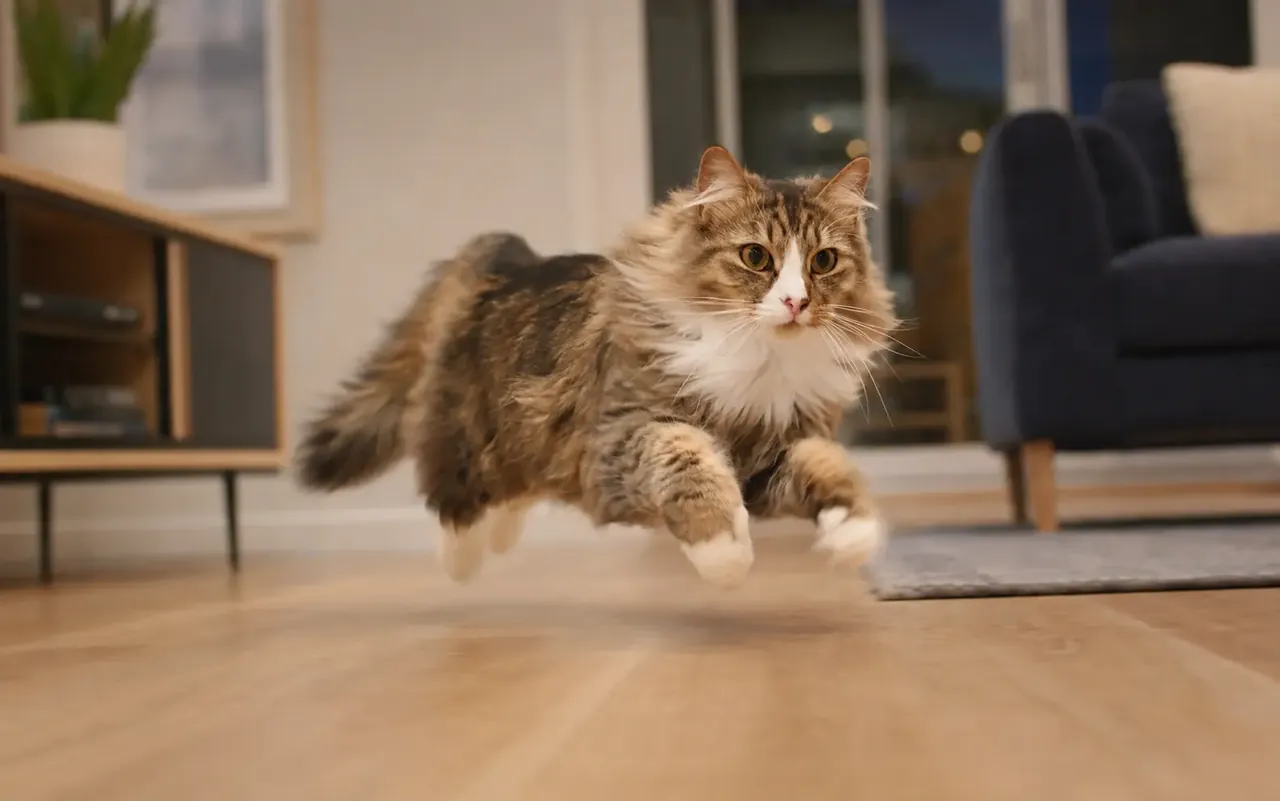 Topic illustration selected for this guide. Some learning images may be AI-assisted.
Why does my cat follow me into the bathroom — the quick answer
✓ The room combines access to you, predictable routines and interesting scents or surfaces
✓ Offer attention at varied times and make sure the cat also has rewarding independent resting and play choices.
✓ Panic, destructive escape attempts, appetite loss or a sudden major attachment change needs veterinary and behaviour advice.
The room combines access to you, predictable routines and interesting scents or surfaces. Following is often ordinary social interest rather than separation anxiety.
The short answer
The room combines access to you, predictable routines and interesting scents or surfaces. Following is often ordinary social interest rather than separation anxiety.
What to observe
Notice whether the cat follows calmly or becomes distressed whenever a door closes.
How to read the situation
Following is often ordinary social interest rather than separation anxiety. Compare the pattern with your cat’s usual behaviour and consider timing, body language, appetite, litter-box use, mobility and recent changes.
What to do now
Offer attention at varied times and make sure the cat also has rewarding independent resting and play choices.
What not to do
Do not punish, frighten, force or repeatedly test the cat. Avoid changing several things at once, because that makes the response harder to interpret.
When to contact a veterinarian
Panic, destructive escape attempts, appetite loss or a sudden major attachment change needs veterinary and behaviour advice.
What to record
Write down when it began, how often it happens and what occurs immediately before and after. A short video, clear photo, food record or litter record can give the veterinary team useful context.
Your quick checklist
Your progress is saved on this device.
Three simple things you can do
You do not have to change everything today. Pick one step that feels realistic, try it and see how your cat responds.
- 1Notice whether the cat follows with a relaxed upright tail or waits anxiously at a closed door.
- 2Offer nearby social time and enrichment outside the bathroom so following is a choice, not the only route to attention.
- 3Keep medicines, cleaners, razors, cords and open toilets safely inaccessible.
Common mistakes
×Calling ordinary social following separation anxiety from one moment alone.
×Shutting the door repeatedly to provoke or film the reaction.
×Ignoring sudden clinginess when appetite, movement, sleep or litter habits also change.
Questions cat people ask
Why does my cat follow me to the bathroom?+
Bathrooms combine predictable routine, your attention, interesting scents, cool surfaces and a door that changes access to territory. Relaxed following is usually ordinary social curiosity.
Does bathroom following mean my cat has separation anxiety?+
Not by itself. Distress when alone is a broader repeated pattern that can include persistent calling, destructive escape attempts, toileting changes or inability to settle.
Still looking for the right answer?
Search the full EverYes Cats encyclopedia with your own words — a symptom, food, behaviour, breed or everyday question.
Checked, dated and transparent
- Prepared by
- EverYes Cats editorial team
- Last updated
- 14 August 2026
- Source checked
- 14 August 2026
- Primary reference
- International Cat Care ↗
We begin with the named reference, rewrite the information in plain language and add practical cat-parent steps. Urgent health statements are checked against veterinary sources. This guide has not been individually reviewed by a veterinarian unless explicitly stated. It provides education, not diagnosis or treatment.
Spotted something unclear or outdated? Tell us so we can review it.
Your answer helps us improve the cat encyclopedia.
Pre-bedtime restlessness often reflects normal evening activity, unused hunting energy or a learned routine. A new pattern with other changes needs medical attention.