Why cats have whiskers on their front legs
The stiff hairs on the backs of a cat's front legs are carpal vibrissae—specialised sensory hairs related to facial whiskers. They help detect close contact around the paws, especially when an object is too near for easy visual inspection.
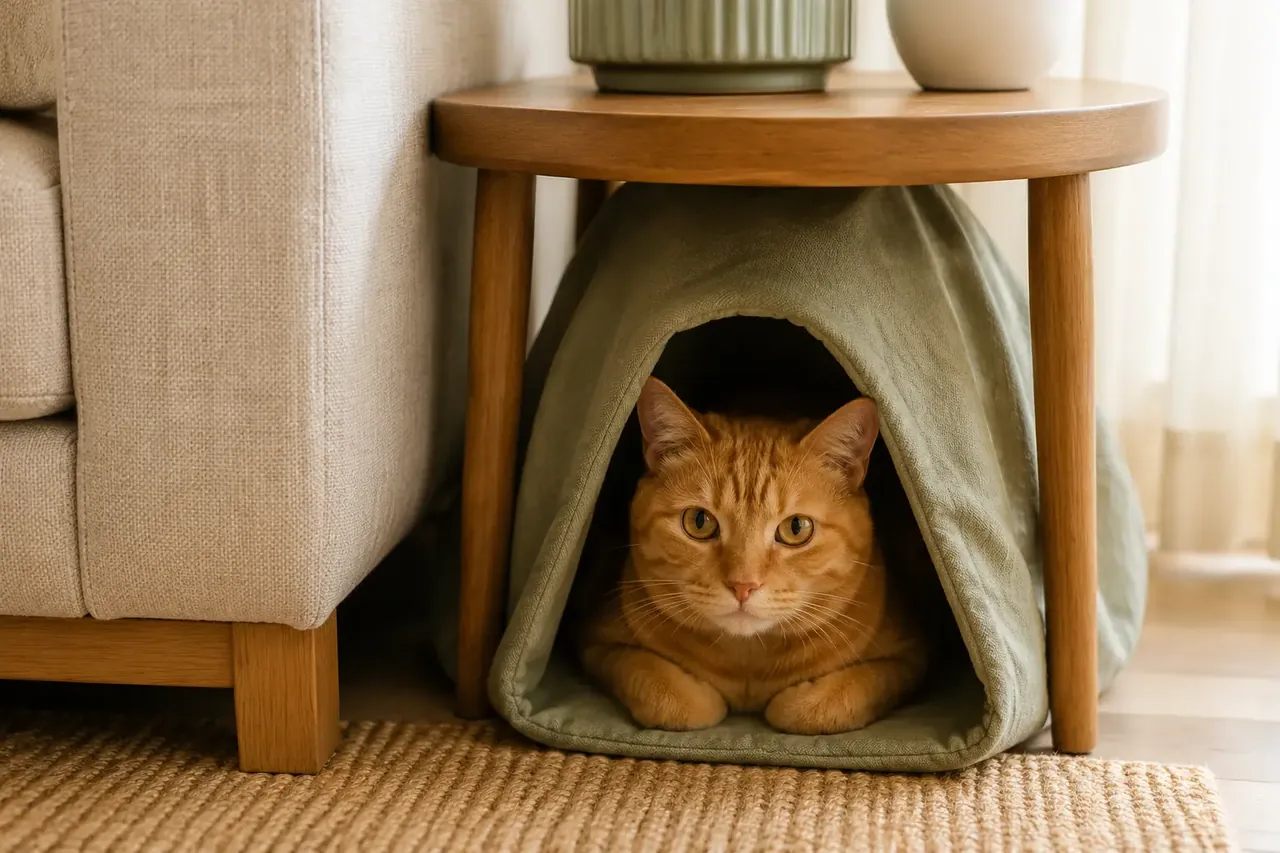 Topic illustration selected for this guide. Some learning images may be AI-assisted.
Why cats have whiskers on their front legs — the quick answer
✓ Carpal whiskers on the backs of the front legs provide close-range touch information.
✓ Offer safe puzzles and supervised hunting play that engage paws without trapping them.
✓ Skin irritation, swelling or persistent paw sensitivity needs checking.
Carpal whiskers on the backs of the front legs provide close-range touch information. They are useful when prey or an object is held too close for the eyes to focus easily. This guide keeps the fascinating detail while separating observation, evidence and internet exaggeration.
They are sensory hairs
Carpal whiskers sit near the wrist area of the front legs and are rooted more deeply than ordinary coat hairs. Movement at the hair is detected by sensory structures around the follicle, giving the cat information about nearby contact.
Why they help at paw distance
Cats do not see fine detail best directly beneath the nose or paws. When holding prey or investigating an object, leg whiskers can add close-range feedback about position and movement alongside touch, hearing and facial whiskers.
Do not trim them
Carpal whiskers are not overgrown fur and do not need styling. Avoid cutting or plucking them. A broken whisker may eventually be replaced naturally, but deliberate removal removes useful sensory input and can hurt if plucked.
Support safe natural use
Offer toys large enough to keep teeth and claws away from hands, and let the cat stalk, grasp and release without forced contact. Check wand toys for loose strings and store them after supervised play.
When the leg needs checking
Missing or bent whiskers alone are not usually an emergency, but redness, swelling, crusting, repeated licking, pain, limping or widespread hair loss warrants veterinary advice. Do not apply human skin products to the area.
Your quick checklist
Loading saved progress…
Three simple things you can do
You do not have to change everything today. Pick one step that feels realistic, try it and see how your cat responds.
- 1Observe your cat’s individual baseline.
- 2Make one gentle change at a time.
- 3Ask a qualified professional when health or safety is involved.
Common mistakes
×Waiting for a dramatic symptom instead of noticing smaller changes from the cat’s normal routine.
×Changing several things at once, making it difficult to learn what actually helped.
×Treating general guidance as a substitute for advice from a veterinarian who knows the individual cat.
Questions cat people ask
Does every cat follow the same rule?+
No. Age, health, history, temperament and environment all change what works for an individual.
When should I seek professional help?+
Seek veterinary advice for sudden, persistent or concerning changes and urgent help for breathing difficulty, collapse, seizures, poisoning or urinary obstruction signs.
Still looking for the right answer?
Search the full EverYes Cats encyclopedia with your own words — a symptom, food, behaviour, breed or everyday question.
Checked, dated and transparent
- Prepared by
- EverYes Cats editorial team
- Last updated
- Source checked
- Primary reference
- International Cat Care ↗
We begin with the named reference, rewrite the information in plain language and add practical cat-parent steps. Urgent health statements are checked against veterinary sources. This guide has not been individually reviewed by a veterinarian unless explicitly stated. It provides education, not diagnosis or treatment.
How we choose and use sources →
Spotted something unclear or outdated? Tell us so we can review it.
Loading your saved choice…
Cats can distinguish familiar human voices, but they may respond with only an ear turn or head movement. A subtle reaction is still different from failing to recognise the speaker.
 01
 02
 03