Why does my cat stretch when it sees me?
A long stretch after resting often marks the transition from sleep to movement and may become part of a familiar greeting routine.
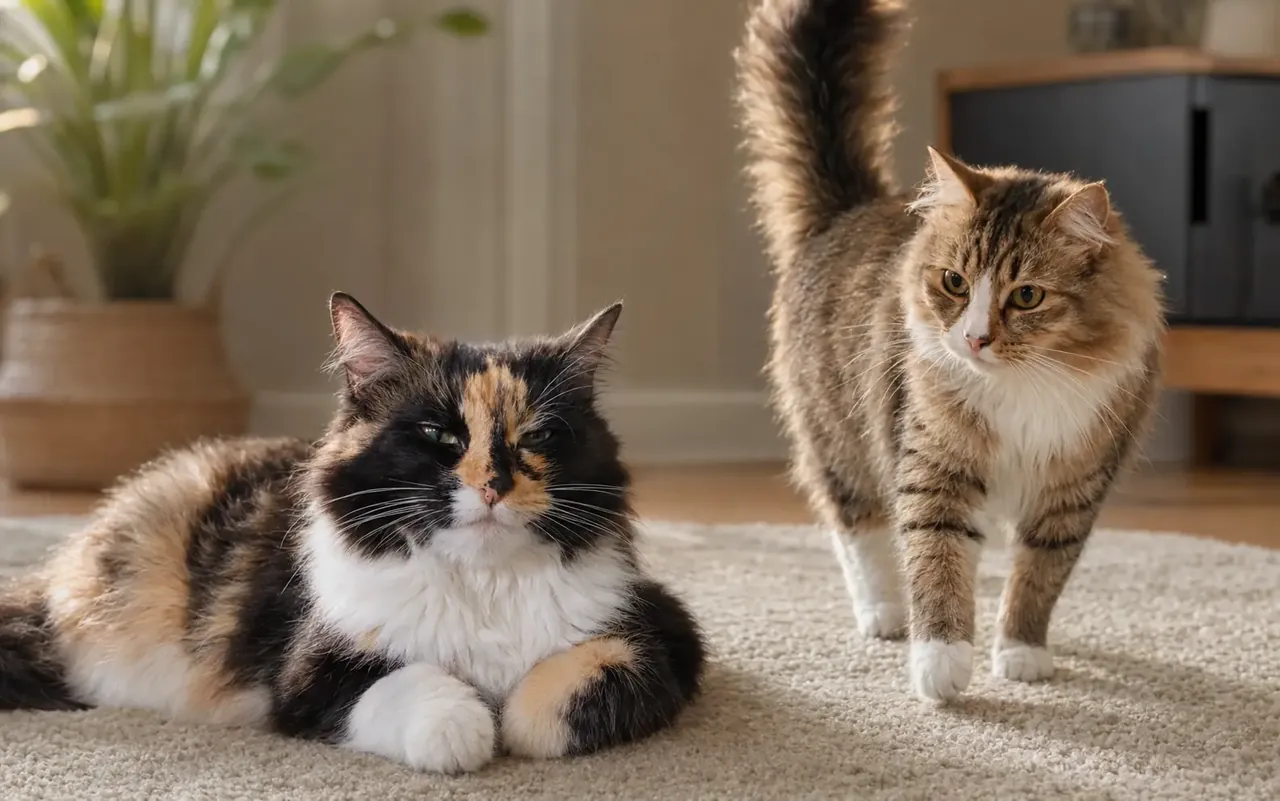 Topic illustration selected for this guide. Some learning images may be AI-assisted.
Why does my cat stretch when it sees me — the quick answer
✓ A long stretch after resting often marks the transition from sleep to movement and may become part of a familiar greeting routine.
✓ Enjoy the greeting and provide stable scratching surfaces that allow a full-body stretch.
✓ Stiffness, shortened stretches or reluctance to rise can be early signs of pain, especially in older cats.
A long stretch after resting often marks the transition from sleep to movement and may become part of a familiar greeting routine. The cat is preparing muscles to move while responding to a person whose arrival predicts attention or activity. Here is the useful version of the answer: what the behaviour may mean, what it does not prove and when it stops being just a fun cat fact.
The short answer
A long stretch after resting often marks the transition from sleep to movement and may become part of a familiar greeting routine. A single moment never tells the whole story, so compare the setting, the cat's posture and what happens next.
Why cats do this
The cat is preparing muscles to move while responding to a person whose arrival predicts attention or activity. Cats combine scent, sound, sight, touch, memory and learning. That is why the same visible action can have more than one reasonable explanation.
Read the whole cat
Look at ear direction, pupils in the current light, tail movement, muscle tension, distance and freedom to leave. Relaxed behaviour is loose and changeable; concern is more likely when the body stays tense, the cat cannot disengage or normal routines change.
What to do at home
Enjoy the greeting and provide stable scratching surfaces that allow a full-body stretch. Avoid forcing a repeat for a photo or testing a viral claim. The most cat-friendly response gives choice, protects safety and rewards calm alternatives.
What this does not prove
This behaviour does not prove that every cat feels the same emotion or shares a human intention. Personality labels can be fun, but age, health, experience, environment and reinforcement explain much more than coat colour, sex or a single gesture.
When to contact a veterinarian
Stiffness, shortened stretches or reluctance to rise can be early signs of pain, especially in older cats. Seek faster help for breathing difficulty, collapse, seizures, major trauma, suspected poisoning, severe pain or repeated unsuccessful attempts to urinate.
Your quick checklist
Your progress is saved on this device.
Three simple things you can do
You do not have to change everything today. Pick one step that feels realistic, try it and see how your cat responds.
- 1Notice whether the stretch follows sleep and flows into a relaxed greeting, walk or scratch.
- 2Provide a tall stable scratching surface that supports a full-body vertical stretch.
- 3Compare left and right movement and record any new stiffness, hesitation or shortened range.
Common mistakes
×Treating every stretch as a deliberate message of affection.
×Pulling or repositioning the cat's legs to increase the stretch.
×Dismissing reduced movement as normal ageing without checking for pain.
Questions cat people ask
Is stretching when I arrive a sign my cat trusts me?+
It often occurs in a relaxed familiar context and may become part of a greeting routine, but it also prepares the body to move after rest. Context matters more than one gesture.
Why has my older cat stopped doing long stretches?+
Stiffness, arthritis, injury or other pain can reduce range and willingness to rise. A gradual change is still worth discussing with a veterinarian.
Still looking for the right answer?
Search the full EverYes Cats encyclopedia with your own words — a symptom, food, behaviour, breed or everyday question.
Checked, dated and transparent
- Prepared by
- EverYes Cats editorial team
- Last updated
- 8 August 2026
- Source checked
- 8 August 2026
- Primary reference
- International Cat Care ↗
We begin with the named reference, rewrite the information in plain language and add practical cat-parent steps. Urgent health statements are checked against veterinary sources. This guide has not been individually reviewed by a veterinarian unless explicitly stated. It provides education, not diagnosis or treatment.
Spotted something unclear or outdated? Tell us so we can review it.
Your answer helps us improve the cat encyclopedia.
A relaxed cat may continue purring while drifting into light sleep, especially during a warm, familiar resting routine. Purring alone does not prove comfort or deep sleep.