← Cat encyclopedia01
124 GUIDES
Can cats eat...?
Fast, careful answers about everyday foods and safer portions.
IN THIS LIBRARY
Can cats eat this? Food safety and nutrition
Cat nutrition questions need more than a yes or no. This hub explains which everyday foods are unsafe, when a tiny taste may be acceptable, and why complete cat food should remain the foundation of the diet.
WHAT FOOD ARE YOU CHECKING?
Six popular cat-food answers
Open the exact ingredient for a short verdict first, followed by portions, preparation, risks and warning signs.
STRAWBERRIESCan cats eat strawberries?
A tiny plain piece, leaves removed—and why fruit is optional
Check this food →CHICKENCan cats eat chicken?Plain cooked meat versus bones, seasoning and raw-food risks
Check this food →SHRIMPCan cats eat shrimp?Plain portions, shells, salt and seafood sensitivity
Check this food →TUNACan cats eat tuna?An occasional taste, not a complete everyday diet
Check this food →OATMEALCan cats eat oatmeal?Small plain tastes without milk, sugar or toppings
Check this food →THREE FOODS PEOPLE SHARE MOST OFTEN
Prepare the tiny taste—not a second meal
Tuna, egg and milk seem familiar, but the exact product, added ingredients and portion decide whether an optional taste stays sensible.
TUNACan cats eat tuna?
Drain plain tuna, measure one tiny taste and keep complete food central
Open the detailed answer →EGGSCan cats eat eggs?Cook fully, remove every added ingredient and offer only a cooled bite
Open the detailed answer →MILKCan cats drink milk?Keep water first and understand why ordinary cow’s milk is a poor default
Open the detailed answer →START WITH YOUR QUESTION
What this topic covers
Begin with the ingredient and amount
Risk depends on the exact food, preparation, dose, cat’s size and health. Onion, garlic, chocolate, alcohol, caffeine and some sweeteners require particular caution.
Keep treats separate from complete food
A food can be non-toxic without being nutritionally useful. Extras should stay small enough that they do not displace a complete, balanced diet.
Ask before changing a medical diet
Cats with kidney, urinary, digestive, allergy or weight concerns may need individual guidance. Do not add treats or supplements without checking.
QUICK QUESTIONS
Important answers before you browse
Can cats eat human food?+
Some plain foods may be suitable in tiny amounts, while others are dangerous. Check the exact ingredient and preparation first.
How much of a cat’s diet can be treats?+
The safe amount depends on the cat and diet. Ask the veterinary team for an individual calorie allowance, especially with weight or medical concerns.
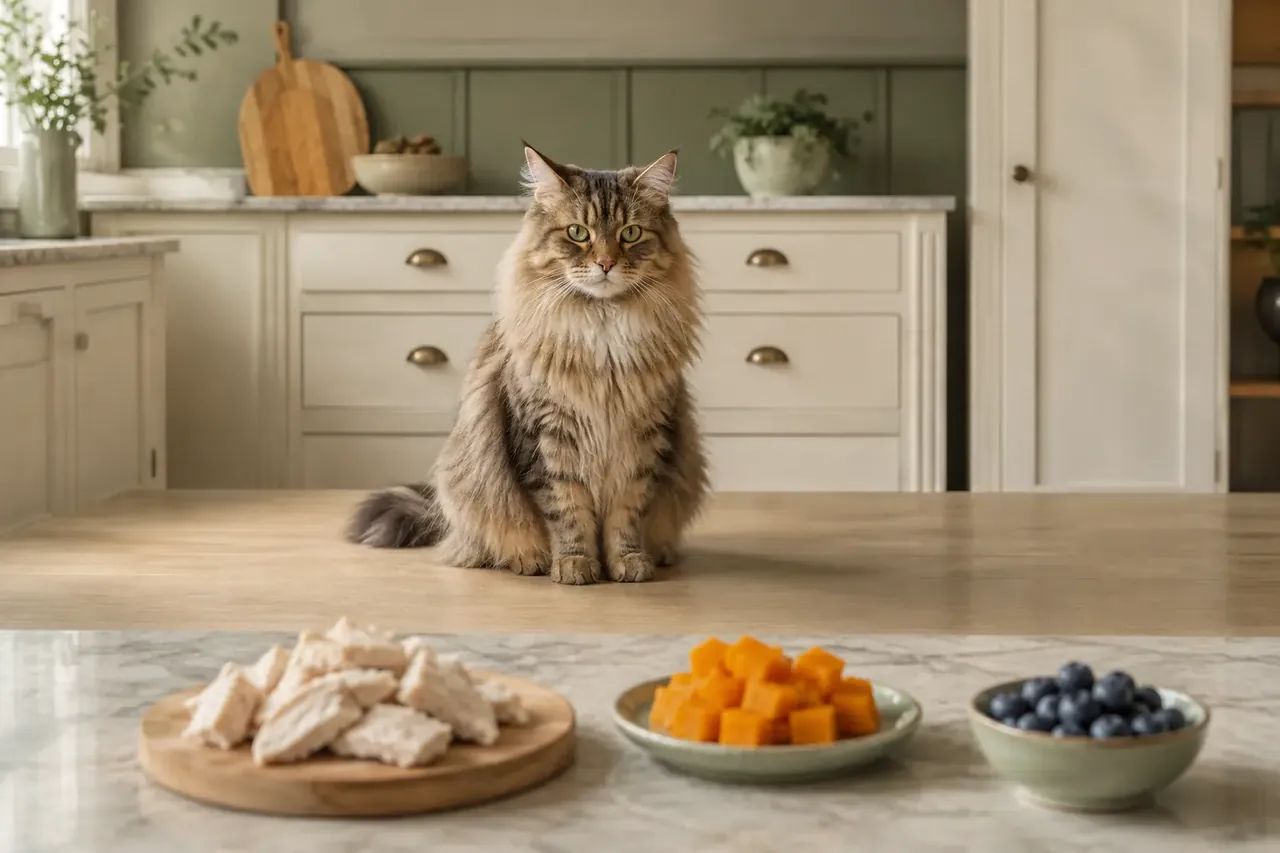
GOOD PLACE TO START · 8 min
Why does my cat repeatedly walk away from food and return?
Some cats naturally eat several small meals, but repeatedly taking a few bites, walking away and returning can also reflect bowl discomfort, interruption, nausea, dental pain or competition.
Read the guide →POPULAR IN THIS LIBRARY
See the complete library ↓Useful answers to start with
01 · 8 minWhy does my cat repeatedly walk away from food and return?Read guide →02 · 8 minWhy does my cat eat wet food only from the edge of the bowl?Read guide →03 · 8 minWhy does my cat drink after grooming?Read guide →04 · 8 minWhy are there bubbles in my cat’s water bowl?Read guide →05 · 9 minWhy does my cat drink water from the shower floor?Read guide →06 · 9 minWhy does my cat paw the water before drinking?Read guide →
All can cats eat...? guides
124 articles01
GUIDE · 8 min
→02Why does my cat repeatedly walk away from food and return?
Some cats naturally eat several small meals, but repeatedly taking a few bites, walking away and returning can also reflect bowl discomfort, interruption, nausea, dental pain or competition.
food · 14–16 min
→03Can cats eat strawberries?
A tiny piece of plain strawberry is not usually toxic, but cats gain no nutritional need from it and sugar or fibre may upset digestion.
GUIDE · 8 min
→04Why are there bubbles in my cat’s water bowl?
Short-lived bubbles often come from pouring water, a fountain return or saliva after drinking. Persistent foam, film, slime, odour or repeated drooling deserves closer inspection.
food · 14–16 min
→05Can cats eat shrimp?
Plain fully cooked shrimp can be a tiny occasional treat for many cats, but shell, tail, seasoning and raw shrimp should be avoided.
food · 14–16 min
→06Can cats eat chicken?
Plain, fully cooked boneless chicken can be a small treat, but seasoned skin, cooked bones and chicken-only diets are unsafe choices.
guide · 8 min
→07Raw diets for cats: benefits claimed, risks known
An evidence-aware guide to pathogens, bones and nutritional balance.
GUIDE · 8 min
→08Why does my cat eat wet food only from the edge of the bowl?
The edge may be easiest to reach if the bowl is deep, the food is cold or the centre texture has changed..
GUIDE · 8 min
→09Why does my cat drink after grooming?
Grooming, warmth and ordinary daily rhythm can be followed by a normal visit to water..
GUIDE · 9 min
→10Why does my cat drink water from the shower floor?
Cats may drink from the shower floor because the water is fresh, moving or in a preferred location, but cleaning residue makes this habit unsafe.
GUIDE · 9 min
→11Why does my cat paw the water before drinking?
Pawing water can help a cat test depth, movement or bowl position. It is usually harmless, but the setup should be stable and clean.
GUIDE · 9 min
→12Why does my cat take food out of the bowl to eat?
Moving food out of a bowl often reflects whisker contact, bowl instability, social pressure or a preferred eating surface rather than fussiness.
GUIDE · 9 min
→13Why does my cat refuse food after the bowl is washed?
A cat may reject a freshly washed bowl because of detergent scent, residue, a changed location or an unfamiliar material—not because the food suddenly changed.
GUIDE · 9 min
→14Why Does My Cat Scratch the Floor After Eating?
The motion can resemble covering leftovers and often appears when a cat is finished or uncertain about the food. Learn what to observe, what to try safely and when to seek help.
GUIDE · 9 min
→15Why Does My Cat Try to Cover Food With a Towel?
Pulling material over food may be an attempt to hide leftovers or respond to a strong smell. Learn what to observe, what to try safely and when to seek help.
GUIDE · 9 min
→16Why Does My Cat Only Eat From the Center of the Bowl?
Food shape, smell, moisture and bowl depth can change which part is easiest to eat. Learn what to observe, what to try safely and when to seek help.
GUIDE · 9 min
→17Why Will My Cat Eat Only Fresh Food Added on Top?
Fresh food restores aroma, temperature and moisture, while repeated topping can also become learned. Learn what to observe, what to try safely and when to seek help.
GUIDE · 9 min
→18Why Does My Cat Prefer Drinking From My Glass?
A tall glass may seem fresh and interesting, but it can tip and may contain unsafe drinks. Learn what to observe, what to try safely and when to seek help.
GUIDE · 9 min
→19Why Does My Cat Stare at Food Before Eating?
A short pause can be normal inspection, but repeated hesitation may reflect nausea or mouth discomfort. Learn what to observe, what to try safely and when to seek help.
GUIDE · 9 min
→20Why Does My Cat Eat Only When I Watch?
Your presence may make the feeding area feel safer or may have become part of the meal routine. Learn what to observe, what to try safely and when to seek help.
GUIDE · 9 min
→21Why does my cat scoop food out with a paw?
Bowl shape, play, caution and individual habit can all contribute. A calm, practical guide to what it means and what to do next.
GUIDE · 9 min
→22Why does my cat carry food away from the bowl?
A cat may carry food away to seek privacy, avoid another animal or eat on a preferred surface. The behaviour matters most when it is new or reduces intake.
GUIDE · 9 min
→23Why does my cat beg immediately after eating?
Begging after a meal can be learned behaviour, a feeding-schedule issue or a sign the diet is not satisfying; a sudden increase in hunger also deserves medical attention.
GUIDE · 9 min
→24Why will my cat only eat when I stay nearby?
A cat may eat only when watched because your presence signals safety, routine or protection from another animal. First confirm the cat is eating enough.
GUIDE · 9 min
→25Why does my cat always leave one piece of food?
A tiny leftover is often about access, smell or habit rather than a message. A calm, practical guide to what it means and what to do next.
GUIDE · 9 min
→26Should a cat’s food bowl be raised?
There is no universal required height; comfort and medical needs differ. A calm, practical guide to what it means and what to do next.
GUIDE · 9 min
→27What temperature should cat food be served?
Many cats prefer food near room or body temperature because aroma is easier to detect. A calm, practical guide to what it means and what to do next.
GUIDE · 9 min
→28How to tell if a cat is eating too fast
Fast eating can lead to regurgitation, food guarding and frustration. Measure the meal and slow access without making the cat compete or work too hard.
GUIDE · 9 min
→29Should you rotate cat-food flavours?
Healthy cats do not require frequent flavour rotation when they eat a complete balanced diet. Sudden changes can cause stomach upset or make appetite harder to interpret.
GUIDE · 9 min
→30Where is the best place for a cat feeding station?
A quiet open route with distance from litter and social pressure supports relaxed eating. A calm, practical guide to what it means and what to do next.
GUIDE · 9 min
→Why Does My Cat Eat Wet Food From the Edges First?
The thinner edges may warm, dry or release aroma differently, and the cat may prefer eating without pushing the face into the centre.
COMPLETE LIBRARYShow 94 more can cats eat...? guidesOpen +
31
GUIDE · 9 min
→32Why Will My Cat Eat Food Only When It Is Mashed?
Mashing changes aroma, moisture and chewing effort and may reveal a strong texture preference or mouth discomfort.
GUIDE · 9 min
→33Is It Normal for a Cat to Eat Many Small Meals?
Cats often prefer several small meals, but total calories and changes from the usual pattern still matter.
GUIDE · 9 min
→34Why Does My Cat Stop Eating When There Is a Noise?
Eating lowers vigilance, so a sudden sound can interrupt a meal when the station feels exposed. Move the meal to a protected low-traffic place with a clear exit.
GUIDE · 8 min
→35Why does my cat lick the gravy but leave the meat?
A cat may lick gravy but leave chunks because aroma, texture, piece size or mouth discomfort makes the liquid easier to eat. Track the total intake rather than assuming the cat has eaten a full meal.
GUIDE · 9 min
→36Why Does My Cat Prefer Food at Room Temperature?
Warmer food releases more aroma and may resemble the temperature of fresh prey.
GUIDE · 8 min
→37Why does my cat wait for fresh food when the bowl is not empty?
A cat may wait for a refill because fresh kibble smells stronger, the bowl is uncomfortable or top-ups have become a rewarding ritual. Measure the whole day before changing the feeding routine.
GUIDE · 9 min
→38Why Does My Cat Lick the Empty Food Bowl?
Residue, scent, hunger or a learned request can keep the bowl interesting after a meal.
GUIDE · 8 min
→39Should cats in the same home eat separately?
Separate feeding lets each cat eat at a comfortable pace and makes appetite, portions and special diets measurable. Visual separation is often more useful than extra bowls side by side.
GUIDE · 8 min
→40How should opened cat food be stored?
Cover and refrigerate opened wet cat food promptly, and keep dry food sealed in its original bag inside a clean container. Follow the label, use clean utensils and discard anything spoiled or contaminated.
GUIDE · 9 min
→41Why Does My Cat Pause Before Drinking Water?
A cat may assess surface depth, reflections, noise and safety before lowering the face. Use a wide shallow non-reflective bowl in a bright quiet place.
GUIDE · 8 min
→42Why does my cat eat differently when alone?
A cat may eat more comfortably alone because people, noise or another animal create pressure—or may prefer trusted company. Measure intake and provide a protected station before deciding what the cat needs.
GUIDE · 9 min
→43Why Does My Cat Drink Water Right After Wet Food?
Wet food supplies moisture but does not remove the normal need to drink, especially after a salty-tasting or larger meal.
GUIDE · 9 min
→44How small should cat-training treats be?
Tiny soft rewards allow more repetitions without turning practice into a meal. A calm, practical guide to what it means and what to do next.
GUIDE · 8 min
→45How to stop one cat stealing another cat’s food
Prevent food stealing through separate controlled access, not supervision or punishment. Each cat should be able to finish the correct measured meal without being watched, rushed or blocked.
GUIDE · 9 min
→46Myth: every cat should drink milk
Many adult cats digest lactose poorly and do not need cow’s milk. A calm, practical guide to what it means and what to do next.
GUIDE · 8 min
→47Preventing winter weight gain in indoor cats
Some cats move less in winter, but weight gain is not inevitable. Measure food, track weight and waist shape, and replace lost activity with indoor hunting games.
GUIDE · 8 min
→48Why will my cat eat food from the floor but not the bowl?
A cat may move food to the floor because the bowl is narrow, deep, unstable or unpleasant, or because the feeding area feels exposed.
GUIDE · 8 min
→49Is it normal for a cat to drink after playing?
Drinking after active play can be normal, especially in warmth, but a clear sustained increase in thirst should be measured and investigated.
GUIDE · 8 min
→50Why does my cat ask for food and then walk away?
A cat that asks for food then walks away may dislike the bowl or texture, but nausea, dental pain and other illness must be considered when the change is new.
GUIDE · 8 min
→51Should a cat’s food bowl be placed against a wall?
A bowl tight against a wall can limit view and escape routes or force whiskers against the rim. A small placement change may improve comfort.
GUIDE · 8 min
→52Why does my cat eat only when I pet them?
A cat may learn to pair petting with eating or seek reassurance at the bowl. New dependence can also reflect anxiety, nausea or pain.
GUIDE · 8 min
→53Why does my cat prefer drinking from the tap?
Running water may seem fresher or be easier to detect, but taps are not always available and can expose cats to cleaners or hot water.
GUIDE · 8 min
→54Why does my cat bat food before eating it?
Pawing or tossing food can be exploratory or prey-like behaviour, but it may also reflect an awkward bowl or difficulty eating.
GUIDE · 8 min
→55Why does my cat refuse wet food straight from the refrigerator?
Cold wet food smells less strongly and may feel unfamiliar. Warm only to room temperature safely and never leave perishable food out for long.
GUIDE · 8 min
→56Why does my cat drink from my water glass?
A human glass may offer fresh water, height or a preferred shape, but drinks can contain caffeine, alcohol, sweeteners or medication residue.
GUIDE · 8 min
→57How can I safely slow down a cat who eats too fast?
Smaller portions spread across a wide surface can reduce gulping without blocking nutrition. Practical observations, a safe next step and clear warning signs.
GUIDE · 8 min
→58Why does my cat scratch around food as if covering it?
Scratching around food often reflects an instinct to hide leftovers or discomfort with the feeding setup. It is not usually an attempt to treat food as litter.
food · 4 min
→59Can cats eat apple?
Plain flesh in tiny pieces can be an occasional treat; remove seeds, core and stem.
food · 4 min
→60Can cats eat blueberries?
A tiny plain blueberry is not usually toxic, but cats do not need fruit and some will develop digestive upset.
GUIDE · 6 min
→61Can cats eat tuna?
Plain tuna can be an occasional tiny treat for many healthy adult cats, but it is not a complete meal. Brine, oil, seasoning and a tuna-only habit create avoidable risks.
food · 14–16 min
→62Can cats eat eggs?
Fully cooked, plain egg can be an occasional small treat for many healthy cats. Raw egg, seasoning, butter and large portions are the parts to avoid.
food · 14–16 min
→63Can cats eat cheese?
A tiny piece of plain cheese is not usually toxic, but many cats digest dairy poorly and cheese adds salt and calories without being needed.
food · 4 min
→64Can cats eat oatmeal?
Plain cooked oats cooled to room temperature may be offered sparingly.
GUIDE · 9 min
→65Foods cats should never eat
Onion, garlic, chocolate, caffeine, alcohol, grapes, raisins, xylitol and raw yeast dough are among the foods that should be kept away from cats. After a possible exposure, call before symptoms begin.
GUIDE · 6 min
→66Can cats drink milk?
Most adult cats do not need milk, and many digest lactose poorly. Fresh water should be the everyday drink; cow's milk is not suitable nutrition for kittens.
food · 4 min
→67Can cats eat milk?
Water is the right everyday drink; adult cats commonly digest lactose poorly.
guide · 8 min
→68How to read a cat-food label
Find the useful facts without getting lost in marketing language.
guide · 8 min
→69How to change your cat's food safely
A calm transition plan for sensitive stomachs and suspicious noses.
food · 4 min
→70Can cats eat grapes?
Do not give cats grapes or raisins. Their safety is uncertain and they can cause severe kidney injury in other pets, so avoidance and prompt advice are the safest choices.
guide · 8 min
→71Feeding different diets in a multi-cat home
Practical ways to stop food stealing without creating mealtime stress.
food · 4 min
→72Can cats eat raisins?
Raisins and foods containing them should be treated as a poisoning concern.
guide · 8 min
→73Cat treats and the 10% guideline
Keep rewards rewarding without crowding out balanced nutrition.
food · 4 min
→74Can cats eat onion?
Onion in raw, cooked, powdered or concentrated form is unsafe for cats.
GUIDE · 7 min
→75How to encourage a cat to drink more
Increase drinking opportunities with several fresh water stations, wide clean bowls and calm placement away from litter. A sudden increase or decrease in thirst still needs veterinary advice.
GUIDE · 6 min
→76Wet food, dry food and hydration
Wet food usually contributes more water than dry food, but the best plan must also be complete, portioned and suitable for the individual cat. Never force a rapid switch that leads to food refusal.
GUIDE · 5 min
→77Build better water stations
Better water stations are clean, quiet, easy to reach and spread across the home. Offer wide bowls or a well-maintained fountain without removing familiar water while you test preferences.
GUIDE · 6 min
→78How many treats should a cat have?
Treats should remain a small, visible part of the daily food plan. Measure the day’s allowance, break rewards into tiny pieces and use complete regular food for frequent training when appropriate.
guide · 8 min
→79Home-cooked diets for cats: where recipes go wrong
Fresh ingredients still require precise feline formulation.
food · 14–16 min
→80Can cats eat turkey?
Plain fully cooked boneless turkey can be a small treat, but skin, gravy, stuffing, seasoning and cooked bones are unsafe.
food · 14–16 min
→81Can cats eat beef?
Plain, thoroughly cooked lean beef can be a small occasional treat for many healthy cats, but it must be unseasoned and cannot replace complete cat food.
food · 14–16 min
→82Can cats eat pork?
Plain, thoroughly cooked lean pork can be a small occasional treat, but raw pork, bones, fat and cured products should be avoided.
food · 14–16 min
→83Can cats eat salmon?
Plain fully cooked salmon can be a small treat, but bones, seasoning, smoked fish and salmon-only feeding create avoidable risks.
food · 14–16 min
→84Can cats eat sardines?
A small plain sardine can be an occasional treat, but choose one in water without added salt, oil, sauce or seasoning.
food · 14–16 min
→85Can cats eat white fish?
Plain cooked boneless white fish is suitable as an occasional extra.
food · 14–16 min
→86Can cats eat liver?
Liver is nutrient-dense, so only a very small occasional amount is appropriate unless a veterinarian formulated the diet.
food · 14–16 min
→87Can cats eat yogurt?
Yogurt is unnecessary for cats, and many adults digest lactose poorly. Flavoured products may also contain excess sugar or unsafe sweeteners.
food · 14–16 min
→88Can cats eat rice?
A small amount of plain fully cooked rice is not usually toxic, but cats do not need it and it should not replace animal-based complete food.
food · 14–16 min
→89Can cats eat oats?
Plain cooked oats can be sampled in a tiny amount, but are not necessary.
food · 14–16 min
→90Can cats eat bread?
A small bite of plain fully baked bread is not usually toxic, but it offers little benefit. Raw yeast dough and breads with unsafe additions are dangerous.
food · 14–16 min
→91Can cats eat pumpkin?
Plain cooked pumpkin can be safe in a small amount, but it is not a universal treatment for constipation or diarrhoea.
food · 14–16 min
→92Can cats eat carrots?
A small piece of plain, soft-cooked carrot can be an occasional taste for many healthy cats, but raw hard chunks can be a choking hazard.
GUIDE · 8 min
→93How often should you feed a cat?
A good cat feeding schedule divides the correct daily amount into consistent meals. Meal number depends on age, health and household routine; kittens and some medical conditions need more frequent feeding.
food · 14–16 min
→94Can cats eat peas?
A few plain cooked peas can be an occasional taste for many cats, but they are unnecessary and should not displace complete nutrition.
food · 14–16 min
→95Can cats eat cucumber?
A tiny fresh cucumber piece is generally low risk.
food · 14–16 min
→96Can cats eat broccoli?
A small soft piece of plain cooked broccoli is usually acceptable, though unnecessary.
food · 14–16 min
→97Can cats eat spinach?
A tiny amount is not automatically toxic, but spinach is a poor choice for cats with urinary or kidney concerns.
food · 14–16 min
→98Can cats eat potatoes?
Plain fully cooked potato flesh is not usually toxic in a tiny amount, but raw potato, green skin, sprouts and the plant contain harmful glycoalkaloids.
food · 14–16 min
→99Can cats eat sweet potato?
A tiny amount of plain fully cooked sweet potato can be safe, but it is unnecessary and should not replace complete cat food.
food · 14–16 min
→100Can cats eat watermelon?
A tiny seedless piece of watermelon flesh is not usually toxic, but rind and seeds should be removed and cats do not need the sugar.
food · 14–16 min
→101Can cats eat banana?
Banana is not toxic in a tiny plain taste, but cats do not need it and the sugar and fibre can cause digestive upset.
food · 14–16 min
→102Can cats eat apples?
A tiny piece of plain apple flesh is not usually toxic to a healthy cat, but seeds, core, stem and leaves must be removed and apple is nutritionally unnecessary.
food · 14–16 min
→103Can cats eat mango?
A tiny ripe mango piece is generally low risk.
food · 14–16 min
→104Can cats eat pineapple?
A tiny piece of fresh pineapple flesh is usually low risk but not useful nutritionally.
food · 14–16 min
→105Can cats eat avocado?
Avocado is best kept away from cats rather than used as a treat.
food · 14–16 min
→106Can cats eat tomatoes?
Do not offer tomato plants, green tomatoes or human tomato dishes.
food · 14–16 min
→107Can cats eat mushrooms?
Wild mushrooms and unidentified mushrooms can be poisonous, so mushrooms are not worth offering.
food · 14–16 min
→108Can cats eat peanut butter?
Peanut butter is sticky, fatty and unnecessary, and some products contain dangerous sweeteners.
food · 14–16 min
→109Can cats eat honey?
Honey is concentrated sugar and has no useful place in a routine feline diet.
food · 14–16 min
→110Can cats eat coconut?
Coconut flesh, milk and oil are fatty extras that cats do not need.
food · 14–16 min
→111Can cats eat chocolate?
Chocolate is toxic to cats. Dark chocolate, cocoa and baking chocolate are especially concentrated, and any suspected ingestion needs immediate professional advice.
food · 14–16 min
→112Can cats eat onions?
Onion in any form can damage feline red blood cells.
food · 14–16 min
→113Can cats eat garlic?
Garlic belongs to the allium family and can damage red blood cells.
food · 14–16 min
→114Can cats eat grapes or raisins?
Grapes and raisins should be treated as unsafe for pets, and there is no reason to test whether a cat is susceptible.
food · 14–16 min
→115Xylitol and cats: what owners need to know
Keep xylitol-sweetened products away from cats and contact a professional after any suspected exposure.
food · 14–16 min
→116Alcohol and cats: why even small amounts matter
Alcohol and alcohol-containing foods or liquids can cause dangerous poisoning.
food · 14–16 min
→117Caffeine and cats: coffee, tea and energy drinks
Caffeine can cause serious heart and nervous-system effects in cats.
food · 14–16 min
→118Raw yeast dough and cats
Unbaked yeast dough is an emergency hazard because it can expand and produce alcohol in the stomach.
food · 14–16 min
→119Why cooked bones are unsafe for cats
Cooked bones can splinter, choke, obstruct or injure the digestive tract.
food · 14–16 min
→120Can cats eat dog food?
A stolen bite is not usually poisoning, but dog food cannot meet a cat's long-term nutritional needs.
food · 14–16 min
→121Can cats eat a vegan or vegetarian diet?
Cats are obligate carnivores, and an improvised plant-based diet can cause serious deficiencies.
food · 14–16 min
→122Homemade cat food: what a complete recipe requires
Homemade feeding can be done only with a precisely formulated recipe and consistent preparation.
food · 14–16 min
→123Food allergies in cats: signs and a proper diet trial
Food allergy cannot be diagnosed reliably from one symptom or a mail-order sensitivity test.
food · 14–16 min
→124A practical guide to the picky eater
A preference can be behavioral, but reduced appetite is also an important health signal in cats.
food · 14–16 min
→How much should I feed my cat? A practical portion guide
The package chart is a starting estimate; the right portion depends on body condition, life stage, activity, neuter status and health.