Did cats develop meowing for humans?
Adult cats often direct meows toward people more than toward unfamiliar adult cats. Each household can develop learned sound-and-response routines, but meowing did not arise as one universal language with a fixed translation.
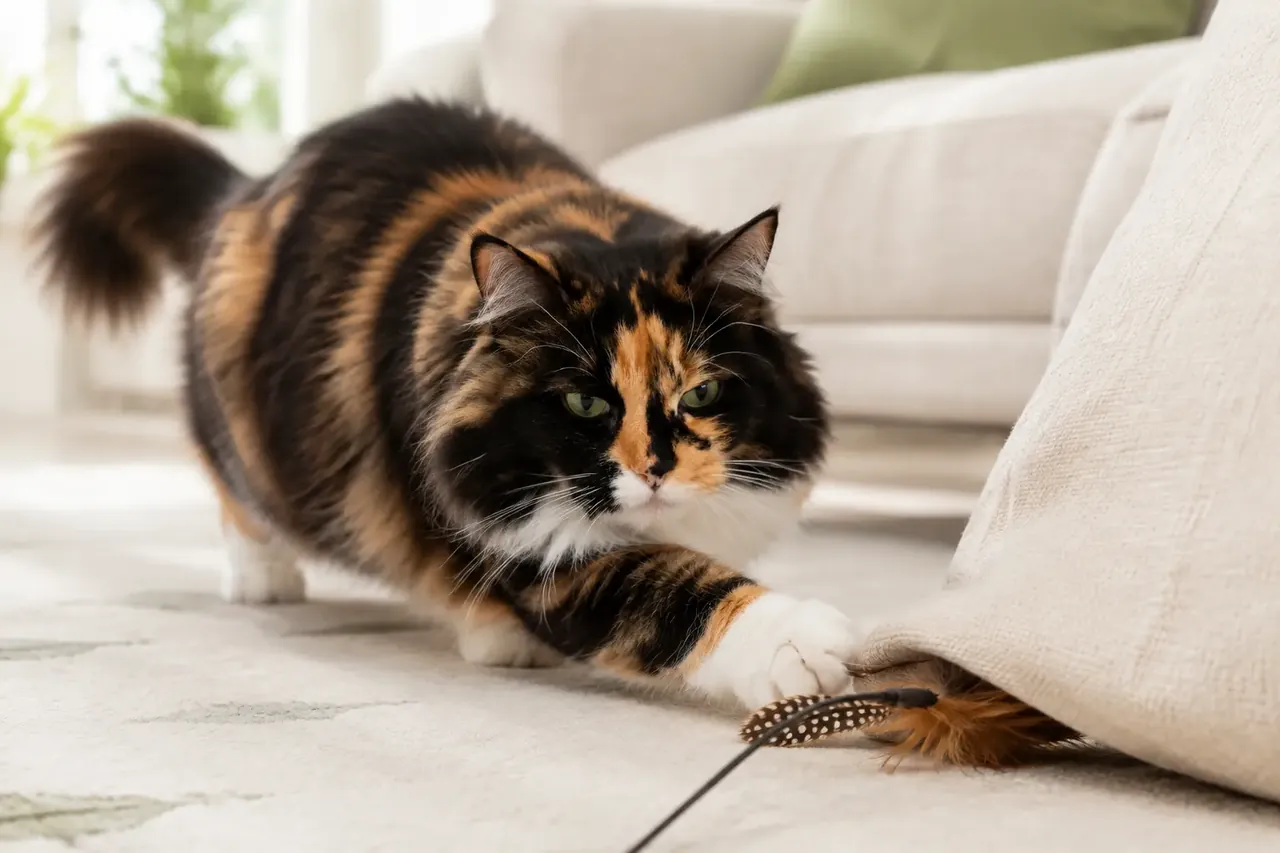
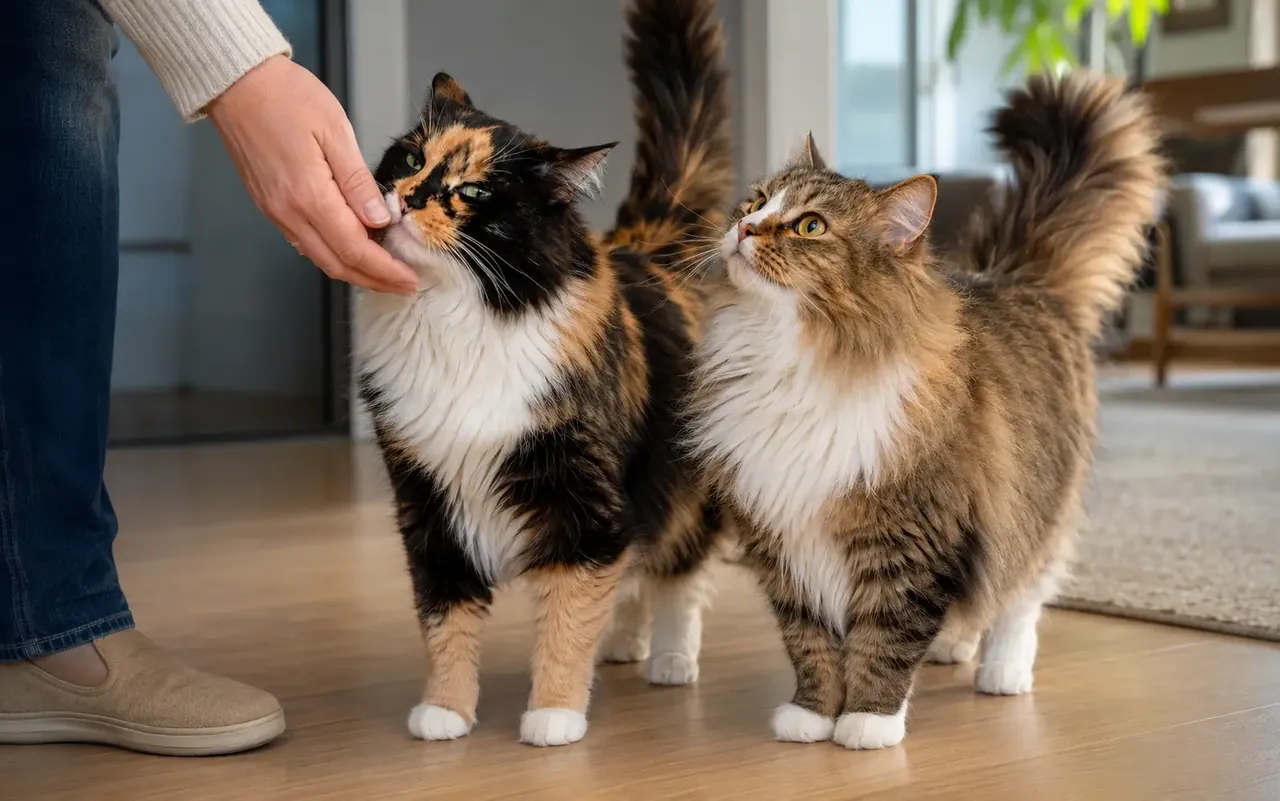 Topic illustration selected for this guide. Some learning images may be AI-assisted.
Did cats develop meowing for humans — the quick answer
✓ Adult cats often direct meows toward people far more than toward unfamiliar adult cats.
✓ Reward calm alternative requests rather than paying every louder meow with food.
✓ New excessive vocalising can indicate pain, sensory loss or thyroid disease.
Adult cats often direct meows toward people far more than toward unfamiliar adult cats. Humans respond to vocal requests, so each cat–person pair develops learned signals around routines. This guide keeps the fascinating detail while separating observation, evidence and internet exaggeration.
Why humans receive so many meows
People respond to sound by looking, talking, opening doors, serving food or offering contact. A cat can learn which vocal patterns work with a particular person, while smell, posture and touch remain important in communication with other cats.
Meaning comes from the routine
A short meow near the door may predict one thing and the same sound beside a bowl another. Watch location, time, gaze, movement and what happens next rather than assigning a dictionary meaning to pitch alone.
How to respond without escalating
Check legitimate needs, then reward calm alternatives such as waiting at a mat, touching a target or approaching quietly. Avoid shouting back, and do not make every increasingly loud call produce food.
What this does not prove
Cats did not invent every meow solely for humans, and one sound does not prove love, manipulation or hunger. Kittens vocalise to mothers, and adult cats also use voices in mating, conflict, distress and other contexts.
When vocalising changes
New or increasing meowing can accompany pain, hearing loss, high blood pressure, thyroid disease, cognitive change or environmental stress. Arrange veterinary advice, especially for a senior cat or when appetite, thirst, weight, litter use or sleep also changes.
Your quick checklist
Loading saved progress…
Three simple things you can do
You do not have to change everything today. Pick one step that feels realistic, try it and see how your cat responds.
- 1Observe your cat’s individual baseline.
- 2Make one gentle change at a time.
- 3Ask a qualified professional when health or safety is involved.
Common mistakes
×Waiting for a dramatic symptom instead of noticing smaller changes from the cat’s normal routine.
×Changing several things at once, making it difficult to learn what actually helped.
×Treating general guidance as a substitute for advice from a veterinarian who knows the individual cat.
Questions cat people ask
Does every cat follow the same rule?+
No. Age, health, history, temperament and environment all change what works for an individual.
When should I seek professional help?+
Seek veterinary advice for sudden, persistent or concerning changes and urgent help for breathing difficulty, collapse, seizures, poisoning or urinary obstruction signs.
Still looking for the right answer?
Search the full EverYes Cats encyclopedia with your own words — a symptom, food, behaviour, breed or everyday question.
Checked, dated and transparent
- Prepared by
- EverYes Cats editorial team
- Last updated
- Source checked
- Primary reference
- International Cat Care ↗
We begin with the named reference, rewrite the information in plain language and add practical cat-parent steps. Urgent health statements are checked against veterinary sources. This guide has not been individually reviewed by a veterinarian unless explicitly stated. It provides education, not diagnosis or treatment.
How we choose and use sources →
Spotted something unclear or outdated? Tell us so we can review it.
Loading your saved choice…
A cat may place a paw on you to seek contact, steady the body, pause your hand or ask for something. The rest of the posture shows whether to continue or give space.
 01
 02
 03
 04