Make daily routes easier
Use low entrances, non-slip surfaces, steps, warm beds and resources on every used level.
33 GUIDES
Older cats often adapt quietly, so changes in jumping, grooming, sleep, litter use or social behaviour matter. This hub supports comfort while ensuring treatable problems are not dismissed as normal ageing.
Start with the closest concern for focused observations, home support and clear veterinary thresholds.
Warmth, routine and subtle changes worth tracking
Open this senior guide →EASIER MOVEMENTMake a home easier for a senior catLow-entry resources, steps and non-slip routes
Open this senior guide →CALLING AT NIGHTWhy an older cat may call at nightPossible causes, observations and calm support
Open this senior guide →GROOMING HELPHelping a senior cat groomGentle coat support without pulling or forcing
Open this senior guide →These changes can develop gradually and may overlap. Measure what you can, keep water and normal complete food available, and use the guides to prepare a useful veterinary history—not to diagnose at home.
Measure the change without ever restricting water
Track this change →WEIGHT LOSSLosing weight despite eating: why it mattersTrack weight and intake when appetite remains normal or strong
Track this change →THYROID CLUESHyperthyroidism in catsUnderstand the pattern, tests and individual treatment choices
Track this change →Use low entrances, non-slip surfaces, steps, warm beds and resources on every used level.
Sleeping more, missing the box, grooming less or avoiding touch may reflect pain or disease. Record and discuss the pattern.
Predictable food, resting places and gentle interaction support security when hearing, vision or cognition changes.
Labels vary and cats age individually. Monitoring should reflect age, history and observed change.
Not necessarily. Arthritis, dental disease and other treatable conditions can look like ageing.
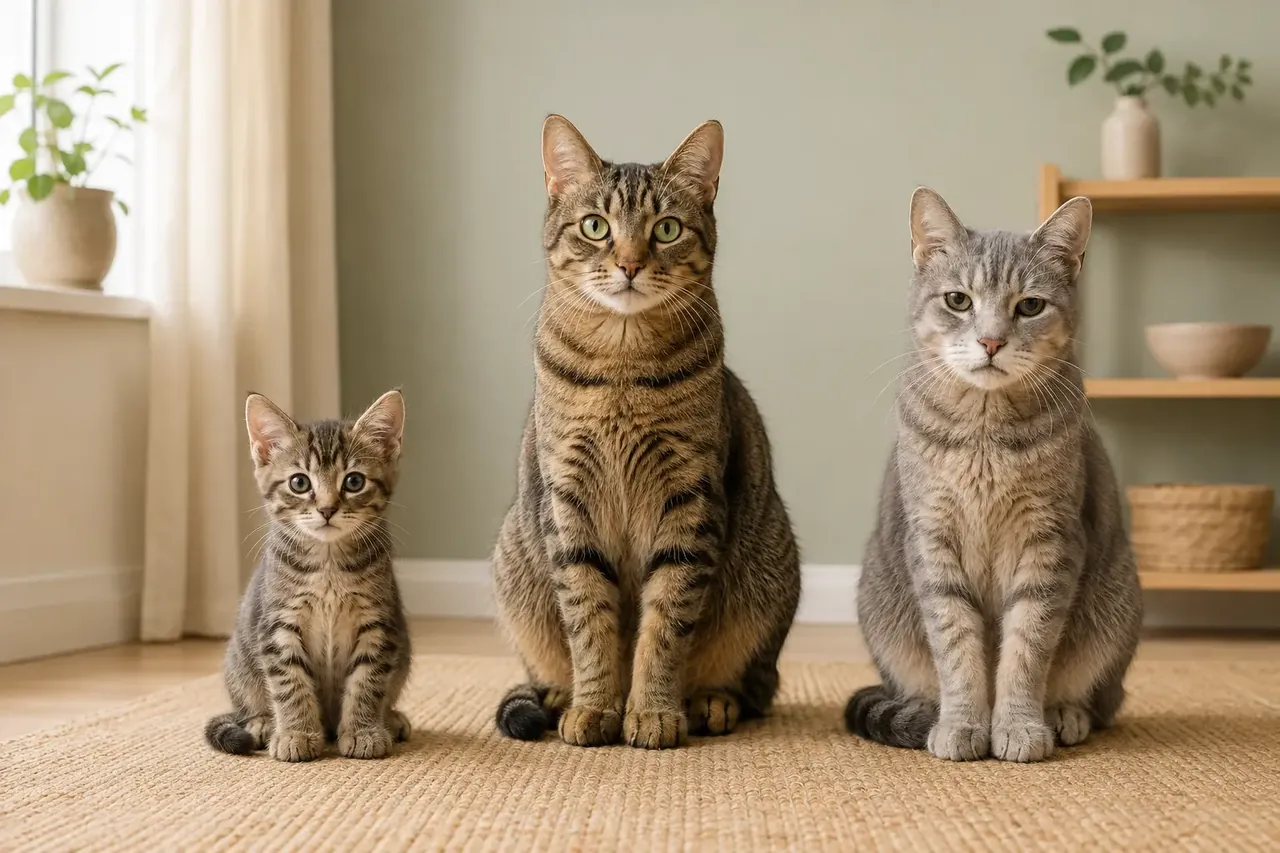
A senior may notice sound, light or scent, but new fixed staring can also accompany vision, hearing or cognitive change. A practical guide to what matters, what to do and when to seek help.
Read the guide →A senior may notice sound, light or scent, but new fixed staring can also accompany vision, hearing or cognitive change. A practical guide to what matters, what to do and when to seek help.
Night calling may reflect routine, attention, pain, sensory loss or cognitive change rather than simple stubbornness. A practical guide to what matters, what to do and when to seek help.
Jumping down places force through joints and may become harder before ordinary walking changes. A practical guide to what matters, what to do and when to seek help.
A modest stable height can help some cats eat comfortably, but there is no single correct setup. A practical guide to what matters, what to do and when to seek help.
Older cats may value warmth as body condition, circulation, activity and comfort change. A practical guide to what matters, what to do and when to seek help.
Pain, stiffness, dental trouble or reduced flexibility can make one side harder to reach. A practical guide to what matters, what to do and when to seek help.
Older cats may shed claw sheaths less effectively and scratch less because of mobility change. Learn what to check, what to change safely and when professional help matters.
Soft night lighting can help a senior cat navigate familiar routes when vision, confidence or mobility changes. Light essential paths without rearranging the whole home at once.
A senior litter box should be large, stable and easy to enter, with a low opening and enough wall height to contain urine. Put an accessible option on every level the cat uses.
Choose steps or a ramp by observing which movement is easiest for the individual senior cat. Stability, width, grip and a gentle approach matter more than the product label.
Weight loss in a senior cat is not a normal part of ageing, even when appetite seems unchanged. Weigh consistently, record related changes and arrange a veterinary examination.
Senior claws may thicken, curve and shed their outer sheaths less effectively. Check every claw regularly and get help before an overgrown claw reaches the paw pad.
A senior cat’s warm bed should be low, supportive and easy to leave. Use pet-specific heating exactly as directed and always provide an unheated resting choice.
Both reduced appetite and unusual hunger in a senior cat deserve attention. Measure what is actually eaten, track weight and arrange a veterinary assessment rather than changing foods repeatedly.
A short senior-cat appointment becomes more useful when you bring a clear timeline, medication list, weight record and videos of changes that may not appear in the clinic.
Sleep disruption, disorientation, house-soiling and changed interaction can occur with cognitive dysfunction, but pain, sensory loss and medical disease must be assessed first.
A senior cat pausing on stairs may be judging distance or coping with arthritis, weakness, vision change or poor grip.
A senior cat appearing to forget the food location may have sensory, mobility or cognitive changes, but illness and appetite loss must be ruled out.
Senior cats often benefit from extra low-entry boxes because stairs, distance, pain and urgency make one location insufficient.
Low-cost changes for joints, senses, warmth and independence.
New nighttime calling in an older cat deserves a veterinary check. Pain, thyroid disease, blood-pressure change, sensory loss and cognitive change can overlap, so do not treat it as a bad habit first.
Senior cats benefit from easier access, weight and muscle tracking, regular veterinary checks and prompt attention to subtle changes. Slowing down should not automatically be dismissed as age.
Weight loss with a strong appetite is a classic clue—not healthy ageing.
A senior-friendly home keeps food, water, litter, warmth and favourite resting places within easy reach. Small changes can protect independence without forcing a cat to stop using familiar spaces.
Communication and home design when sound is no longer reliable.
Regular senior-cat check-ups can identify gradual disease before changes become dramatic. Bring measured trends in weight, appetite, thirst, toileting, movement and behaviour.
A stable body weight can hide muscle loss in an older cat. Track weight together with appetite, body shape, movement and the feel over the spine, shoulders and hips.
Night calling, disorientation and changed sleep have several possible causes.
Arthritis or illness can make familiar grooming movements difficult.
Older cats still benefit from hunting and play when the game matches their vision, confidence and joint comfort. Keep movement low, predictable and easy to complete successfully.
Night calling, hiding and irritability can be clues to treatable disease.
Gentle coat care when flexibility, skin and patience have changed.
Senior cats still benefit from hunting-style play when it is short, low-impact and easy to win. Keep toys near floor level, use non-slip footing and treat new reluctance to move as health information.