Why does my cat purr while sleeping?
A relaxed cat may continue purring while drifting into light sleep, especially during a warm, familiar resting routine. Purring alone does not prove comfort or deep sleep.
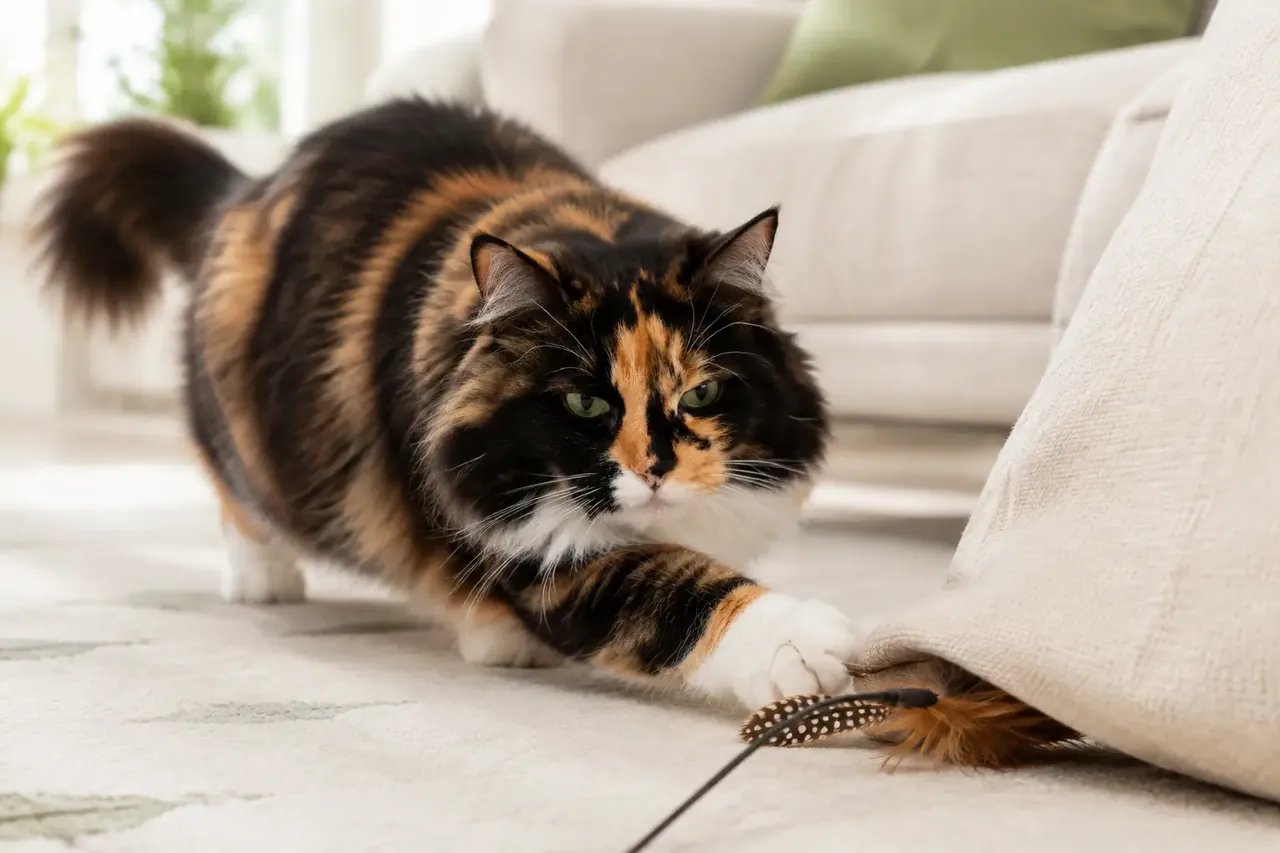 Topic illustration selected for this guide. Some learning images may be AI-assisted.
Why does my cat purr while sleeping — the quick answer
✓ A relaxed cat may continue purring while drifting into light sleep.
✓ Observe breathing and body softness without waking the cat unnecessarily.
✓ Laboured breathing, open-mouth breathing, collapse or a major change in behaviour is urgent.
A relaxed cat may continue purring while drifting into light sleep. Purring also occurs in stressful or painful situations, so sleep posture and normal routines matter. The useful answer comes from the whole situation—not one pose, sound or viral claim.
The short answer
A relaxed cat may continue purring while drifting into light sleep. Compare it with your cat's usual behaviour before deciding what it means.
What may be happening
Purring also occurs in stressful or painful situations, so sleep posture and normal routines matter. Age, health, past experience and the immediate environment can all change the explanation.
Read the whole cat
Look at posture, ear direction, tail movement, breathing, distance, freedom to leave and what happened immediately before and after. One signal alone is rarely a complete answer.
What to do at home
Observe breathing and body softness without waking the cat unnecessarily. Make one calm change at a time so you can tell whether it helps.
What this does not prove
Avoid treating a cute label, coat-colour stereotype or social-media myth as a diagnosis. The same action can have different meanings in different cats.
When to contact a veterinarian
Laboured breathing, open-mouth breathing, collapse or a major change in behaviour is urgent. Seek urgent help for breathing difficulty, collapse, seizures, major trauma, suspected poisoning or repeated unsuccessful attempts to urinate.
Look for the rest of relaxed sleep
Loose muscles, slow regular breathing, soft paws and easy waking support an ordinary sleepy purr. Small twitches can occur during dreaming. Note whether the cat settles normally before and after rather than trying to wake or test it repeatedly.
Purring is not a health certificate
Cats may also purr when stressed, painful or seeking reassurance. Breathing effort, open-mouth breathing, hiding, poor appetite, weakness or inability to settle requires attention regardless of the sound.
Your quick checklist
Your progress is saved on this device.
Three simple things you can do
You do not have to change everything today. Pick one step that feels realistic, try it and see how your cat responds.
- 1Observe breathing and posture without waking a peacefully sleeping cat.
- 2Compare the purr with the cat’s ordinary sleep routine.
- 3Check appetite, movement and behaviour if purring accompanies a new change.
Common mistakes
×Assuming purring always proves comfort.
×Repeatedly waking the cat to test responsiveness.
×Ignoring breathing effort because the cat is purring.
Questions cat people ask
Is it normal for cats to purr in their sleep?+
A relaxed cat can continue purring while becoming drowsy or entering light sleep. Loose posture and calm breathing support an ordinary pattern.
Can a cat purr when in pain?+
Yes. Purring can also occur during stress, pain or reassurance-seeking, so it must be read alongside breathing, appetite, posture and behaviour.
Still looking for the right answer?
Search the full EverYes Cats encyclopedia with your own words — a symptom, food, behaviour, breed or everyday question.
Checked, dated and transparent
- Prepared by
- EverYes Cats editorial team
- Last updated
- 8 August 2026
- Source checked
- 8 August 2026
- Primary reference
- Cornell Feline Health Center ↗
We begin with the named reference, rewrite the information in plain language and add practical cat-parent steps. Urgent health statements are checked against veterinary sources. This guide has not been individually reviewed by a veterinarian unless explicitly stated. It provides education, not diagnosis or treatment.
Spotted something unclear or outdated? Tell us so we can review it.
Your answer helps us improve the cat encyclopedia.
Tail thumps can signal rising arousal, irritation, concentration or conflict about continuing contact.