Pica in cats: why cats eat non-food items
Pica means chewing or swallowing non-food materials such as fabric, plastic, string or litter. It has medical, nutritional, developmental and behavioural contributors, and ingestion can cause a life-threatening obstruction.
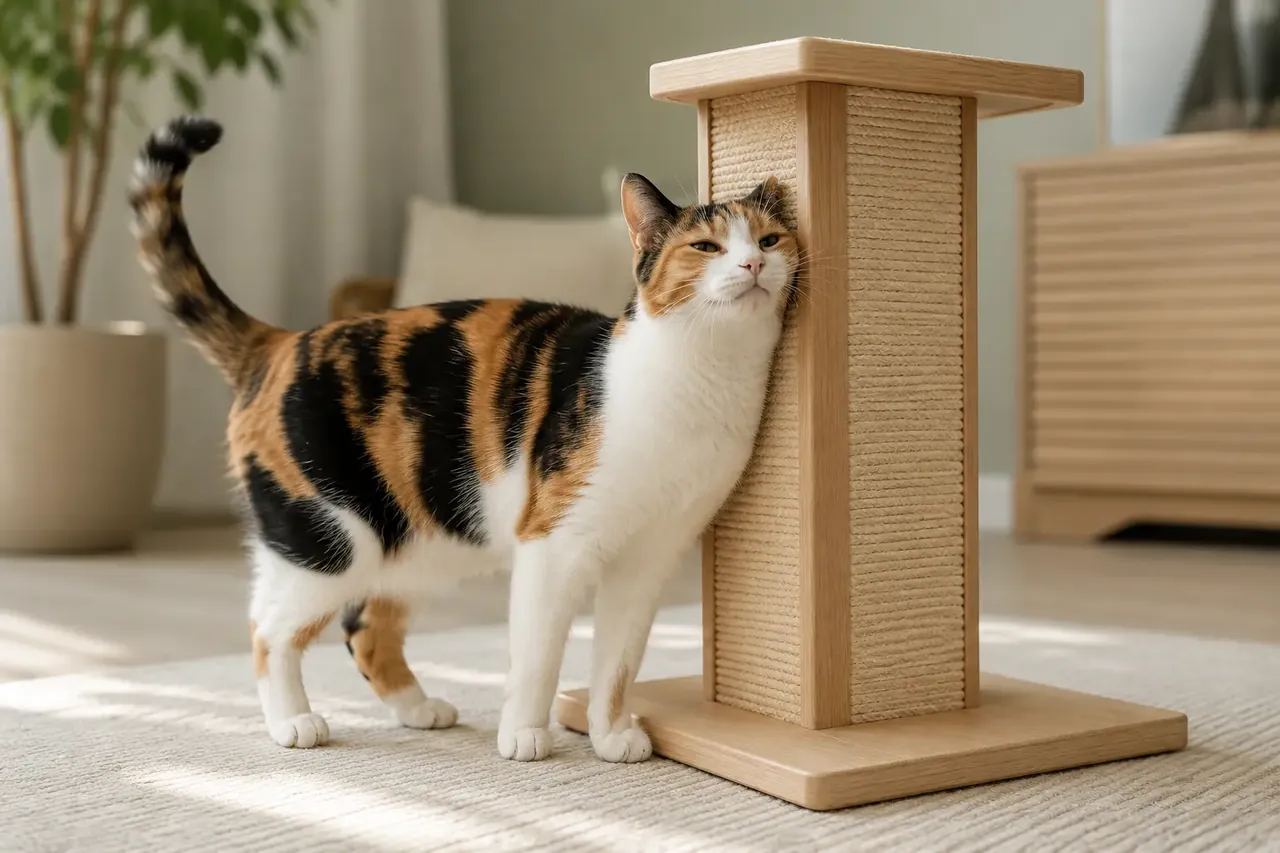
 Topic illustration selected for this guide. Some learning images may be AI-assisted.
Pica in cats: why cats eat non-food items — the quick answer
✓ Pica has medical, nutritional, developmental and environmental contributors; there is no safe one-cause shortcut.
✓ Remove access, record exact materials and seek a veterinary diagnostic and behavior plan.
✓ Read the complete body and setting
✓ Known ingestion, vomiting, pain or appetite loss is urgent. Never pull string from the mouth or anus.
A cat chews and swallows fabric, plastic, string, litter or another non-food material. Pica has medical, nutritional, developmental and environmental contributors; there is no safe one-cause shortcut. This guide helps you read the moment, protect the relationship and choose a response that works for the cat as well as the household.
Chewing and swallowing are different risks
A cat may mouth an object without ingesting it, but missing pieces, damaged edges or repeated chewing increase concern. Identify the exact material, amount, time and whether it can form a long strand, sharp fragment, toxin or expanding blockage.
Remove access before testing a theory
Use closed storage for fabric, foam, elastic, hair ties, plastic, thread and small objects; secure bins and laundry; and inspect toys. Do not leave the material available to see whether enrichment alone stops the behaviour.
Seek an individual veterinary work-up
Pica can be associated with gastrointestinal disease, dental pain, anaemia, dietary problems, early-life patterns or stress. Bring samples or photographs and review the complete diet, medication, stool, vomiting, appetite and weight.
Add safe replacement activity
Use appropriate chew-safe toys, food puzzles from the measured ration, hunting play and predictable social routines based on the cat's preferences. Replacement supports welfare but does not make a swallowed object safe or replace diagnosis.
Know the obstruction warning signs
Suspected ingestion, repeated vomiting, gagging, abdominal pain, poor appetite, constipation, lethargy or straining needs prompt veterinary advice. Never pull string from the mouth or anus; tension can damage the intestine. Breathing difficulty or collapse is an emergency.
Your quick checklist
Loading saved progress…
Three simple things you can do
You do not have to change everything today. Pick one step that feels realistic, try it and see how your cat responds.
- 1Observe your cat’s individual baseline.
- 2Make one gentle change at a time.
- 3Ask a qualified professional when health or safety is involved.
Common mistakes
×Waiting for a dramatic symptom instead of noticing smaller changes from the cat’s normal routine.
×Changing several things at once, making it difficult to learn what actually helped.
×Treating general guidance as a substitute for advice from a veterinarian who knows the individual cat.
Questions cat people ask
Does every cat follow the same rule?+
No. Age, health, history, temperament and environment all change what works for an individual.
When should I seek professional help?+
Seek veterinary advice for sudden, persistent or concerning changes and urgent help for breathing difficulty, collapse, seizures, poisoning or urinary obstruction signs.
Still looking for the right answer?
Search the full EverYes Cats encyclopedia with your own words — a symptom, food, behaviour, breed or everyday question.
Checked, dated and transparent
- Prepared by
- EverYes Cats editorial team
- Last updated
- Source checked
- Primary reference
- Cornell: Destructive behaviour ↗
We begin with the named reference, rewrite the information in plain language and add practical cat-parent steps. Urgent health statements are checked against veterinary sources. This guide has not been individually reviewed by a veterinarian unless explicitly stated. It provides education, not diagnosis or treatment.
How we choose and use sources →
Spotted something unclear or outdated? Tell us so we can review it.
Loading your saved choice…
An apparently empty room may contain echoes, learned cues, scent, insects or sounds outside human hearing. Track timing and orientation rather than assuming the cat sees something supernatural; sudden persistent calling can also accompany pain, hearing change or confusion.
 02
 03
 05