Why cats show their belly—and why it is not always an invitation
A visible belly can signal relaxation, cooling, stretching, play or defensive readiness. It is not automatically an invitation to touch the abdomen, so read the whole body and let the cat choose contact.
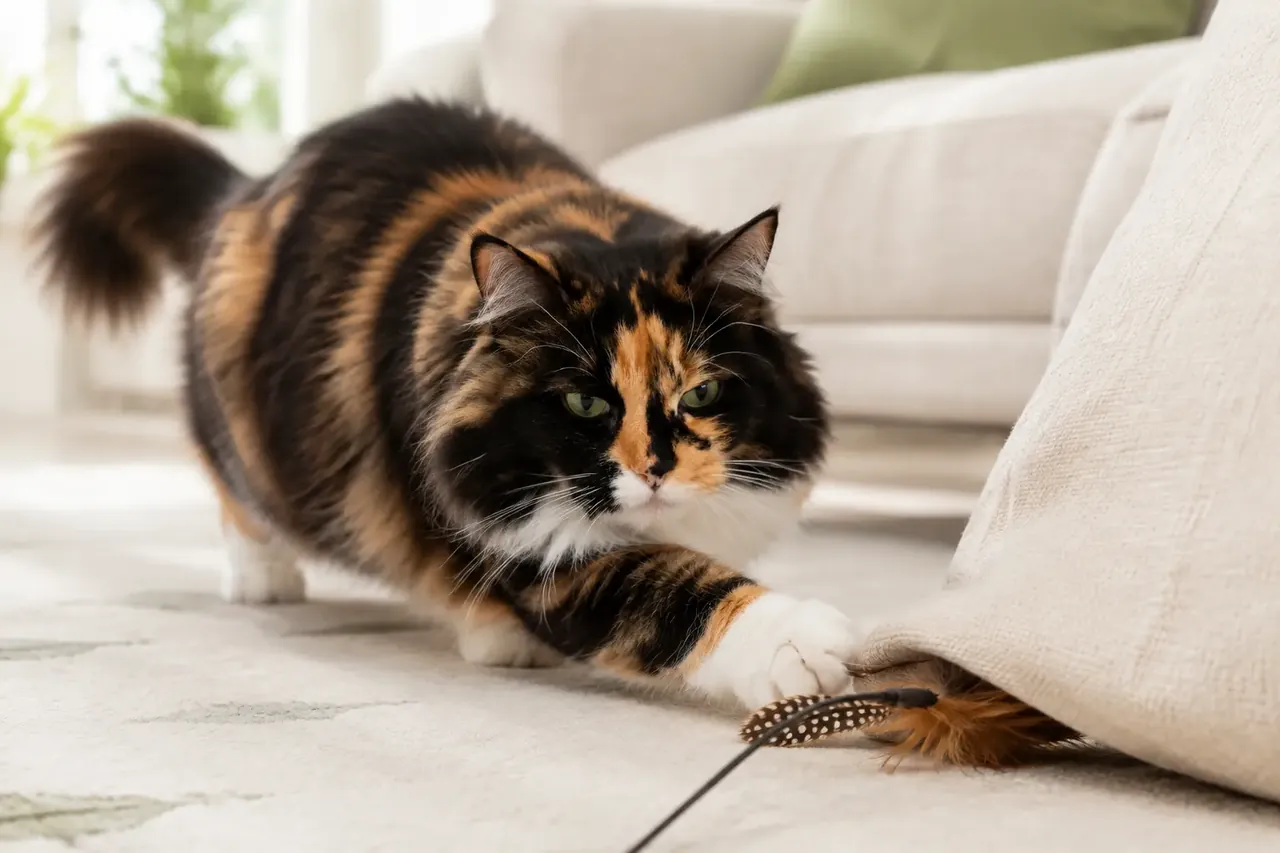
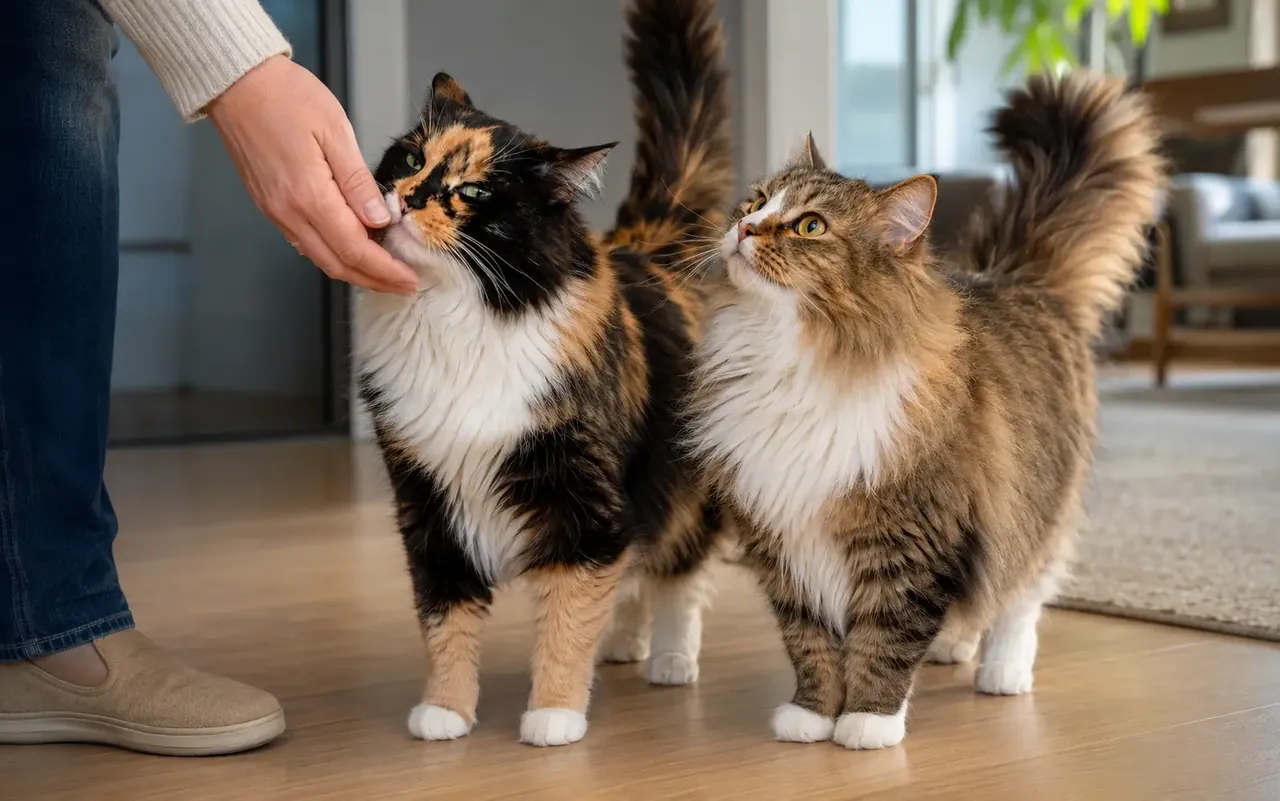 Topic illustration selected for this guide. Some learning images may be AI-assisted.
Why cats show their belly—and why it is not always an invitation — the quick answer
✓ A relaxed cat may expose the belly because the setting feels safe. In play or defense, the position also gives access to claws and teeth.
✓ Acknowledge the display without touching it. Invite cheek contact and let repeated consent—not a visible belly—guide your hand.
✓ Read the complete body and setting
✓ Guarding a swollen abdomen, difficulty lying down or sudden pain-related aggression needs veterinary care.
Your cat rolls over and exposes the abdomen, then may grab an approaching hand with four paws. A relaxed cat may expose the belly because the setting feels safe. In play or defense, the position also gives access to claws and teeth. This guide helps you read the moment, protect the relationship and choose a response that works for the cat as well as the household.
Why cats expose the belly
A cat may roll during greeting, stretch after rest, cool on a surface or prepare for play. Because the abdomen is vulnerable, relaxed exposure can show comfort in that moment without promising tolerance of belly rubbing.
Read relaxed versus defensive posture
Loose limbs, soft eyes and easy breathing differ from fixed pupils, flattened ears, a rapidly moving tail, tense legs or claws ready to grab. A cat can switch quickly as arousal rises, so the complete sequence matters.
Offer contact away from the abdomen
Pause and let the cat approach. If touch is invited, begin briefly around the cheek, chin or shoulder and stop after a few strokes. Keep hands away from the belly unless that individual cat has repeatedly shown relaxed preference for it.
Respond calmly to grabbing
Freeze rather than pulling the hand rapidly, then create distance when the cat releases. Do not shout, tap, spray water or repeatedly offer the hand as a test. Use an appropriate toy for kicking and grabbing during play.
When belly guarding needs care
Sudden reluctance to lie normally, a tense or swollen abdomen, pain when moving, repeated vomiting, poor appetite or urinary straining needs veterinary assessment. Collapse, severe pain, breathing difficulty or inability to urinate is urgent.
Your quick checklist
Loading saved progress…
Three simple things you can do
You do not have to change everything today. Pick one step that feels realistic, try it and see how your cat responds.
- 1Observe your cat’s individual baseline.
- 2Make one gentle change at a time.
- 3Ask a qualified professional when health or safety is involved.
Common mistakes
×Waiting for a dramatic symptom instead of noticing smaller changes from the cat’s normal routine.
×Changing several things at once, making it difficult to learn what actually helped.
×Treating general guidance as a substitute for advice from a veterinarian who knows the individual cat.
Questions cat people ask
Does every cat follow the same rule?+
No. Age, health, history, temperament and environment all change what works for an individual.
When should I seek professional help?+
Seek veterinary advice for sudden, persistent or concerning changes and urgent help for breathing difficulty, collapse, seizures, poisoning or urinary obstruction signs.
Still looking for the right answer?
Search the full EverYes Cats encyclopedia with your own words — a symptom, food, behaviour, breed or everyday question.
Checked, dated and transparent
- Prepared by
- EverYes Cats editorial team
- Last updated
- Source checked
- Primary reference
- FelineVMA: Environmental Needs Guidelines ↗
We begin with the named reference, rewrite the information in plain language and add practical cat-parent steps. Urgent health statements are checked against veterinary sources. This guide has not been individually reviewed by a veterinarian unless explicitly stated. It provides education, not diagnosis or treatment.
How we choose and use sources →
Spotted something unclear or outdated? Tell us so we can review it.
Loading your saved choice…
Better grooming, medication and cuddles begin with pauses the cat can trust.
 01
 02
 03
 04