A split or broken cat claw: safe first steps
A split or broken claw can expose sensitive tissue and bleed. Keep the cat quiet, prevent licking, apply gentle pressure for minor bleeding and contact a veterinarian rather than pulling or cutting a damaged claw at home.
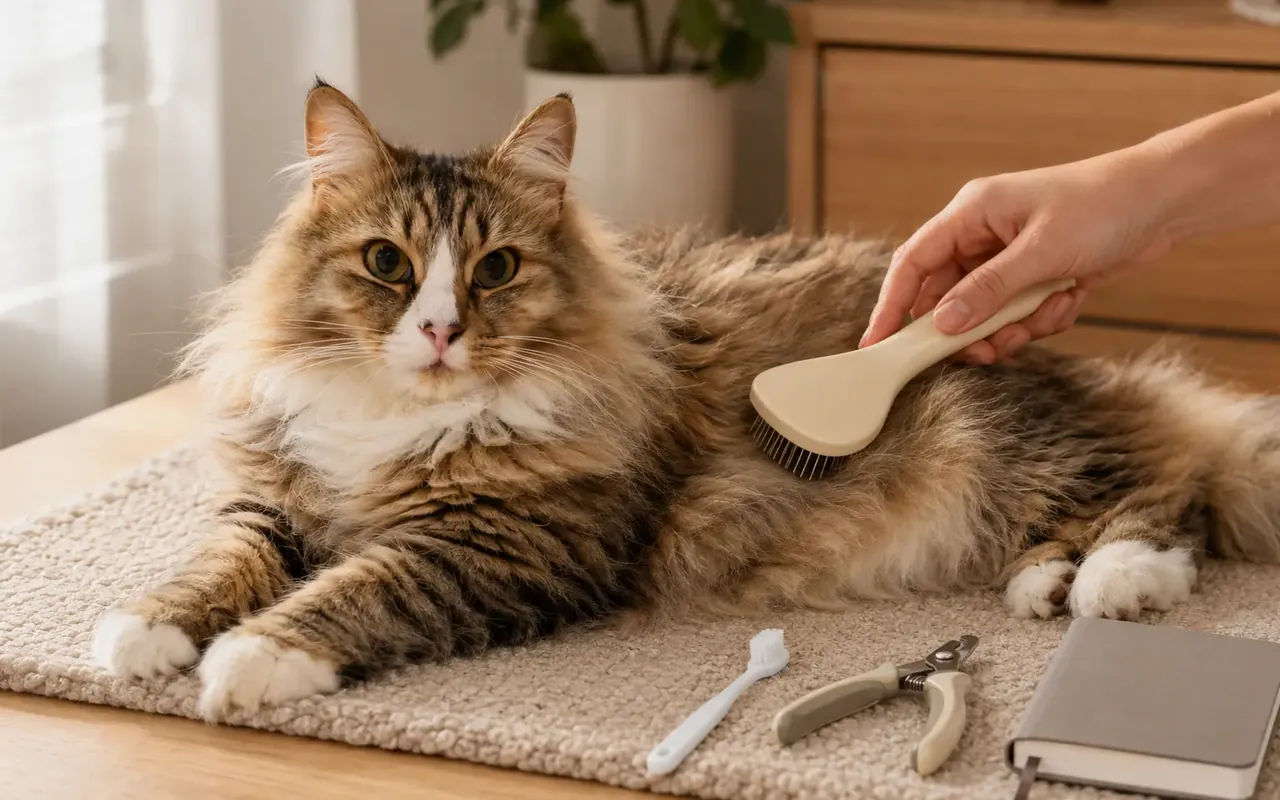
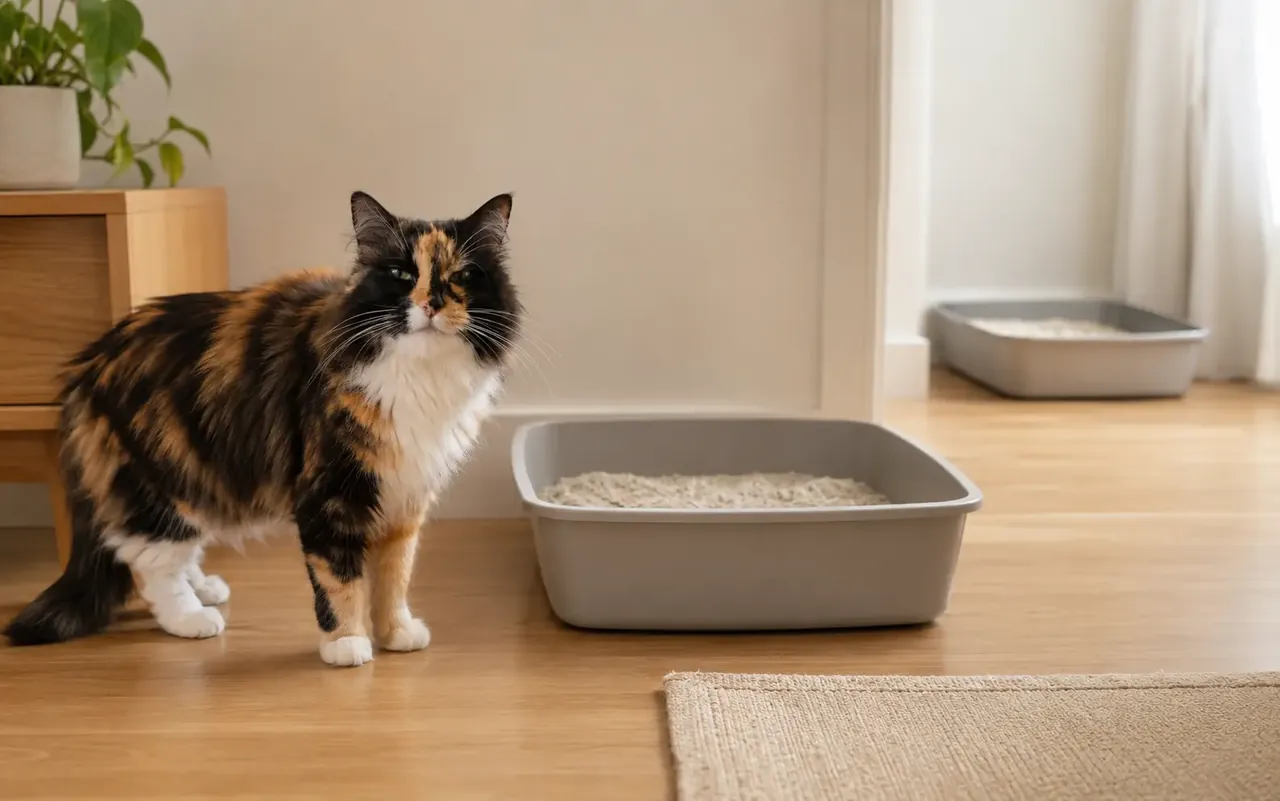 Topic illustration selected for this guide. Some learning images may be AI-assisted.
A split or broken cat claw: safe first steps — the quick answer
✓ Keep the cat indoors, inspect only if calm and prepare a clean carrier for veterinary care.
✓ Use gentle pressure with clean gauze for minor bleeding and prevent licking while seeking advice.
✓ Ongoing bleeding, a dangling claw, swelling, pus, severe pain or limping needs prompt care.
Claws can crack, snag or tear and may bleed or expose sensitive tissue. This guide shows how to protect a damaged claw without pulling attached tissue, what equipment helps, how to protect trust and when routine care should become professional care.
Look without manipulating
Check which toe is affected, whether the claw is loose, twisted or missing, and whether blood, swelling or limping is present. Do not squeeze the toe, extend the claw repeatedly or pull a hanging fragment. Pain can cause even a gentle cat to bite.
Control minor bleeding safely
If the cat allows and the injury is small, hold clean gauze with gentle steady pressure for several minutes. Use only a styptic product previously recommended for pets. Do not keep lifting the pad to check every few seconds, bandage tightly or apply human pain cream.
Protect the paw for transport
Keep the cat indoors on a clean dry surface and prevent licking without forcing a homemade wrap. Place the cat in a secure carrier with clean bedding. Photograph the claw only if that does not delay care or require painful positioning.
Avoid home removal and medication
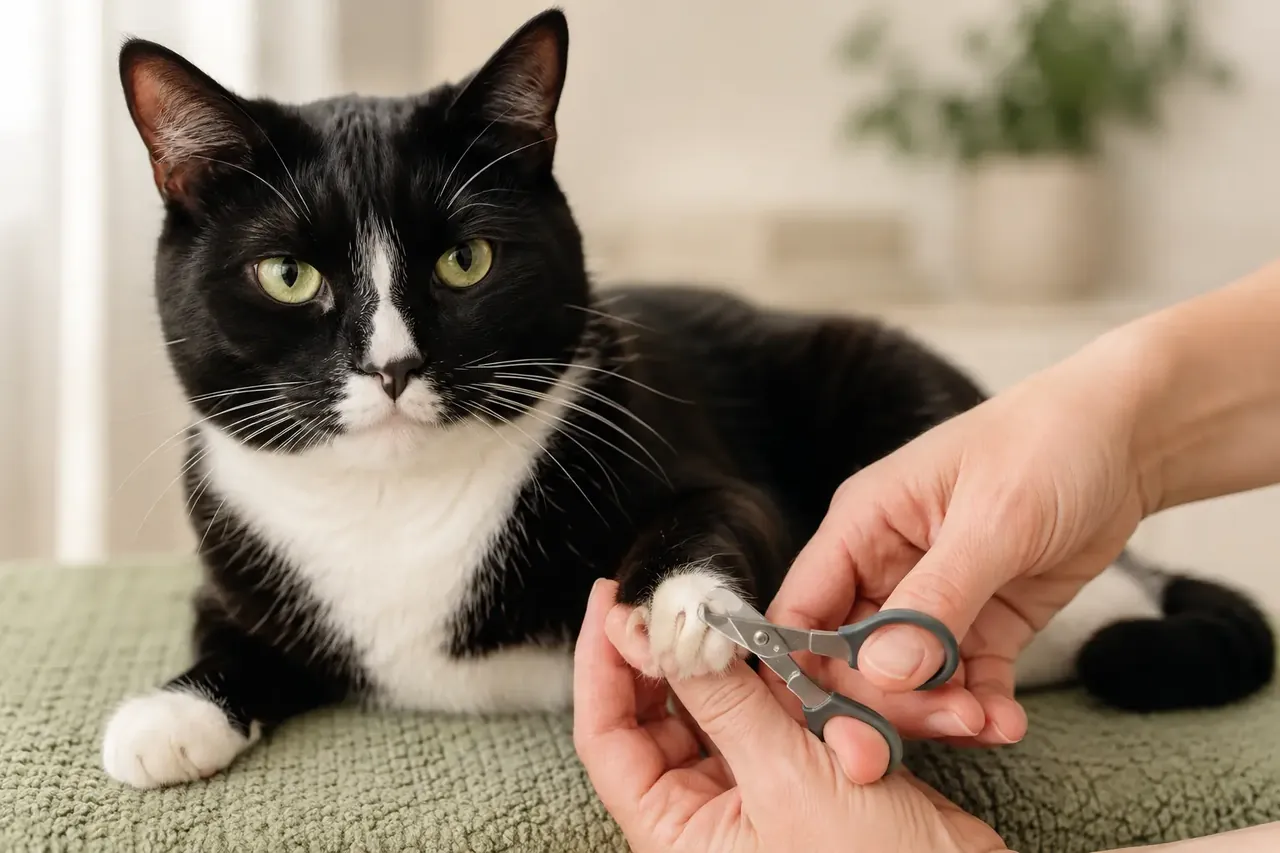
A partly attached claw may be connected to living tissue and needs appropriate pain control and trimming by a professional. Never use scissors, pliers or human painkillers. Do not soak the paw in peroxide, alcohol, essential oil or disinfectant unless specifically directed.
When veterinary care is needed
Prompt assessment is appropriate for a split into the quick, a loose claw, pain, limping, swelling or recurrent breaks. Continuous bleeding, severe trauma, pale gums, collapse or a toe caught with major injury is urgent. Monitor later for redness, discharge and odour.
Your quick checklist
Loading saved progress…
Three simple things you can do
You do not have to change everything today. Pick one step that feels realistic, try it and see how your cat responds.
- 1Observe your cat’s individual baseline.
- 2Make one gentle change at a time.
- 3Ask a qualified professional when health or safety is involved.
Common mistakes
×Waiting for a dramatic symptom instead of noticing smaller changes from the cat’s normal routine.
×Changing several things at once, making it difficult to learn what actually helped.
×Treating general guidance as a substitute for advice from a veterinarian who knows the individual cat.
Questions cat people ask
Does every cat follow the same rule?+
No. Age, health, history, temperament and environment all change what works for an individual.
When should I seek professional help?+
Seek veterinary advice for sudden, persistent or concerning changes and urgent help for breathing difficulty, collapse, seizures, poisoning or urinary obstruction signs.
Still looking for the right answer?
Search the full EverYes Cats encyclopedia with your own words — a symptom, food, behaviour, breed or everyday question.
Checked, dated and transparent
- Prepared by
- EverYes Cats editorial team
- Last updated
- Source checked
- Primary reference
- Merck Veterinary Manual: Minor Injuries and Accidents ↗
We begin with the named reference, rewrite the information in plain language and add practical cat-parent steps. Urgent health statements are checked against veterinary sources. This guide has not been individually reviewed by a veterinarian unless explicitly stated. It provides education, not diagnosis or treatment.
How we choose and use sources →
Spotted something unclear or outdated? Tell us so we can review it.
Loading your saved choice…
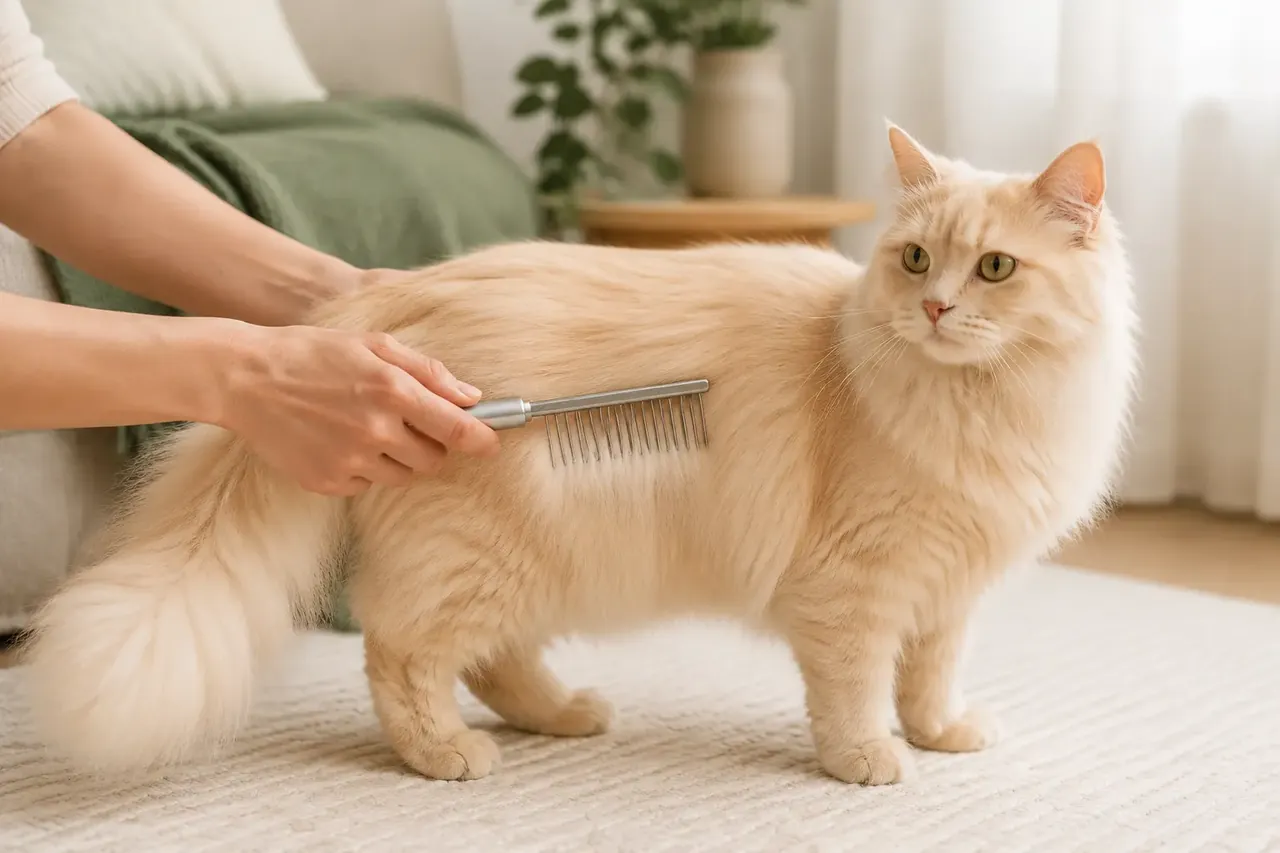
A dense or double coat needs patient layer-by-layer grooming without shaving or stripping healthy fur. Use a suitable comb, support the skin and keep sessions short enough that every pass remains comfortable.
 01
 02
 05
 06