What to write down before your cat’s vet appointment
Useful vet notes show what changed, when it began and how eating, drinking, urine, stool, sleep and movement compare with the cat's normal baseline.
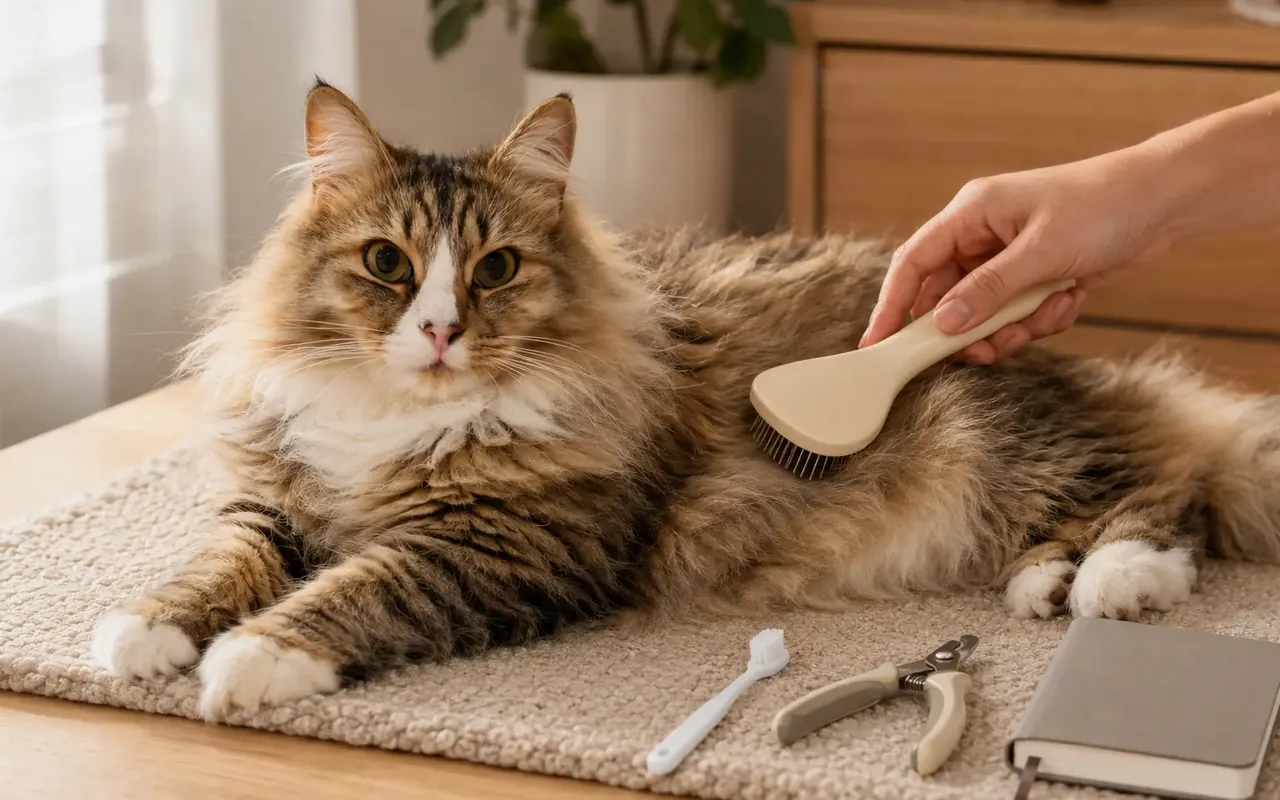 Topic illustration selected for this guide. Some learning images may be AI-assisted.
What to write down before your cat’s vet appointment — the quick answer
✓ A short timeline helps turn vague concern into useful clinical information
✓ Record onset, frequency, food, water, litter, medication, weight and short videos of relevant behaviour.
✓ Do not delay urgent care while trying to create a perfect record.
A short timeline helps turn vague concern into useful clinical information. Cats may hide signs at the clinic and several family members may remember different details. This guide separates the useful observation from guesswork and gives you one safe next step.
The clear answer
A short timeline helps turn vague concern into useful clinical information. Cats may hide signs at the clinic and several family members may remember different details.
What to observe in your own cat
A short timeline helps turn vague concern into useful clinical information. Observe the real situation without recreating or exaggerating it. Note the setting, the cat's posture and how quickly ordinary behaviour returns.
Why two cats may look different
Age, health, body shape, early experience, confidence and the immediate environment all affect what owners see. A common pattern can still deserve attention when it is new or different for this individual cat.
Make the home support the answer
Prepare the environment and tools first, work on a stable surface and stop before restraint is needed. Comfort and voluntary participation matter more than completing every step in one session.
A practical next step
Record onset, frequency, food, water, litter, medication, weight and short videos of relevant behaviour. Keep the change small and easy to reverse, then compare the same facts again rather than relying on memory.
What not to do
Do not punish, frighten, force handling or remove every familiar option at once. Avoid using a general explanation to dismiss a sudden change in health or behaviour.
Warning signs and veterinary help
Do not delay urgent care while trying to create a perfect record.
Source and limits
This educational guide is informed by AAHA/AAFP Feline Life Stage Guidelines. It can help you observe and prepare useful information, but it cannot examine your cat, diagnose a condition or replace individual veterinary advice.
DEEPER GUIDE2 more detailed sectionsOpen +
What to check first
Record exact dates, frequency, triggers, medications, diet and relevant photos or short videos without delaying urgent care.
What to do next
Put the main concern first, list three priority questions and bring product labels or samples only when the clinic requests them. Breathing difficulty, collapse, seizures, poisoning or urinary blockage signs should be called through immediately rather than documented at home.
Your quick checklist
Your progress is saved on this device.
Three simple things you can do
You do not have to change everything today. Pick one step that feels realistic, try it and see how your cat responds.
- 1List the main concern, when it began and how often it occurs.
- 2Bring medication, diet and supplement names plus relevant photos or videos.
- 3Write the veterinarian's plan, warning signs and follow-up date before leaving.
Common mistakes
×Relying on memory while stressed.
×Hiding non-prescription products from the history.
×Presenting a long log without highlighting the current change.
Questions cat people ask
What information should I bring to a cat's vet visit?+
Bring changes in appetite, water, litter, weight, movement and behaviour, plus a timeline, medication list and clear images or videos when relevant.
Can a video help the veterinarian?+
Yes. Short clips of coughing, gait, episodes or home behaviour can provide evidence that may not appear in the clinic.
Still looking for the right answer?
Search the full EverYes Cats encyclopedia with your own words — a symptom, food, behaviour, breed or everyday question.
Checked, dated and transparent
- Prepared by
- EverYes Cats editorial team
- Last updated
- 14 August 2026
- Source checked
- 14 August 2026
- Primary reference
- AAHA/AAFP Feline Life Stage Guidelines ↗
We begin with the named reference, rewrite the information in plain language and add practical cat-parent steps. Urgent health statements are checked against veterinary sources. This guide has not been individually reviewed by a veterinarian unless explicitly stated. It provides education, not diagnosis or treatment.
Spotted something unclear or outdated? Tell us so we can review it.
Your answer helps us improve the cat encyclopedia.
Posture, box height, size and mobility can place urine outside even when the cat enters. A calm, practical guide to what it means and what to do next.