A gentler nail-trimming plan for a fearful cat
A gentler claw-trimming plan teaches paw handling in tiny voluntary steps and clips only the clear hooked tip. Stop before restraint or panic, and ask a veterinary professional for help when pain or fear prevents safe care.
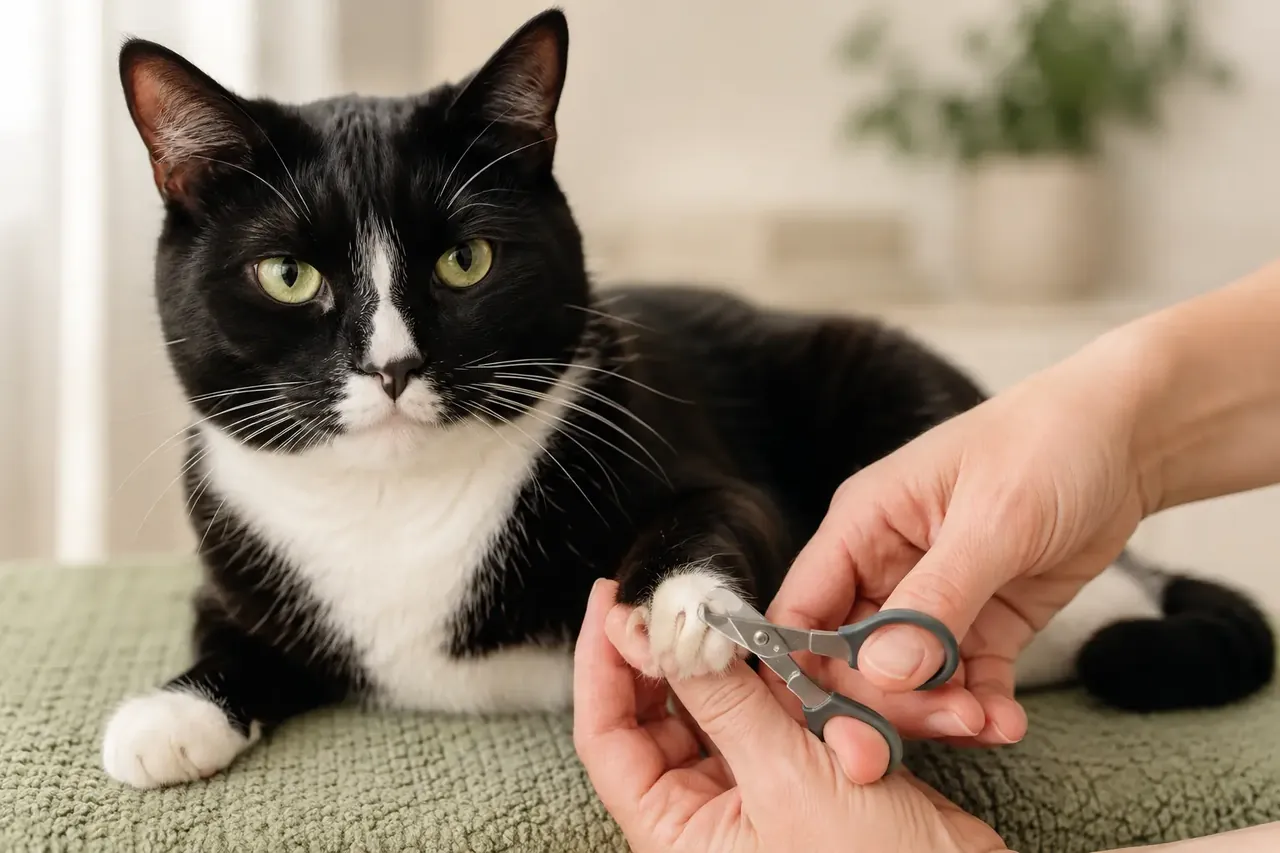 Topic illustration selected for this guide. Some learning images may be AI-assisted.
A gentler nail-trimming plan for a fearful cat — the quick answer
✓ Use sharp cat clippers, excellent light, rewards and a surface where the cat feels secure.
✓ Train paw touch first, clip one clear tip, reward and stop before tension escalates.
✓ Ask a clinic for help if claws curl, paws hurt, the cat panics or handling safety is poor.
Fear can come from restraint, a previous quick cut, joint pain or unfamiliar paw handling. This guide shows how to build cooperation without completing every claw in one session, what equipment helps, how to protect trust and when routine care should become professional care.
Prepare the environment and tool
Choose a quiet time, a stable non-slip surface and sharp cat-sized clippers. Keep styptic material recommended by the veterinary team available and check the tool closes cleanly. Do not begin when the cat is excited, cornered or already avoiding touch.
Teach paw contact separately
Reward looking at the clippers, a brief leg touch, one paw touch and gentle pressure on a toe across separate sessions. Release after each easy step. The cat should remain free to move away; progress is measured by relaxed repetition, not by holding longer.
Identify the safe cutting area
In good light, extend one claw gently and locate the pink quick inside translucent claws. Clip only the clear sharp hook, well away from living tissue. Dark claws, thick claws and uncertain anatomy should be demonstrated by a veterinary nurse or experienced professional.
Trim fewer claws at a time
One successful claw can be a complete session. Reward, stop and resume another day rather than chasing the cat to finish every paw. Never scruff, pin, punish or cut while the cat struggles; sudden movement makes an otherwise simple trim unsafe.
When professional help is better
Seek veterinary advice for overgrown claws, pain, swelling, bleeding, abnormal thickness, a claw growing toward the pad or a sudden handling reaction. Persistent bleeding after an accidental cut needs prompt guidance. Sedation or medication must only follow a veterinary plan.
Your quick checklist
Loading saved progress…
Three simple things you can do
You do not have to change everything today. Pick one step that feels realistic, try it and see how your cat responds.
- 1Observe your cat’s individual baseline.
- 2Make one gentle change at a time.
- 3Ask a qualified professional when health or safety is involved.
Common mistakes
×Waiting for a dramatic symptom instead of noticing smaller changes from the cat’s normal routine.
×Changing several things at once, making it difficult to learn what actually helped.
×Treating general guidance as a substitute for advice from a veterinarian who knows the individual cat.
Questions cat people ask
Does every cat follow the same rule?+
No. Age, health, history, temperament and environment all change what works for an individual.
When should I seek professional help?+
Seek veterinary advice for sudden, persistent or concerning changes and urgent help for breathing difficulty, collapse, seizures, poisoning or urinary obstruction signs.
Still looking for the right answer?
Search the full EverYes Cats encyclopedia with your own words — a symptom, food, behaviour, breed or everyday question.
Checked, dated and transparent
- Prepared by
- EverYes Cats editorial team
- Last updated
- Source checked
- Primary reference
- FelineVMA: Positive Reinforcement Training ↗
We begin with the named reference, rewrite the information in plain language and add practical cat-parent steps. Urgent health statements are checked against veterinary sources. This guide has not been individually reviewed by a veterinarian unless explicitly stated. It provides education, not diagnosis or treatment.
How we choose and use sources →
Spotted something unclear or outdated? Tell us so we can review it.
Loading your saved choice…
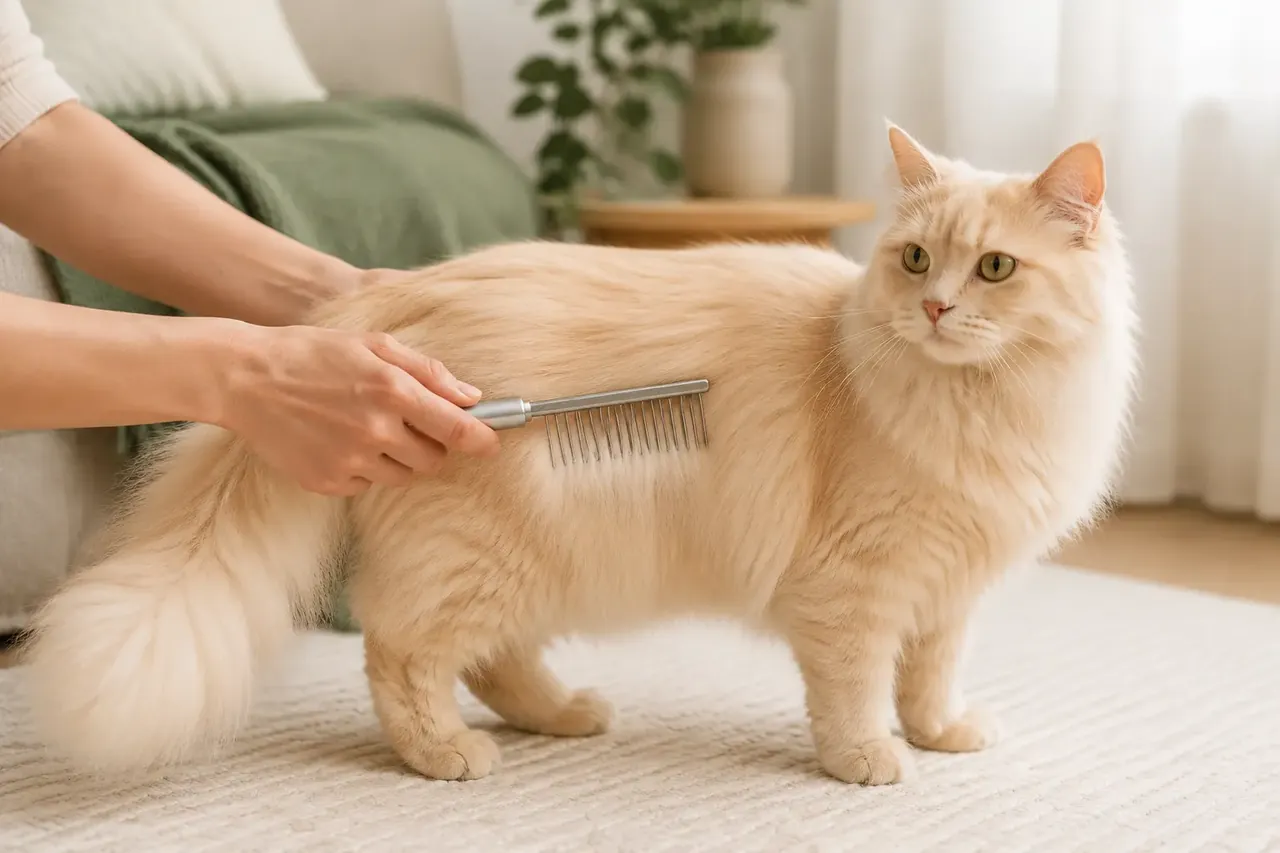
A dense or double coat needs patient layer-by-layer grooming without shaving or stripping healthy fur. Use a suitable comb, support the skin and keep sessions short enough that every pass remains comfortable.
 01
 05
 06