Should a cat play immediately after eating?
Cats can usually walk and play gently after eating, but vigorous chasing, twisting and jumping immediately after a large meal may trigger discomfort, regurgitation or vomiting in some cats.
 Topic illustration selected for this guide. Some learning images may be AI-assisted.
Should a cat play immediately after eating — the quick answer
✓ Gentle movement is usually fine, but vigorous jumping after a large meal may be uncomfortable for some cats.
✓ Observe: Watch for regurgitation, nausea, reluctance or a history of digestive problems.
✓ Try this: Use calm activity after meals and schedule energetic chase play beforehand when practical.
Gentle movement is usually fine, but vigorous jumping after a large meal may be uncomfortable for some cats. The useful question is not only what the moment resembles, but whether it fits this cat’s normal pattern. Context, frequency, recovery and accompanying changes make the interpretation safer and more accurate.
Plan energetic play around the meal
Gentle self-directed movement is usually fine. Save vigorous chasing and jumping until your cat has comfortably settled after a larger meal.
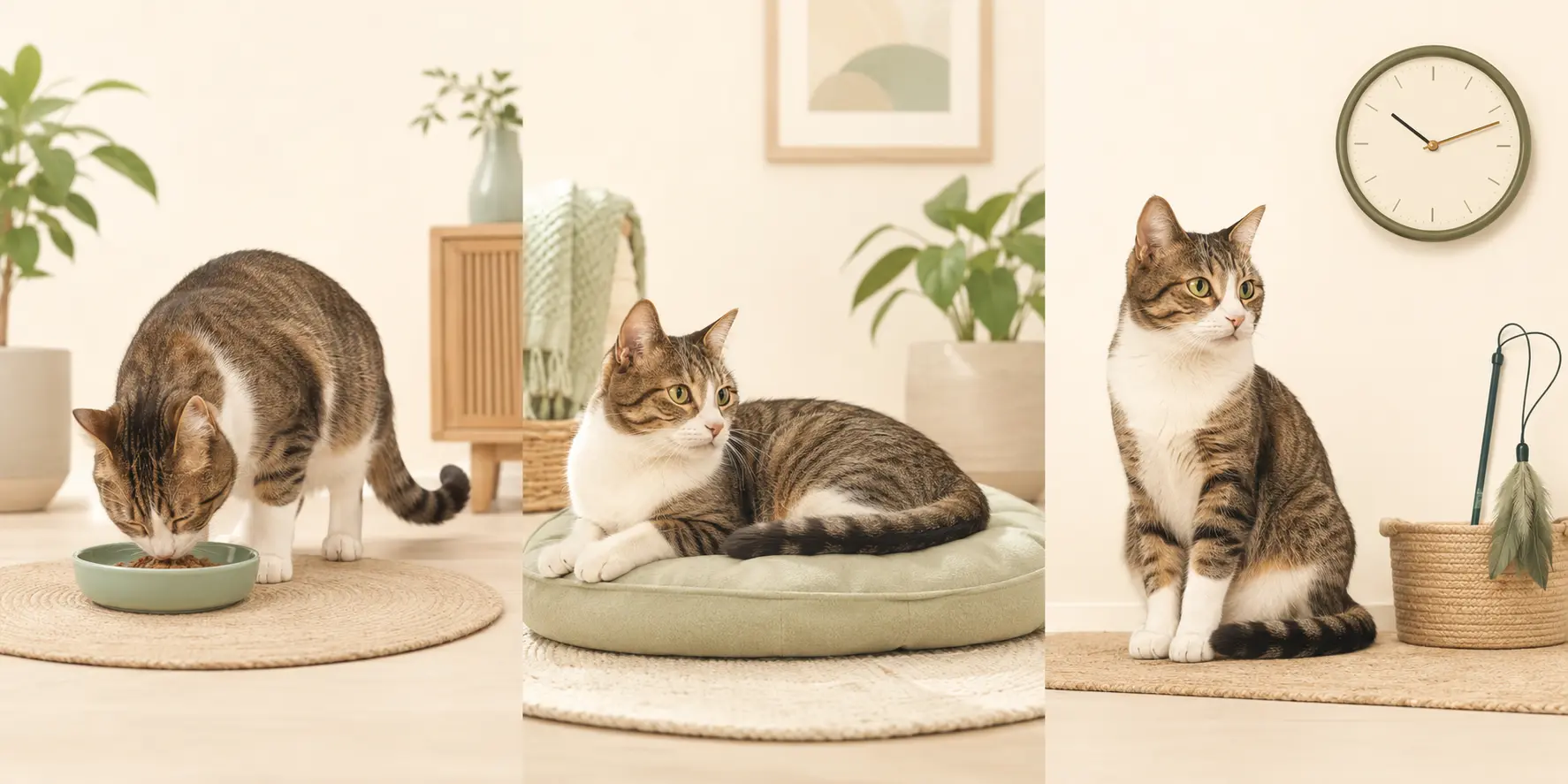
- 1Finish the measured meal
Offer the normal portion in a calm feeding place and let your cat stop without pressure.
- 2Allow quiet movement or rest
Let your cat walk, groom or settle naturally instead of starting an intense chase game immediately.
- 3Move big play to a better time
Schedule energetic wand play before a meal or after your cat has settled, especially when digestive upset has happened before.
The short answer
Gentle movement is usually fine, but vigorous jumping after a large meal may be uncomfortable for some cats. One isolated moment rarely proves a single emotion, preference or medical cause. Age, experience, health and the immediate environment all matter.
What to observe first
Watch for regurgitation, nausea, reluctance or a history of digestive problems. Note the time, duration, trigger and what the cat does next. Compare the event with the cat’s usual routine rather than with another cat.
Read the whole situation
Look at ears, eyes, whiskers, tail, muscle tension, movement and freedom to leave. Also check eating, drinking, litter use, grooming, sleep and social contact. Several small changes together matter more than a catchy explanation for one gesture.
A practical next step
Use calm activity after meals and schedule energetic chase play beforehand when practical. Make one small change at a time so the cat’s response is easy to understand. Preserve choice and a clear retreat.
Common mistakes to avoid
Do not punish, frighten, restrain or deliberately repeat a trigger for a reaction. Never use human medicine or a leftover pet prescription to test a theory. Avoid assuming that a behaviour is revenge, stubbornness or proof of a breed personality.
When veterinary advice matters
A sudden behaviour change can be an early sign of pain or illness. Contact a veterinarian when the pattern is new, persistent or accompanied by reduced appetite, toileting change, weakness, breathing change or obvious discomfort.
Make a useful record
Write down when the change began, how often it occurs, duration, possible triggers and recovery. Add appetite, water, urine, stool, vomiting, mobility and medication. A clear photo or short video can help when collecting it does not delay urgent care or provoke the behaviour.
How long should a cat wait after eating?
There is no universal countdown. After a small meal, let the cat choose calm movement. After a large meal, allow a quiet settling period and move energetic chase-and-jump play to before the next meal when practical. A cat with repeated digestive problems needs individual veterinary advice rather than a fixed internet rule.
DEEPER GUIDE1 more detailed sectionsOpen +
Tell ordinary play from a pattern worth checking
Record the meal size, time to play and whether food returns without abdominal effort, vomiting involves heaving, or the cat also lip-licks, swallows repeatedly, hides or loses appetite. Repeated episodes, pain, lethargy, blood, breathing trouble or inability to keep food down needs veterinary assessment.
Your quick checklist
Your progress is saved on this device.
Three simple things you can do
You do not have to change everything today. Pick one step that feels realistic, try it and see how your cat responds.
- 1Keep movement calm after a larger meal and let the cat choose whether to rest.
- 2Schedule vigorous chase-and-jump play before meals when practical.
- 3Record meal size, timing and any vomiting, regurgitation, lip licking or reluctance to move.
Common mistakes
×Assuming every cat must remain completely still after every small snack.
×Starting intense jumping play immediately after a large meal when the cat has a history of digestive upset.
×Ignoring repeated regurgitation or vomiting because it happens around play.
Questions cat people ask
Can cats play after eating?+
Gentle self-directed movement is usually fine. Vigorous chase, twisting and jumping may be uncomfortable after a large meal, especially for a cat with digestive problems.
How long should a cat wait to play after eating?+
There is no universal waiting time. Let the cat set the pace after small meals and allow more quiet time after a large meal; ask your veterinarian for individual advice when vomiting or regurgitation recurs.
Still looking for the right answer?
Search the full EverYes Cats encyclopedia with your own words — a symptom, food, behaviour, breed or everyday question.
Checked, dated and transparent
- Prepared by
- EverYes Cats editorial team
- Last updated
- 20 August 2026
- Source checked
- 20 August 2026
- Primary reference
- AAHA/AAFP Feline Life Stage Guidelines ↗
We begin with the named reference, rewrite the information in plain language and add practical cat-parent steps. Urgent health statements are checked against veterinary sources. This guide has not been individually reviewed by a veterinarian unless explicitly stated. It provides education, not diagnosis or treatment.
Spotted something unclear or outdated? Tell us so we can review it.
Your answer helps us improve the cat encyclopedia.
Eating can stimulate normal gut movement, but urgency and stool quality determine whether the pattern is concerning.