Where to place litter boxes
Place litter boxes in separate quiet areas with easy approach and escape routes. Avoid noisy appliances, dead ends and locations another cat can block; add accessible trays wherever stairs or mobility create a barrier.
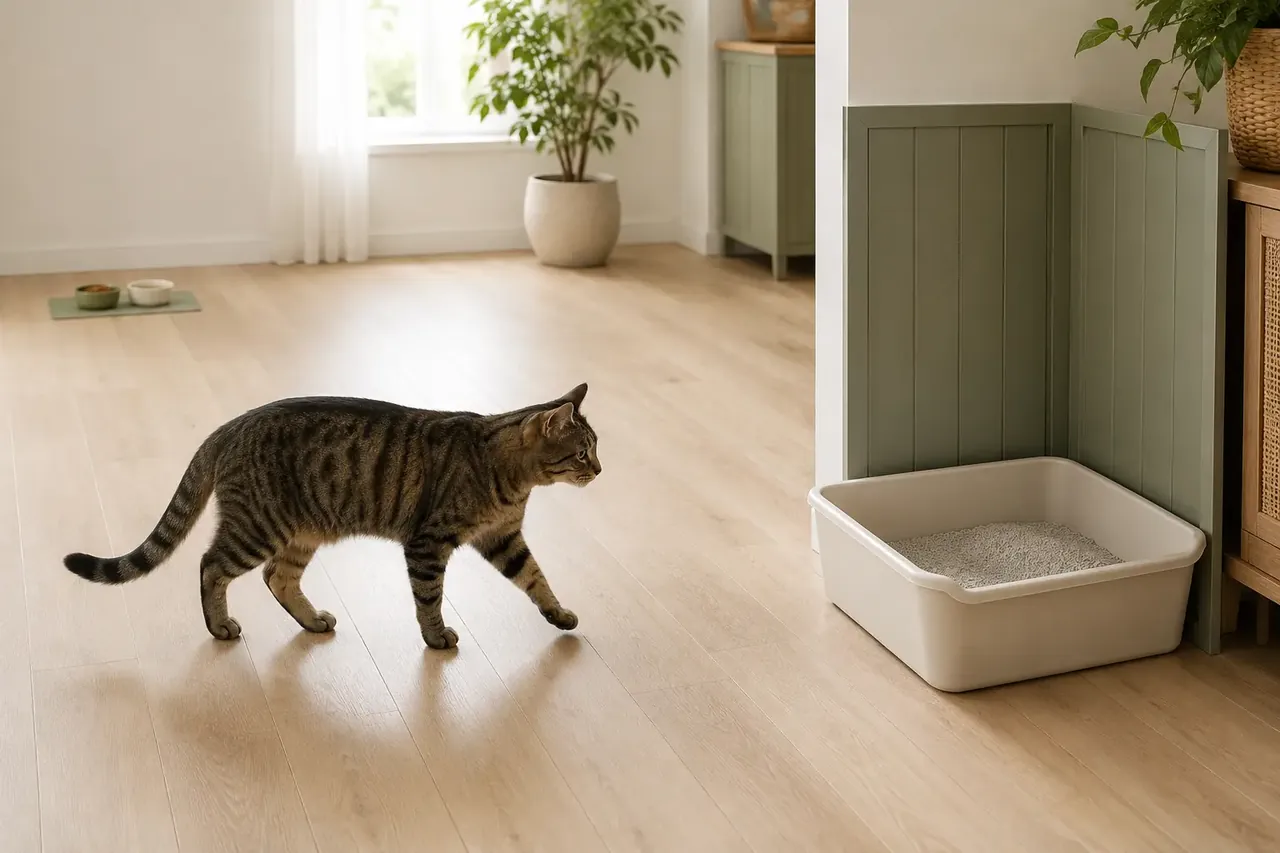 Topic illustration selected for this guide. Some learning images may be AI-assisted.
Where to place litter boxes — the quick answer
✓ Use separate locations, not a row of boxes
✓ Avoid noisy appliances and dead-end corners
✓ Offer one box per cat plus one extra as a starting point
A litter box should feel easy to reach and safe to use. One perfect-looking location may not work if it is noisy, trapped or guarded by another cat.
Choose a place that feels safe to use
The best box is easy to reach, quiet and impossible for another cat to block.
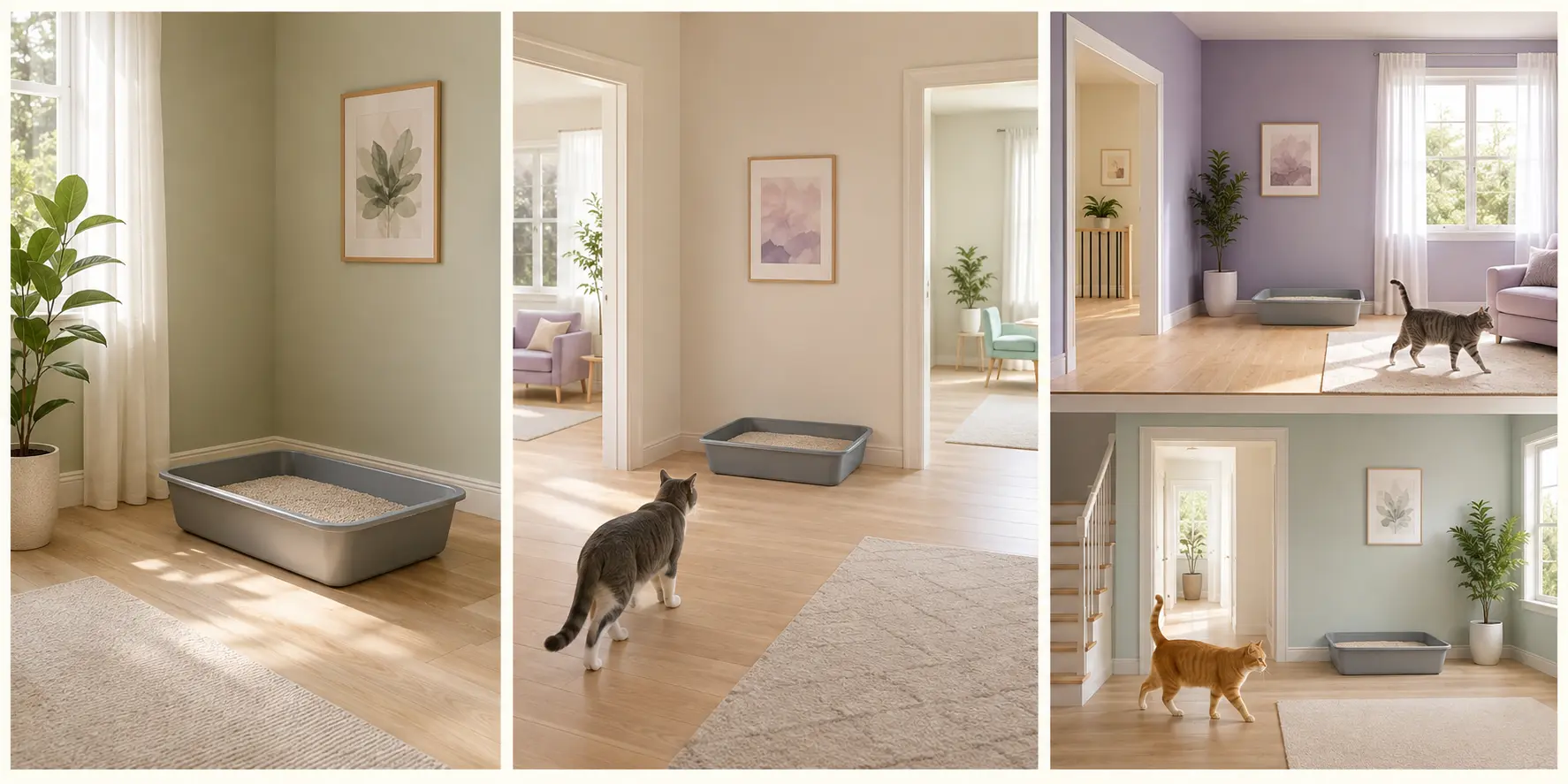
- 1Choose open access
Use a calm location with more than one approach or exit and enough room for a large tray.
- 2Avoid conflict zones
Keep the tray away from food, loud appliances and cramped dead ends where a cat may feel trapped.
- 3Separate the choices
In multi-cat homes, place boxes in genuinely different areas rather than lining them up together.
Choose calm access
Look for a quiet area with more than one approach route, especially in a multi-cat home.
Spread the options
Several boxes side by side may function like one large station. Place them in different parts of the home.
Review life changes
Older cats may need low entrances and a box on each level. Sudden avoidance requires veterinary attention.
Map access instead of hiding the tray
Watch the route at busy and quiet times. A visually discreet box can fail if a door closes, a machine starts, a dog passes or another cat waits nearby. Food and water should be kept away from the toilet area.
Test a change without removing the old option
Add a clean tray in the proposed location using familiar unscented litter. Keep the existing tray while the cat chooses, then adjust gradually. Sudden avoidance, straining, blood or frequent visits needs veterinary assessment.
Your quick checklist
Your progress is saved on this device.
Three simple things you can do
You do not have to change everything today. Pick one step that feels realistic, try it and see how your cat responds.
- 1Place boxes in quiet, accessible locations with a clear view and safe exit.
- 2Spread boxes across separate rooms and floors so one cat cannot block every option.
- 3Match entry height to mobility while keeping the tray large enough to turn and dig.
Common mistakes
×Putting every box together in one laundry room.
×Choosing a trapped corner beside a noisy appliance.
×Moving the only accepted box abruptly without offering an overlap period.
Questions cat people ask
Where is the best place for a litter box?+
Choose a quiet, easy-to-reach location away from food and sudden noise, with visibility and an escape route. The cat should not need to pass another cat to use it.
Can litter boxes be next to each other?+
They may function as one resource station rather than separate choices. In multi-cat homes, distribute them across genuinely different locations.
Still looking for the right answer?
Search the full EverYes Cats encyclopedia with your own words — a symptom, food, behaviour, breed or everyday question.
Checked, dated and transparent
- Prepared by
- EverYes Cats editorial team
- Last updated
- 13 August 2026
- Source checked
- 13 August 2026
- Primary reference
- AAHA/AAFP Feline Life Stage Guidelines ↗
We begin with the named reference, rewrite the information in plain language and add practical cat-parent steps. Urgent health statements are checked against veterinary sources. This guide has not been individually reviewed by a veterinarian unless explicitly stated. It provides education, not diagnosis or treatment.
Spotted something unclear or outdated? Tell us so we can review it.
Your answer helps us improve the cat encyclopedia.
Scratching is normal scent marking, stretching and claw care. The practical solution is a stable surface in the right place—not punishment.