How to reduce litter tracking without upsetting your cat
Box size, litter texture and a gentle exit surface can reduce mess. A calm, practical guide to what it means and what to do next.
 Topic illustration selected for this guide. Some learning images may be AI-assisted.
How to reduce litter tracking without upsetting your cat — the quick answer
✓ Box size, litter texture and a gentle exit surface can reduce mess
✓ Use a larger box, tolerated litter depth and a soft washable mat while changing one detail at a time.
✓ Sudden litter avoidance needs a health-first response.
Box size, litter texture and a gentle exit surface can reduce mess. The most efficient human solution is not useful if it makes the cat avoid the box. This guide separates the useful observation from guesswork and gives you one safe next step.
Reduce mess without changing everything at once
The best tracking solution keeps the tray comfortable and accessible while catching litter along the natural exit route.
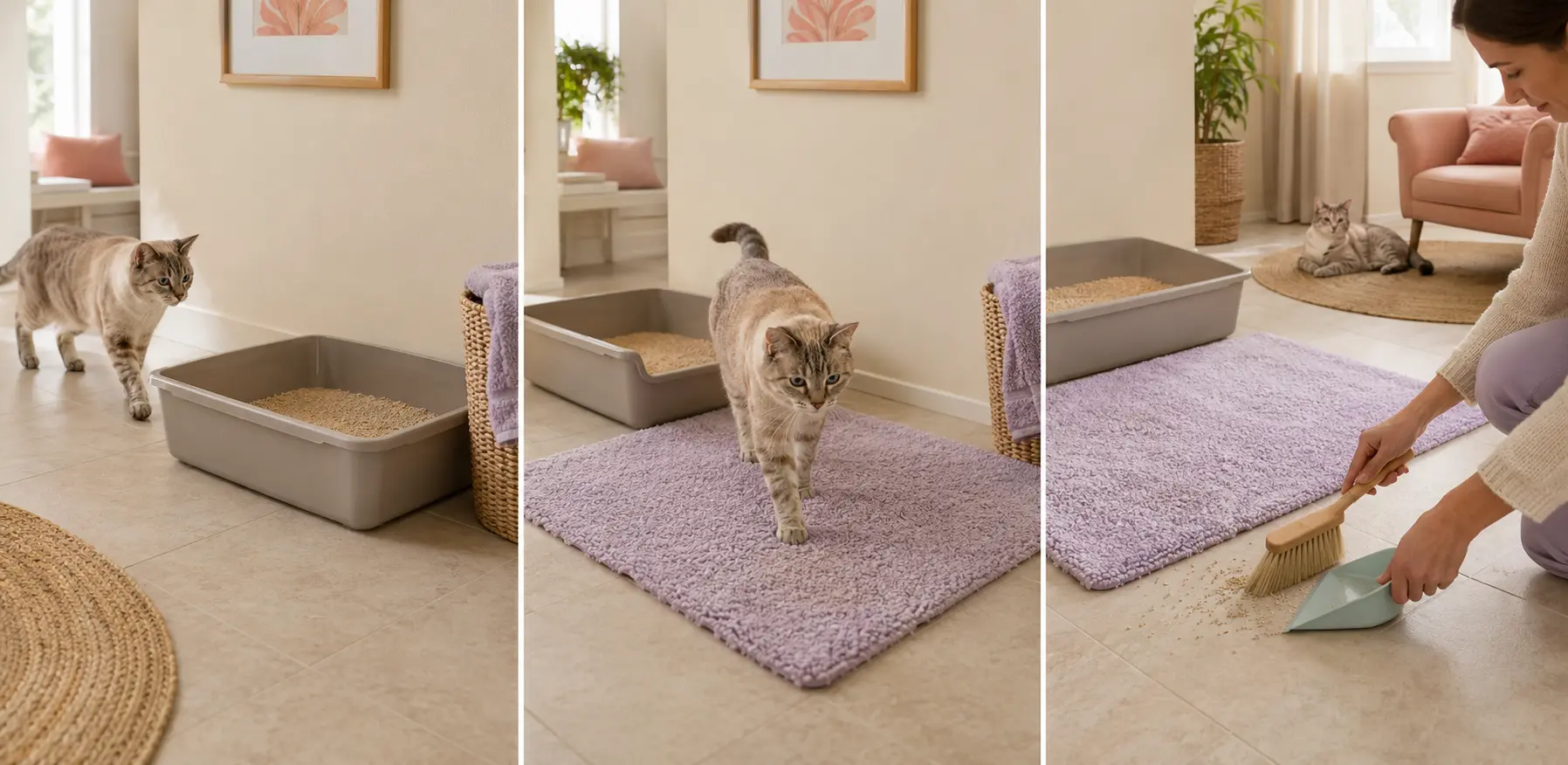
- 1Start with the tray
Use a large uncovered tray with familiar unscented litter and enough space for turning, digging and a comfortable exit.
- 2Add a soft washable mat
Place a broad paw-friendly mat outside the tray where your cat naturally walks, never as a barrier to entry.
- 3Clean without creating fear
Sweep or vacuum when your cat is at a comfortable distance and keep the normal tray setup available throughout.
The clear answer
Box size, litter texture and a gentle exit surface can reduce mess. The most efficient human solution is not useful if it makes the cat avoid the box.
What to observe in your own cat
Box size, litter texture and a gentle exit surface can reduce mess. Observe the real situation without recreating or exaggerating it. Note the setting, the cat's posture and how quickly ordinary behaviour returns.
Why two cats may look different
Age, health, body shape, early experience, confidence and the immediate environment all affect what owners see. A common pattern can still deserve attention when it is new or different for this individual cat.
Make the home support the answer
Prepare the environment and tools first, work on a stable surface and stop before restraint is needed. Comfort and voluntary participation matter more than completing every step in one session.
A practical next step
Use a larger box, tolerated litter depth and a soft washable mat while changing one detail at a time. Keep the change small and easy to reverse, then compare the same facts again rather than relying on memory.
What not to do
Do not punish, frighten, force handling or remove every familiar option at once. Avoid using a general explanation to dismiss a sudden change in health or behaviour.
Warning signs and veterinary help
Sudden litter avoidance needs a health-first response.
Source and limits
This educational guide is informed by International Cat Care. It can help you observe and prepare useful information, but it cannot examine your cat, diagnose a condition or replace individual veterinary advice.
Your quick checklist
Your progress is saved on this device.
Three simple things you can do
You do not have to change everything today. Pick one step that feels realistic, try it and see how your cat responds.
- 1Use a large box with enough space for turning and digging.
- 2Place a soft low-profile mat beyond the exit and vacuum regularly.
- 3Trial a slightly larger-grain unscented litter gradually.
Common mistakes
×Switching abruptly to a disliked pellet litter.
×Using a sharp uncomfortable trapping mat.
×Reducing litter so much that digging becomes difficult.
Questions cat people ask
How can I stop cat litter tracking everywhere?+
A roomy box, suitable litter depth, an accepted mat and regular cleaning reduce tracking, but some scatter is normal.
Do covered litter boxes reduce tracking?+
They may contain scatter but can trap odour and feel cramped. Cat comfort and reliable use are more important than keeping every grain inside.
Still looking for the right answer?
Search the full EverYes Cats encyclopedia with your own words — a symptom, food, behaviour, breed or everyday question.
Checked, dated and transparent
- Prepared by
- EverYes Cats editorial team
- Last updated
- 14 August 2026
- Source checked
- 14 August 2026
- Primary reference
- International Cat Care ↗
We begin with the named reference, rewrite the information in plain language and add practical cat-parent steps. Urgent health statements are checked against veterinary sources. This guide has not been individually reviewed by a veterinarian unless explicitly stated. It provides education, not diagnosis or treatment.
Spotted something unclear or outdated? Tell us so we can review it.
Your answer helps us improve the cat encyclopedia.
Some healthy cats simply do not cover stool. A change can also reflect a small or dirty box, disliked litter, social pressure, pain or urgency.