How to brush a long-haired cat
Comb a long-haired cat in short, rewarded sessions and check friction areas before small tangles become painful mats. Never cut a tight mat with scissors close to moving skin.
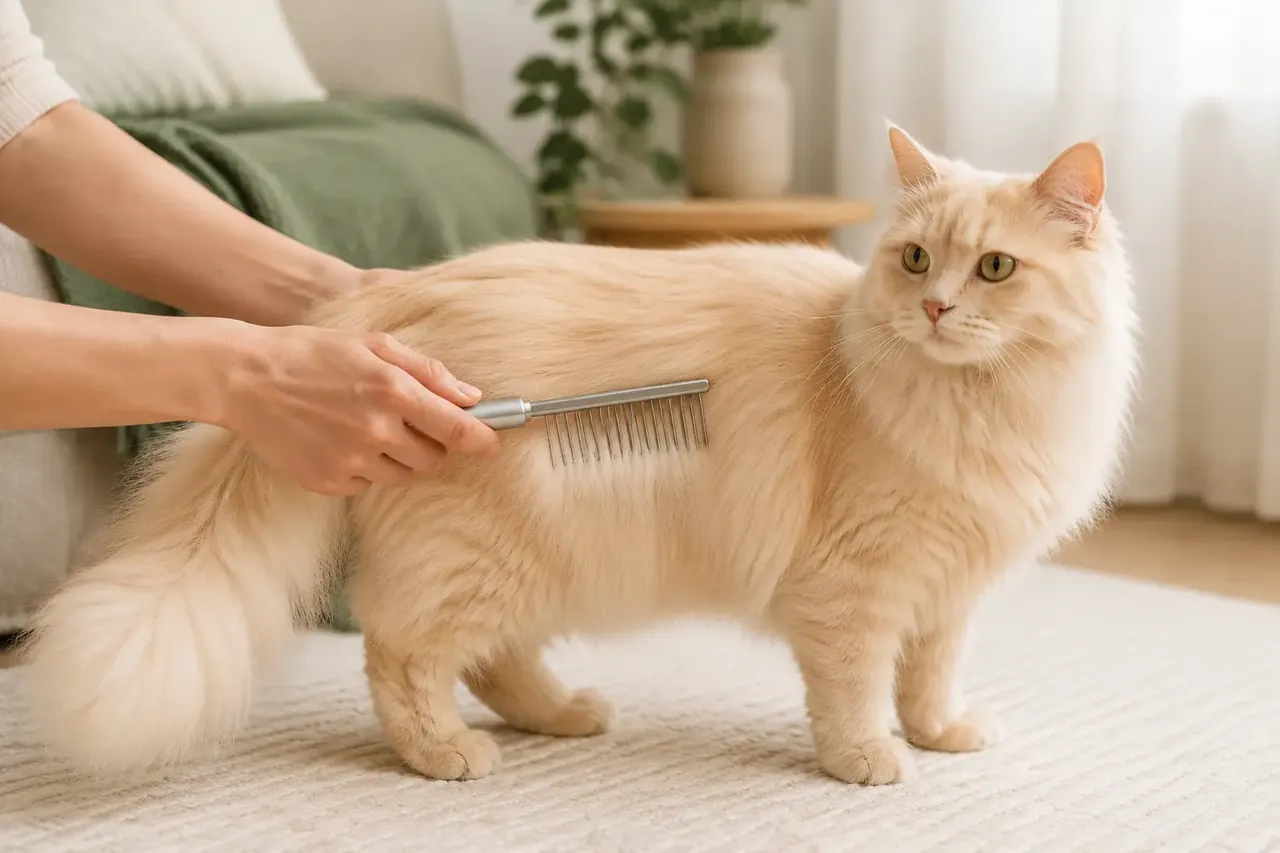 Topic illustration selected for this guide. Some learning images may be AI-assisted.
How to brush a long-haired cat — the quick answer
✓ Use short sessions and reward cooperation
✓ Check high-friction areas often
✓ Do not cut tight mats with scissors
Long coats often need regular help where friction creates tangles: behind the ears, under the front legs, around the chest and along the back legs.
A gentler three-step brushing routine
Short, comfortable sessions protect trust and make it easier to notice tangles early.
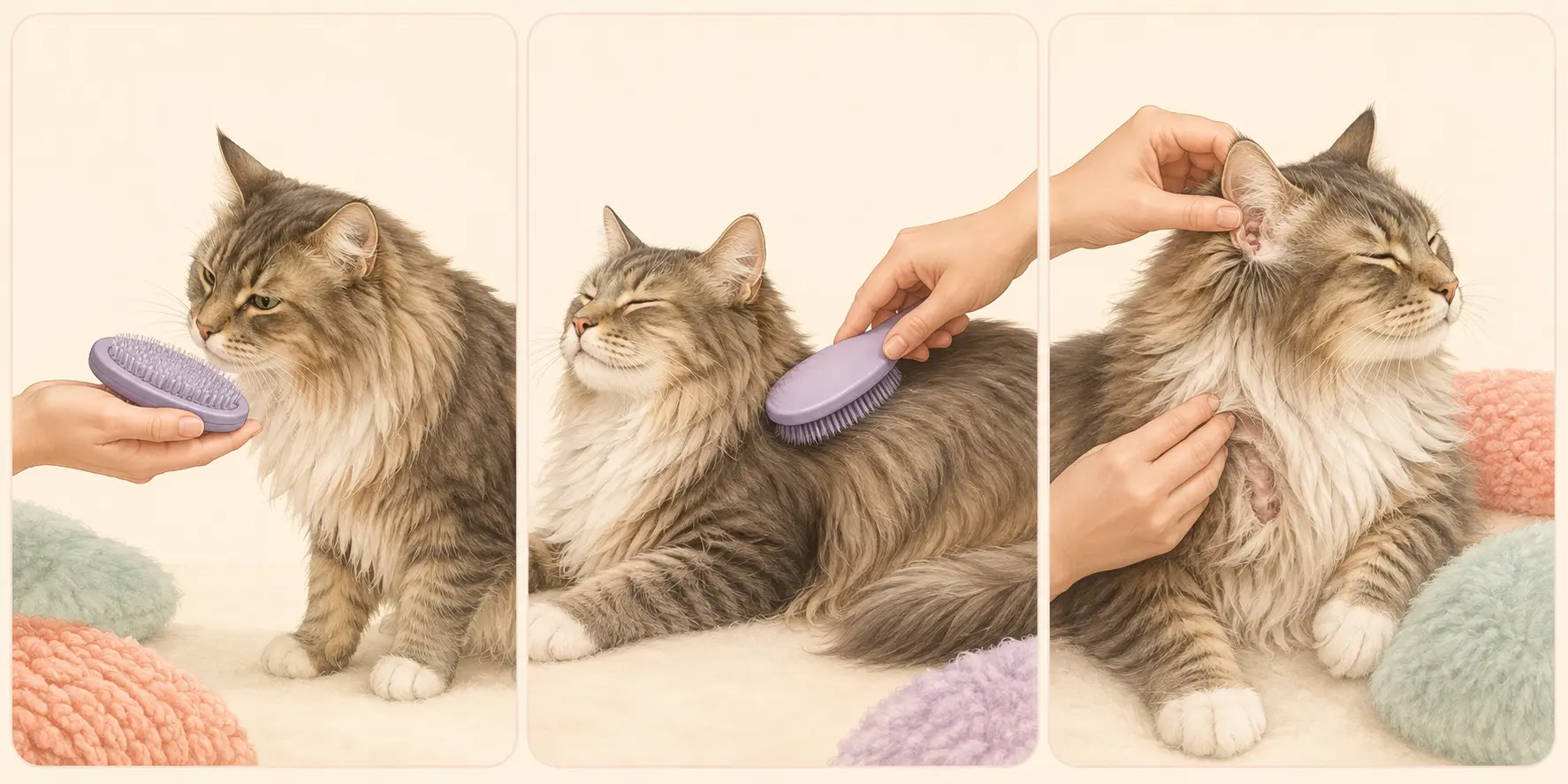
- 1Introduce the tool
Let your cat sniff the brush, then pair one light stroke with something they enjoy.
- 2Follow the coat
Use short strokes in the direction of hair growth and stop when the body becomes tense.
- 3Check hidden areas
Use your fingers to check behind ears, under the chest and near the legs without pulling.
Choose the right tools
A wide-tooth comb helps locate tangles while a suitable brush removes loose undercoat. Ask a groomer what fits the coat.
Work in small areas
Support the skin and comb from the ends of the fur toward the body. Stop if pulling causes discomfort.
Get help with mats
Tight mats can hide sore skin and are easy to cut accidentally. A veterinary professional or experienced groomer can remove them safely.
Check the five mat-prone zones
Gently inspect behind the ears, under the front legs, chest, trousers and base of the tail. Support the skin and work from the loose end of a tangle rather than pulling from the root. Stop at skin twitching, tail movement, tension or attempts to leave.
Get help before a mat becomes an injury
Tight mats can hide inflamed skin and pull painfully with every movement. Scissors can cut folded skin even when the mat looks separate. Ask a veterinary professional or experienced cat groomer about safe removal, especially when mats are extensive or the cat is painful.
Your quick checklist
Your progress is saved on this device.
Three simple things you can do
You do not have to change everything today. Pick one step that feels realistic, try it and see how your cat responds.
- 1Check behind the ears, under the front legs, chest and back legs with a wide-tooth comb.
- 2Work from the ends of the fur toward the body while supporting the skin.
- 3Keep sessions brief, reward cooperation and ask a professional about tight mats.
Common mistakes
×Cutting a tight mat with scissors close to thin cat skin.
×Pulling from the root or continuing while the cat shows pain.
×Brushing only the easy back area while missing friction points underneath.
Questions cat people ask
How often should a long-haired cat be brushed?+
Many need frequent and sometimes daily checks, but coat texture, season, health and self-grooming ability change the schedule.
Can I remove a mat at home?+
A loose small tangle may be gently teased apart, but tight mats can hide sore skin and are easy to cut accidentally. A groomer or veterinarian can remove them safely.
Still looking for the right answer?
Search the full EverYes Cats encyclopedia with your own words — a symptom, food, behaviour, breed or everyday question.
Checked, dated and transparent
- Prepared by
- EverYes Cats editorial team
- Last updated
- 13 August 2026
- Source checked
- 13 August 2026
- Primary reference
- AAHA/AAFP Feline Life Stage Guidelines ↗
We begin with the named reference, rewrite the information in plain language and add practical cat-parent steps. Urgent health statements are checked against veterinary sources. This guide has not been individually reviewed by a veterinarian unless explicitly stated. It provides education, not diagnosis or treatment.
Spotted something unclear or outdated? Tell us so we can review it.
Your answer helps us improve the cat encyclopedia.
Scratching is normal scent marking, stretching and claw care. The practical solution is a stable surface in the right place—not punishment.